Uji Matcha: The Origin Guide for Cafés
24 October, 2026
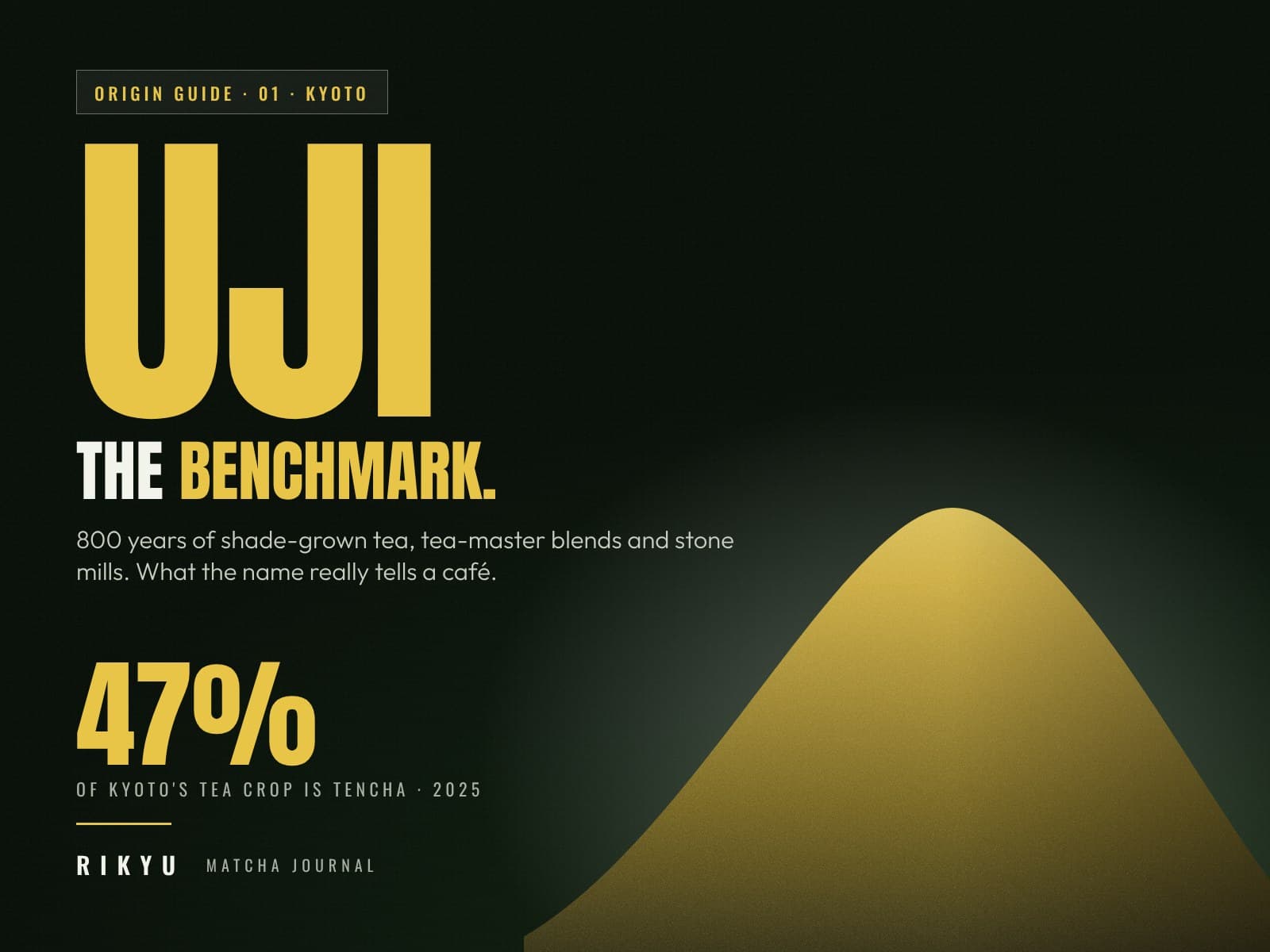
Uji is where matcha began, and it is still the place the rest of Japan measures itself against. When a tea master in Nishio or Kagoshima describes a good tencha, the reference point is Uji. This guide explains what makes Uji matcha taste the way it does, how the region grows and mills it, what the word “Uji” legally covers, and when it is the right choice for a café.
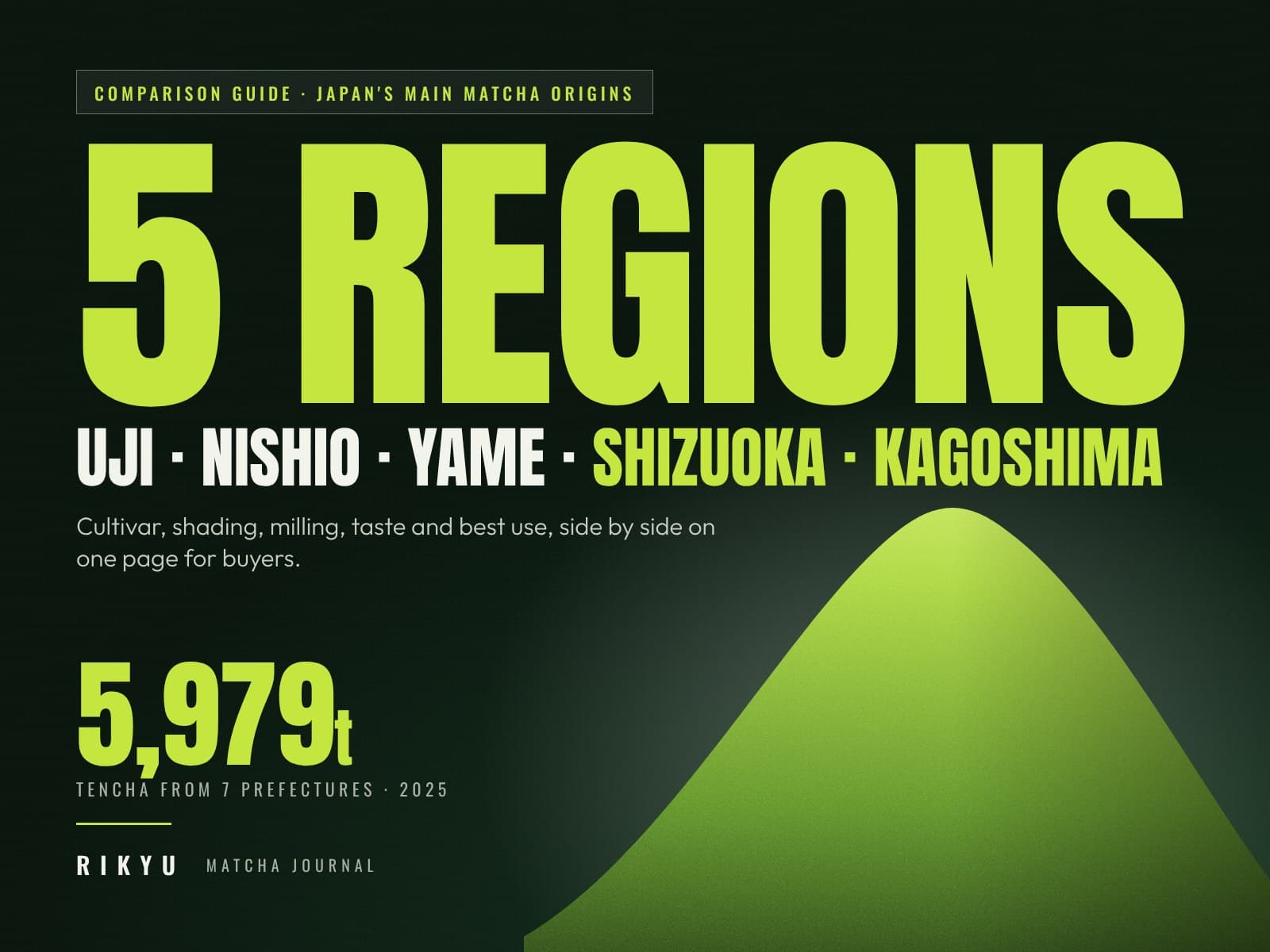
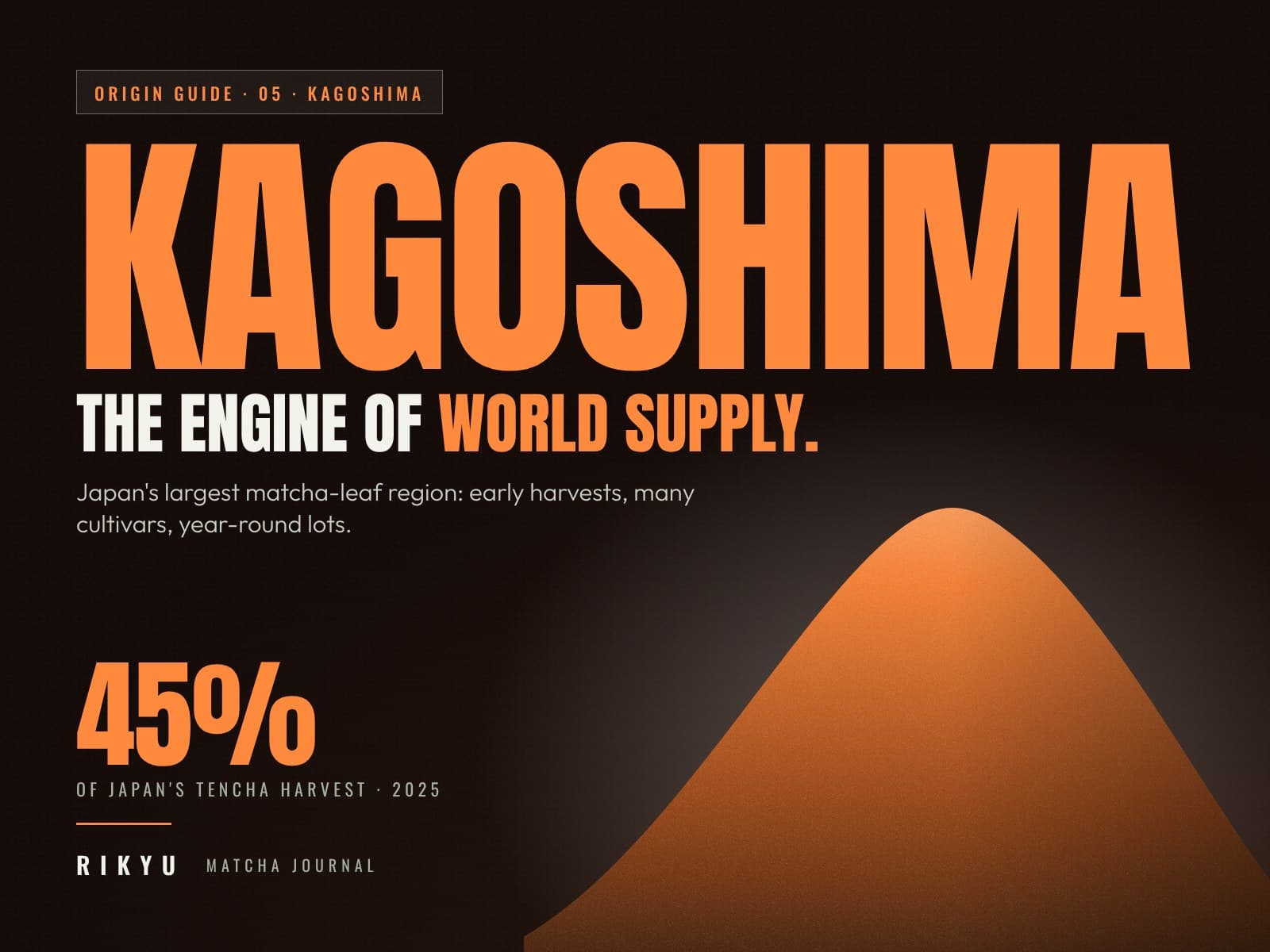
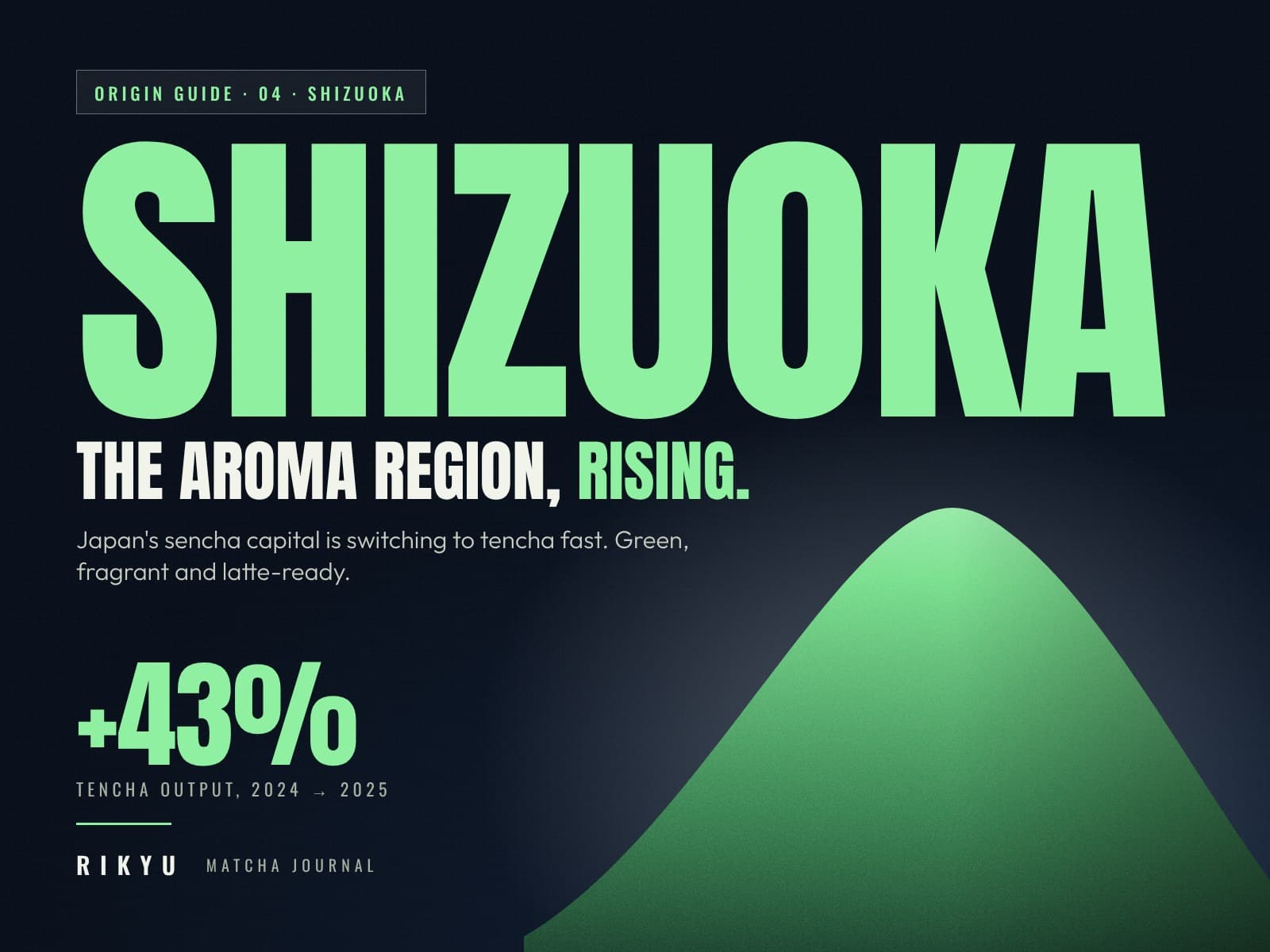
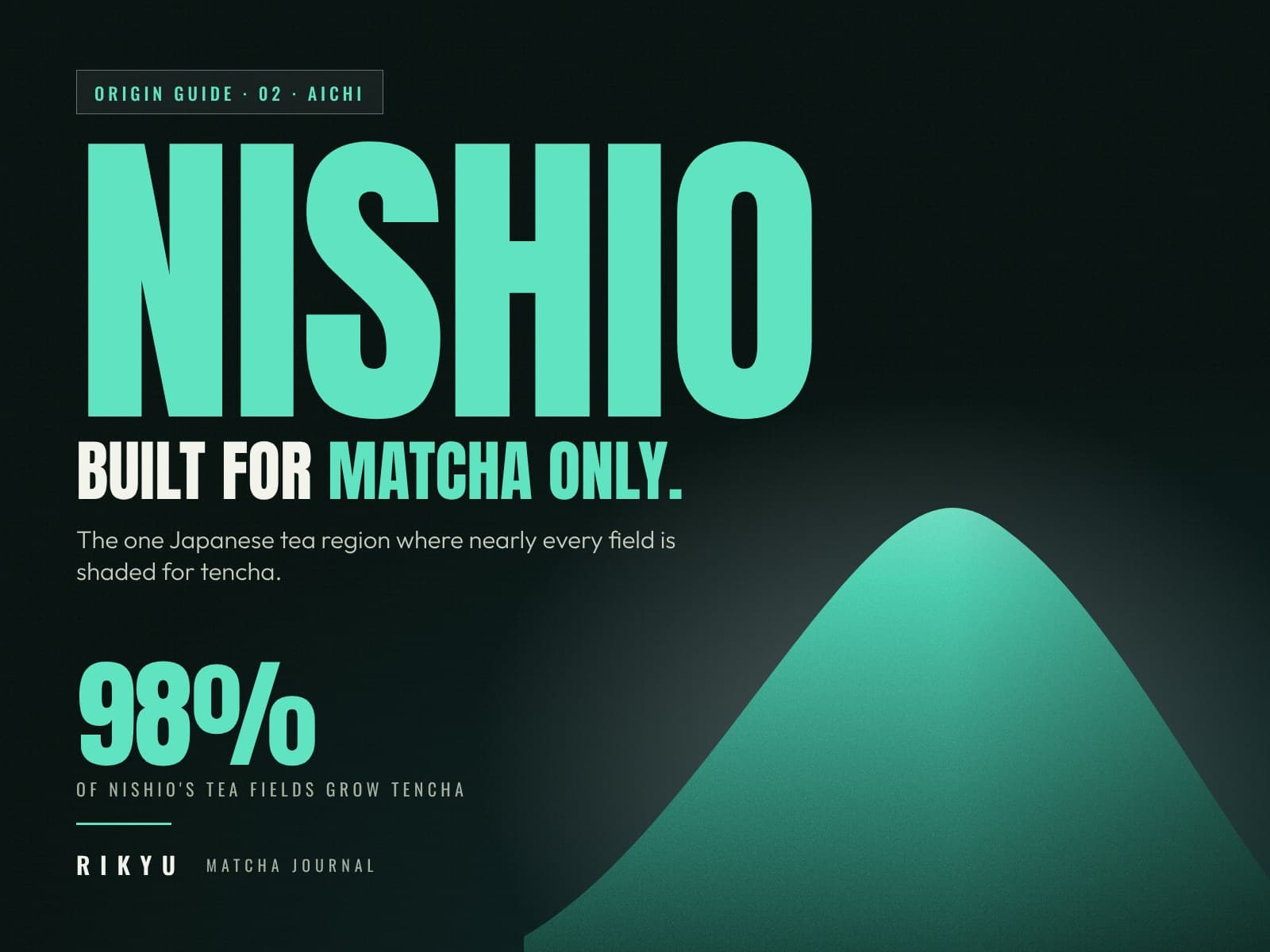
This is the first of five origin guides. The others cover Nishio, Yame, Shizuoka and Kagoshima, and a side-by-side comparison puts all five on one page.
Why is Uji the benchmark for matcha?
Three reasons: history, technique and concentration. Tea arrived in the Uji area in the early Kamakura period, when the monk Eisai brought seeds back from Song China and the priest Myoe planted them at Kozanji temple in Toganoo. By the Muromachi period the shogun Ashikaga Yoshimitsu had designated the “Seven Famous Gardens of Uji,” making the area the official tea supplier to the shogunate.
In the 16th century, Uji growers worked out how to cover tea bushes with reed screens and straw before harvest. This shade-growing method, called ooishita saibai, is the origin of both tencha (the leaf for matcha) and gyokuro, and it was invented only here. The tea ceremony that Sen no Rikyu perfected was built on this shaded Uji leaf. In 1738 Nagatani Soen of Ujitawara established the Uji method of steamed green tea that became the basis of modern sencha, so Uji is the source not just of matcha but of Japanese tea processing itself.
Concentration is the modern part of the story. Kyoto Prefecture is no longer Japan's largest tencha grower, but about 47% of all tea harvested in Kyoto is tencha (989 tons out of 2,121 tons in 2025). No other prefecture comes close. Kyoto is the only part of Japan that is a matcha region first and a tea region second.
What does “Uji matcha” legally mean?
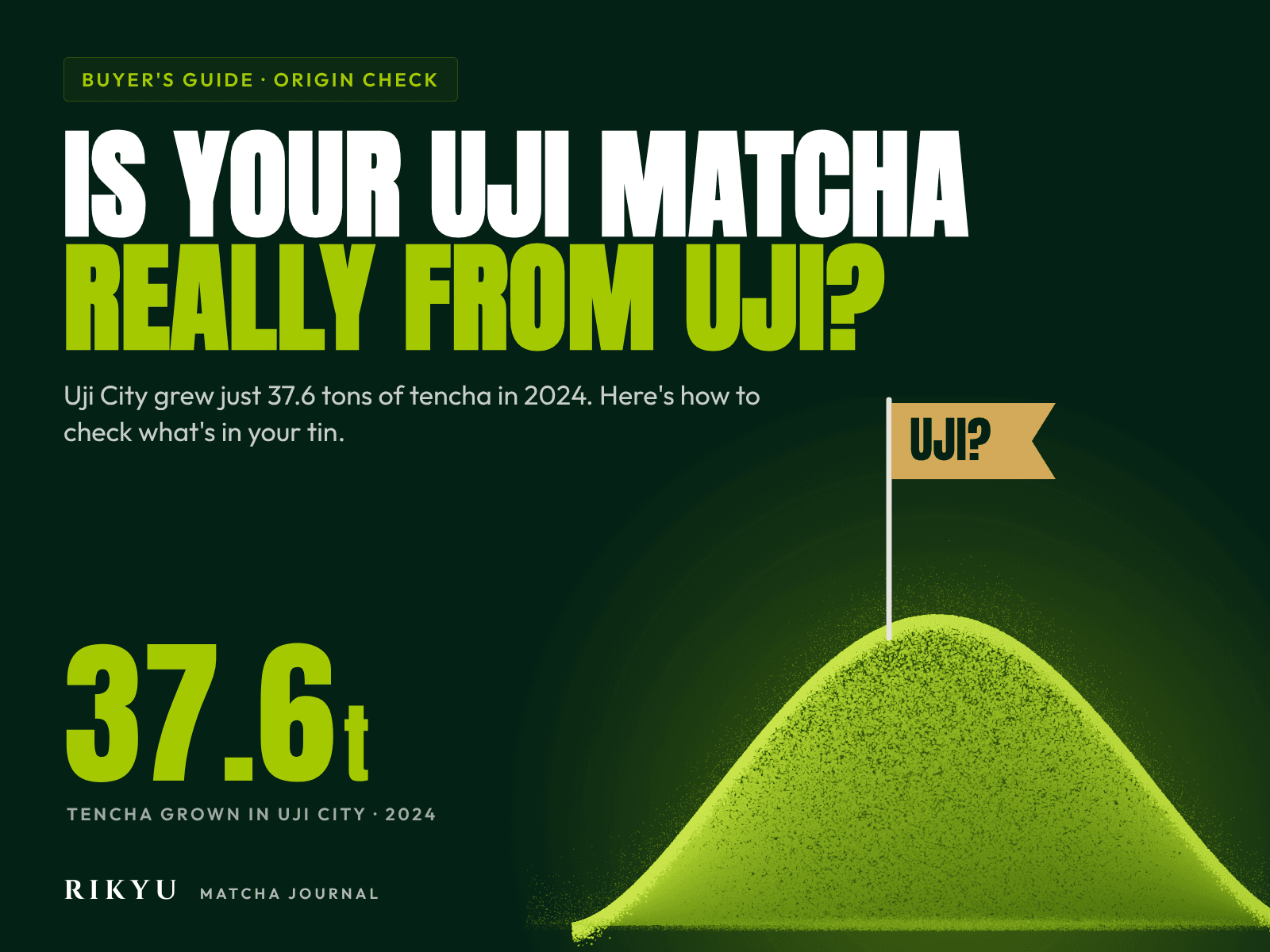
Under the Kyoto Prefecture Tea Industry Association's definition, Uji tea is tea grown in Kyoto, Nara, Shiga or Mie and finished inside Kyoto Prefecture by a Kyoto-based company, using methods that originated in Uji. In other words, “Uji matcha” describes a method and a finishing location rather than a single field. Uji City itself grows only a small share of Kyoto's tencha; towns such as Wazuka, Minamiyamashiro and Ujitawara grow most of it.
This matters when a customer asks for “single-origin Uji.” The honest answer starts with the definition, then moves to what can actually be stated on a spec sheet: the growing town, the refiner and the cultivar. We cover the mapping in detail in two earlier articles.
Related: Where Is Ujicha Grown? The Map Behind the Name · Is Your Uji Matcha Really from Uji?
What is the Uji terroir?
Kyoto's matcha country has two layers. The first is the historic belt of covered tea gardens on the flat land along the Uji and Kizu rivers: central Uji and Shirakawa in Uji City, the riverbank “hama-cha” gardens of Joyo and Yawata, and Iioka in Kyotanabe, the home of gyokuro. The second layer is the hill country of Wazuka, Ujitawara and Minamiyamashiro, which historically grew sencha and has converted to tencha over the past two decades. The first layer is where the top hand-picked tencha comes from; the second is where most of today's volume comes from.
Uji City, Joyo and Kyotanabe are known as the “three cities,” and their honzu-shaded, hand-picked tencha dominates the national tea competition. In the 2020 competition, places one through thirty-seven in the tencha division all went to Kyoto, with twenty-five of them to Uji City. Uji City has won the tencha production-area award fifty-four times.
Morning fog from the two rivers and the temperature swing between day and night slow the growth of the leaf and let it store theanine, the amino acid behind umami. Shading then does the rest.
Related: Why Uji? The Terroir of Kyoto Tea · A Timeline of Ujicha
How is Uji tencha shaded?
Uji still uses the traditional honzu method for its best leaf: a scaffold (tana) is covered with reed screens, then straw is layered on top in stages until the shading rate reaches 95% or more. Shading lasts thirty to forty days, longer than in most other regions. Below the top grades, black synthetic cloth on a scaffold (kanreisha) is the norm. Direct covering, where cloth is draped straight onto the bushes, is rare for Uji tencha.
Long, staged shading is what gives Uji its depth of umami and its dark, glossy green. It is also expensive, which is one reason Uji leaf costs more than leaf from anywhere else.
Which cultivars define Uji matcha?
Uji's great asset is a family of cultivars selected from its own native seed-grown bushes: Asahi, Samidori, Ujihikari, Gokou, Komakage and Ujimidori. All of them produce deep umami and the seaweed-like “covered aroma” (ooika) that develops under shade. Alongside them, Okumidori is widely used for its vivid green, and Yabukita for its aroma and reliability.
Because Uji works in blends, the cultivar on a spec sheet is usually given as the lead cultivar, for example “Okumidori blend.” That is normal and not a sign of lower quality.
Related: Single Estate vs. Single Origin vs. Single Cultivar
How is Uji tencha processed and milled?
After steaming, tencha leaf is dried without rolling in a brick tencha kiln. Uji refiners tend to fire a little harder than other regions, producing a faint roasted note called hika. Whether a matcha has this note or not is one of the quickest ways an experienced taster tells Uji from Kagoshima.
Top grades are stone-milled. A granite mill produces only about 40 grams of matcha an hour, but the particle size is a few microns and the texture is exceptionally smooth. Stone milling explains much of the price of the top Uji grades. Lower grades are machine-milled and are perfectly good for lattes.
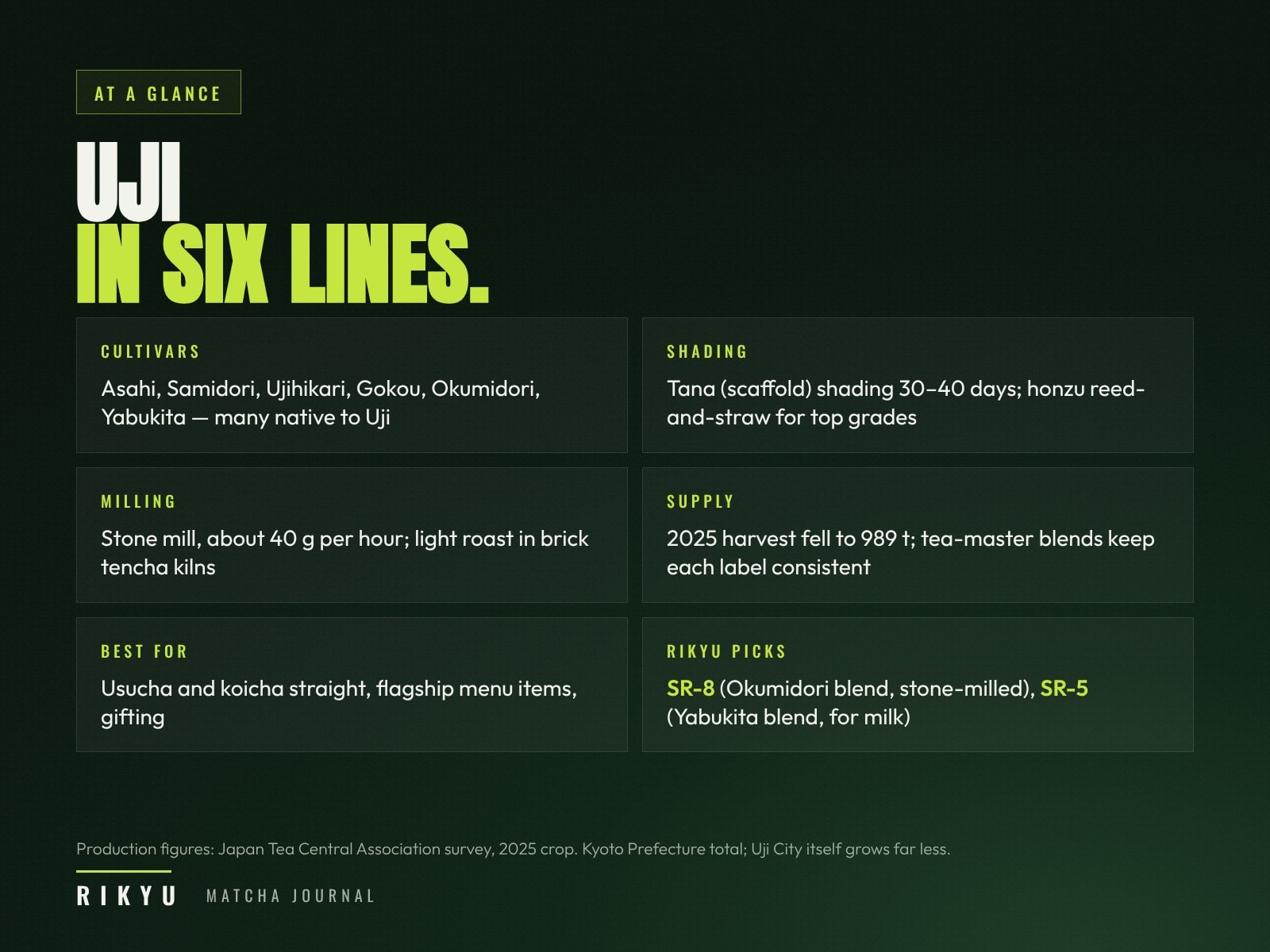
Card: Uji matcha in six lines. Production figure is the 2025 Kyoto Prefecture tencha crop.
Why do Uji tea houses blend?
In Uji, the tea master (chashi) of each tea house combines tencha from several farms and fields into a named product, and re-balances the recipe every year so that the product tastes the same. This practice, called gogumi, grew out of the tea ceremony's need for a named matcha to be reproducible from year to year. It is a skill, not a shortcut.
The consequence for buyers is that true single-farm, single-cultivar Uji matcha barely exists on the market. If a customer insists on single-cultivar, the realistic answers are an Okumidori-led Uji blend, or a single-cultivar lot from Yame or Kagoshima, which we cover in those guides.
What does Uji matcha taste like?
Umami, sweetness and color are all high and in balance, and the light roast gives the cup a defined outline. As the grade rises, bitterness and astringency fall away and the finish gets longer. Uji's top grades are the only matcha we recommend without hesitation for koicha, the thick preparation, because they keep their structure at a very high powder-to-water ratio.
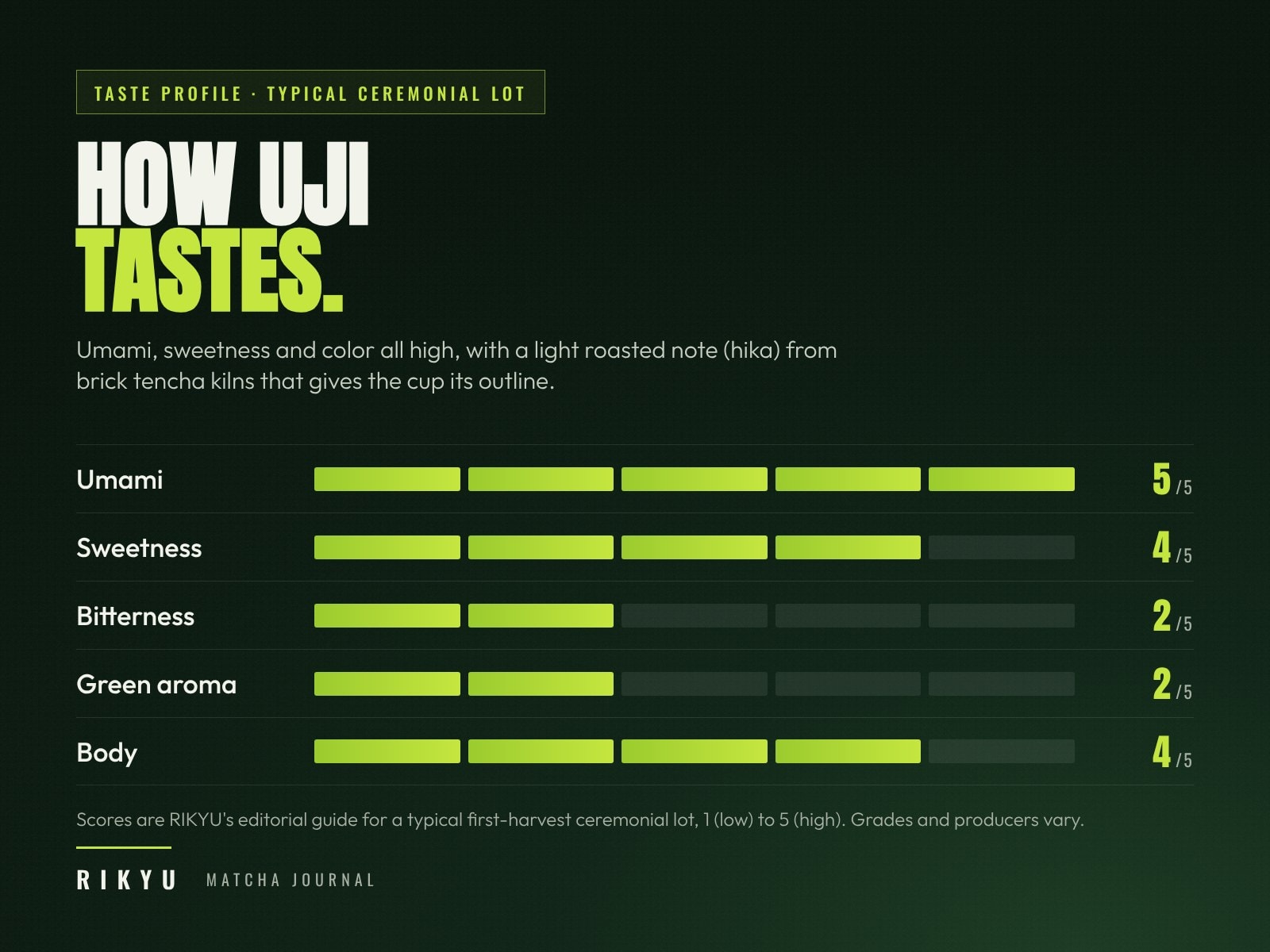
Chart: RIKYU's editorial taste profile for a typical first-harvest Uji ceremonial lot. Individual products vary.
Related: Koicha vs. Usucha
What is happening to Uji supply in 2026?
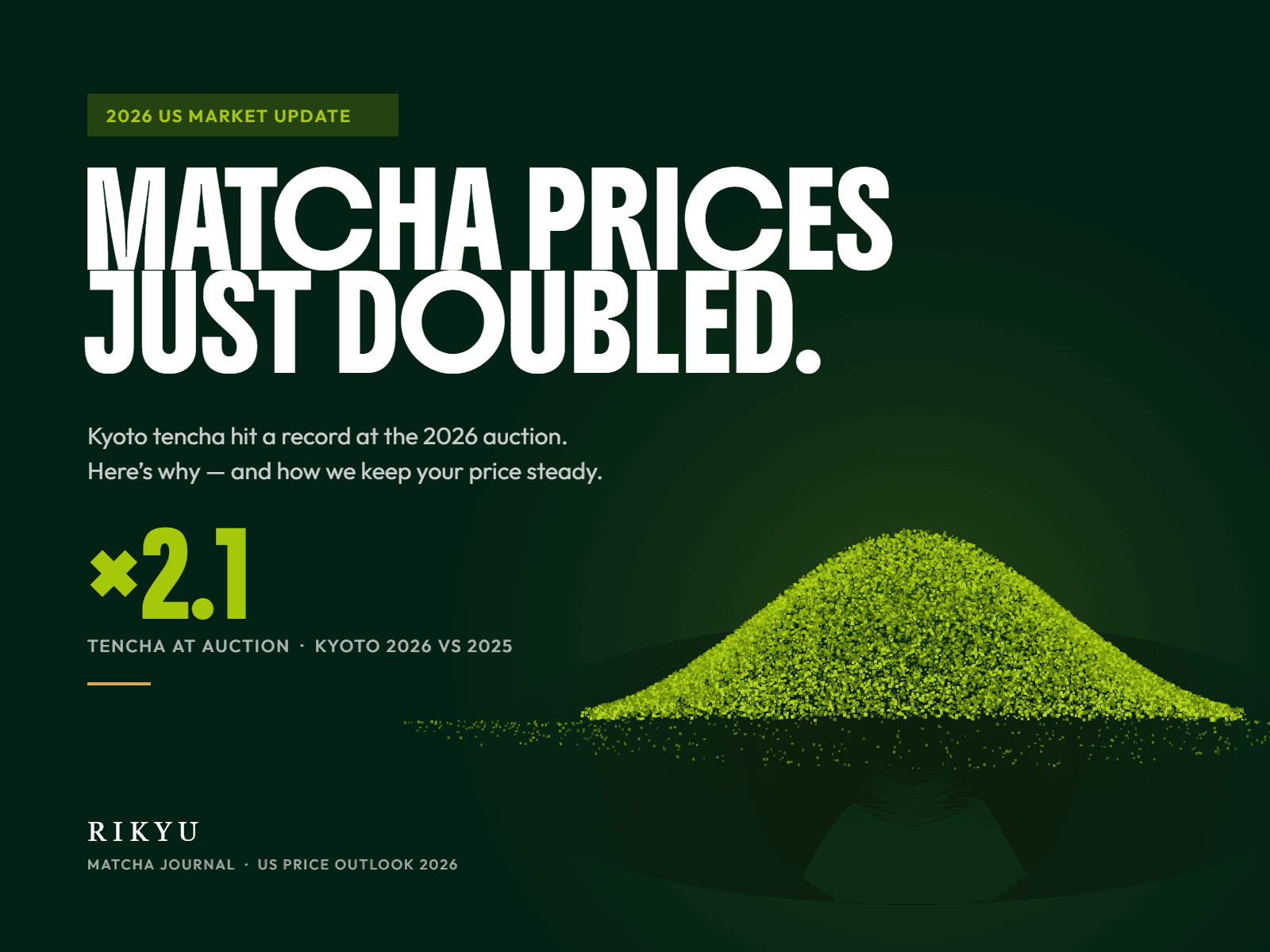
Kyoto's tencha harvest fell from 1,068 tons in 2024 to 989 tons in 2025, just as overseas demand surged. Prices followed: at the first Kyoto tencha auction of May 2026, raw tencha averaged about 1.7 times the 2025 level. Some long-standing products that used to be made only from first-harvest leaf are now blended with second harvest to hold their price, so “Uji” no longer automatically means a stable, unchanging product. Ask for the harvest composition of each lot.
For a café, the practical approach is to treat Uji as the flagship and pair it with a steadier, better-priced line from Kagoshima or Shizuoka for daily lattes.
Related: Why US Cafés Are Asking for Price Lists in 2026 · First Harvest vs. Second Harvest
Which RIKYU products come from Uji?
Our Uji line is the SR series. SR-8 is a stone-milled, first-harvest Okumidori blend with a fine artisan texture, built for drinking straight as usucha or koicha and for a flagship menu item. SR-5 is the same region one grade down: a machine-milled Yabukita blend with rich color and strong body that holds up in milk. Further grades and the stone-milled SR-4 are listed in the catalogue.
Buy from the region that fits your menu
Rikyu Matcha is based in Tokyo and sources matcha directly from producers in Uji, Nishio, Yame, Shizuoka and Kagoshima. Every lot comes with a spec sheet, and we can provide a certificate of origin, a certificate of analysis (COA) and pesticide residue test results on request. If you are deciding between regions for a latte program, a straight-matcha menu or a private label, write to us with your volumes and how you will use it. We answer in English, from Tokyo, and we answer fast.
FAQ
Is Uji matcha the best matcha?
Uji sets the reference for umami, color and texture at the top end, and it is the clear choice for koicha and for a flagship product. For a high-volume latte program, Kagoshima or Shizuoka often fit better on price and consistency. Pick by use, not by rank.
Is Uji matcha grown in Uji City?
Only a small part of it. Under the Kyoto tea industry's definition, Uji tea can be grown in Kyoto, Nara, Shiga or Mie and must be finished in Kyoto Prefecture by a Kyoto company using Uji methods.
Why is Uji matcha more expensive?
Longer shading (30 to 40 days, often with reed and straw), hand-picking for the top grades, stone milling at about 40 grams an hour, and a harvest that shrank in 2025 while demand grew.
Can I get single-cultivar Uji matcha?
Rarely. Uji products are tea-master blends by tradition. For single cultivar, consider Yame or Kagoshima; for Uji, ask for the lead cultivar instead.
Does Uji matcha meet EU pesticide limits?
Some lots do and some do not. MRL compliance is decided lot by lot, not by region, so ask for the residue test results for the exact lot you are buying.
Sources
Japan Tea Central Association, tencha production by prefecture, 2024 and 2025 crops (via Aichi Prefecture, Japanese)
Kyoto Prefecture, tea production statistics for 2025 (Japanese)
MAFF Kinki Regional Office, definition of Uji tea (Japanese)
National Tea Competition results, tencha division (Japanese)
Shokuhin Shimbun, first Kyoto tencha auction of 2026 (May 2026, Japanese)
Historical and horticultural details reflect standard Japanese tea-industry references; we recommend confirming specific claims with your Uji supplier before reuse.