Shizuoka Matcha: The Aroma Region on the Rise
24 October, 2026
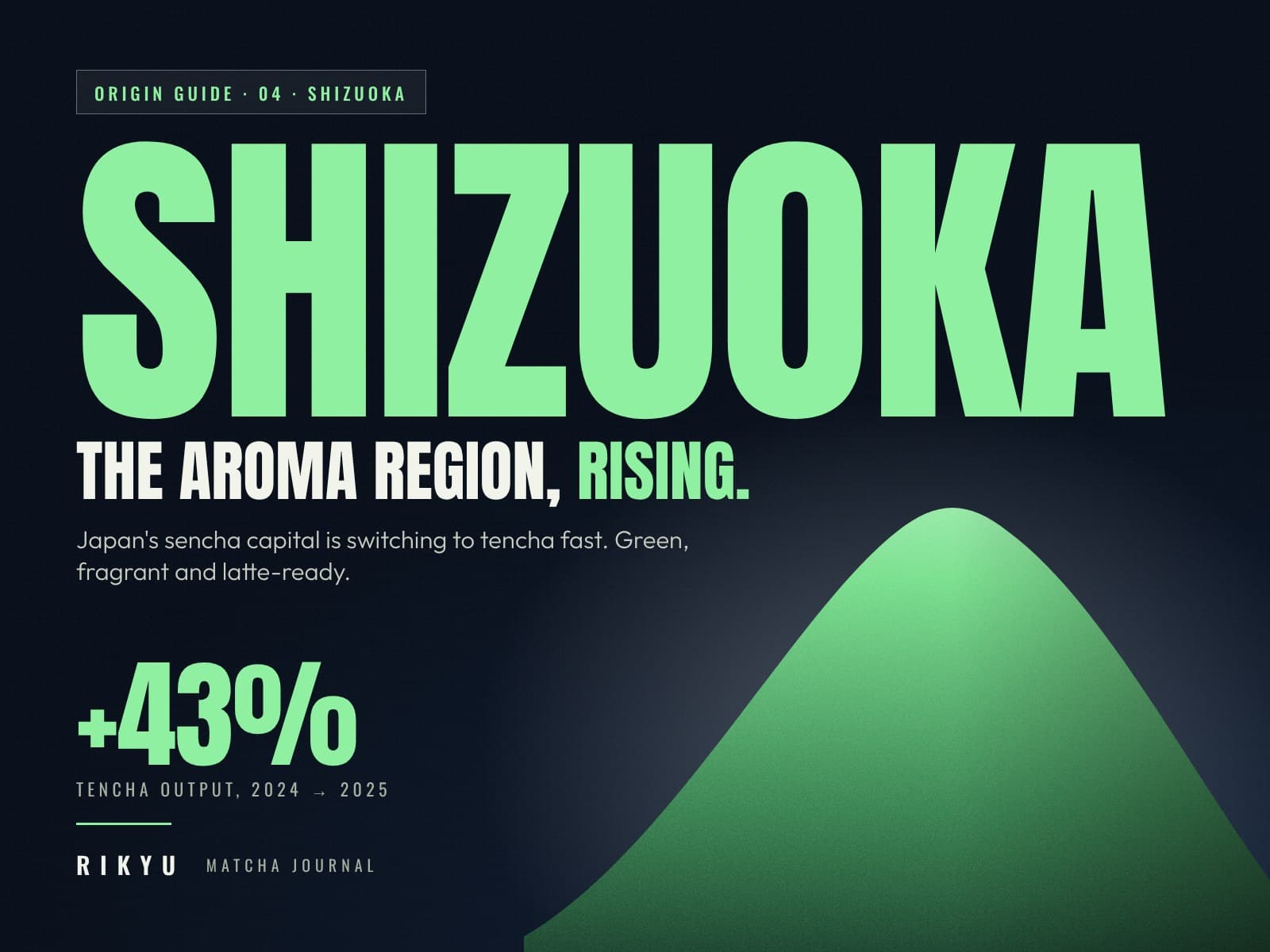
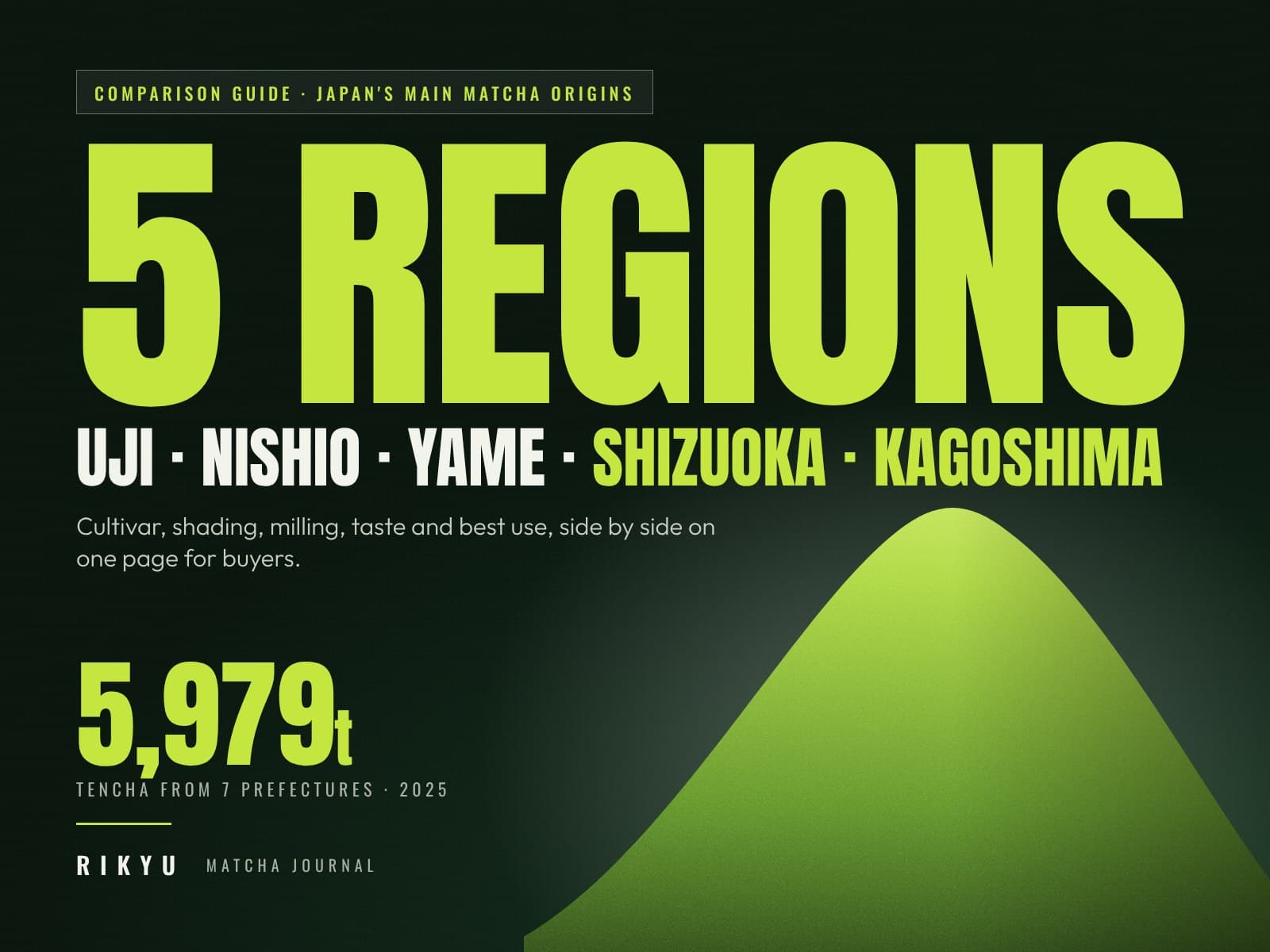
For more than sixty years Shizuoka was Japan's largest tea region, and over 90% of its tea was Yabukita grown for sencha. Matcha came late. But tencha production jumped from 611 tons in 2024 to 875 tons in 2025, a 43% increase in one year, lifting Shizuoka to third place in Japan. It is the youngest of the five main matcha regions and the fastest growing. This guide explains what sixty years of sencha know-how does to a matcha, and why Shizuoka is becoming the daily-latte region for cafés in the United States and Europe.
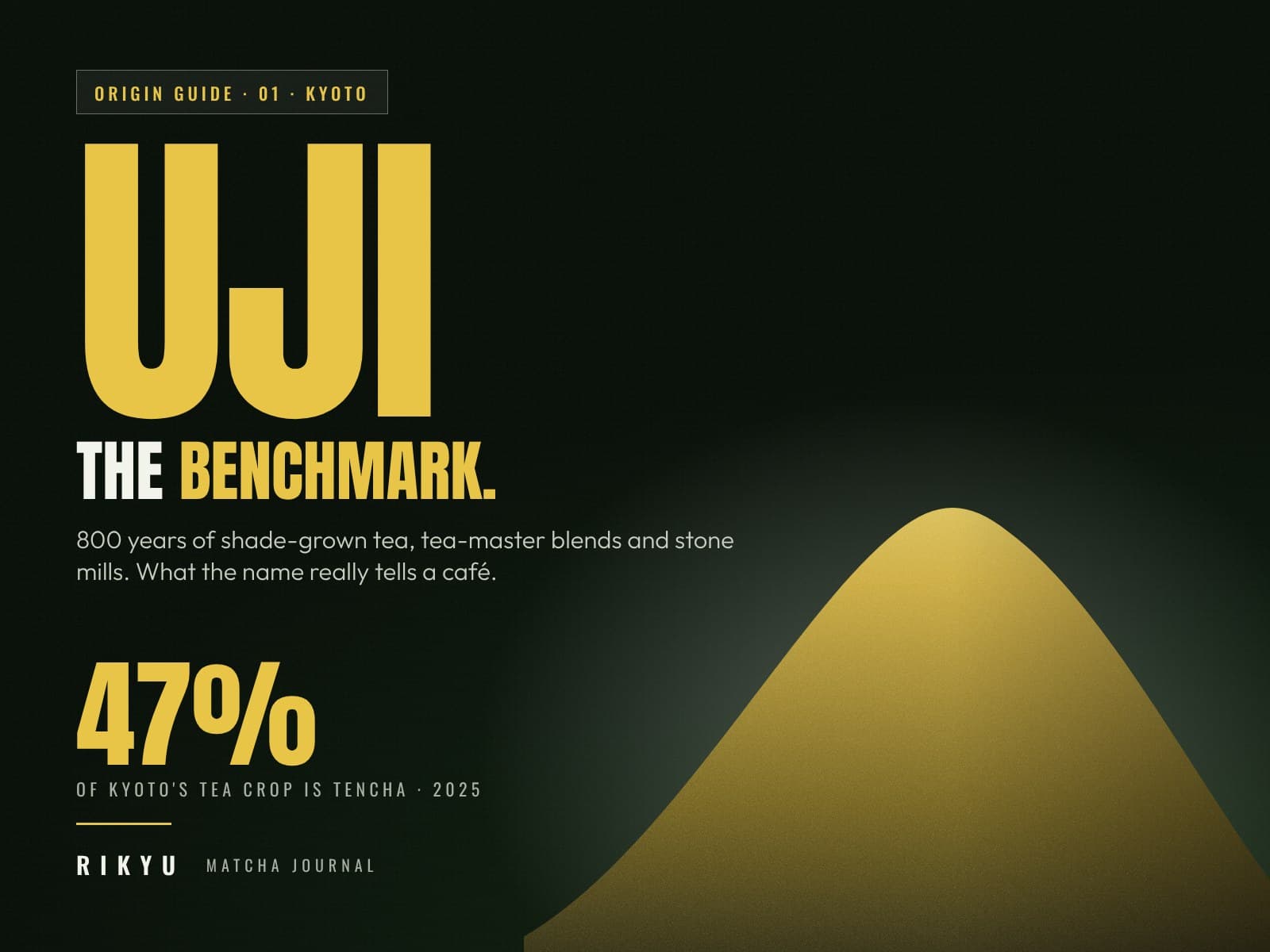
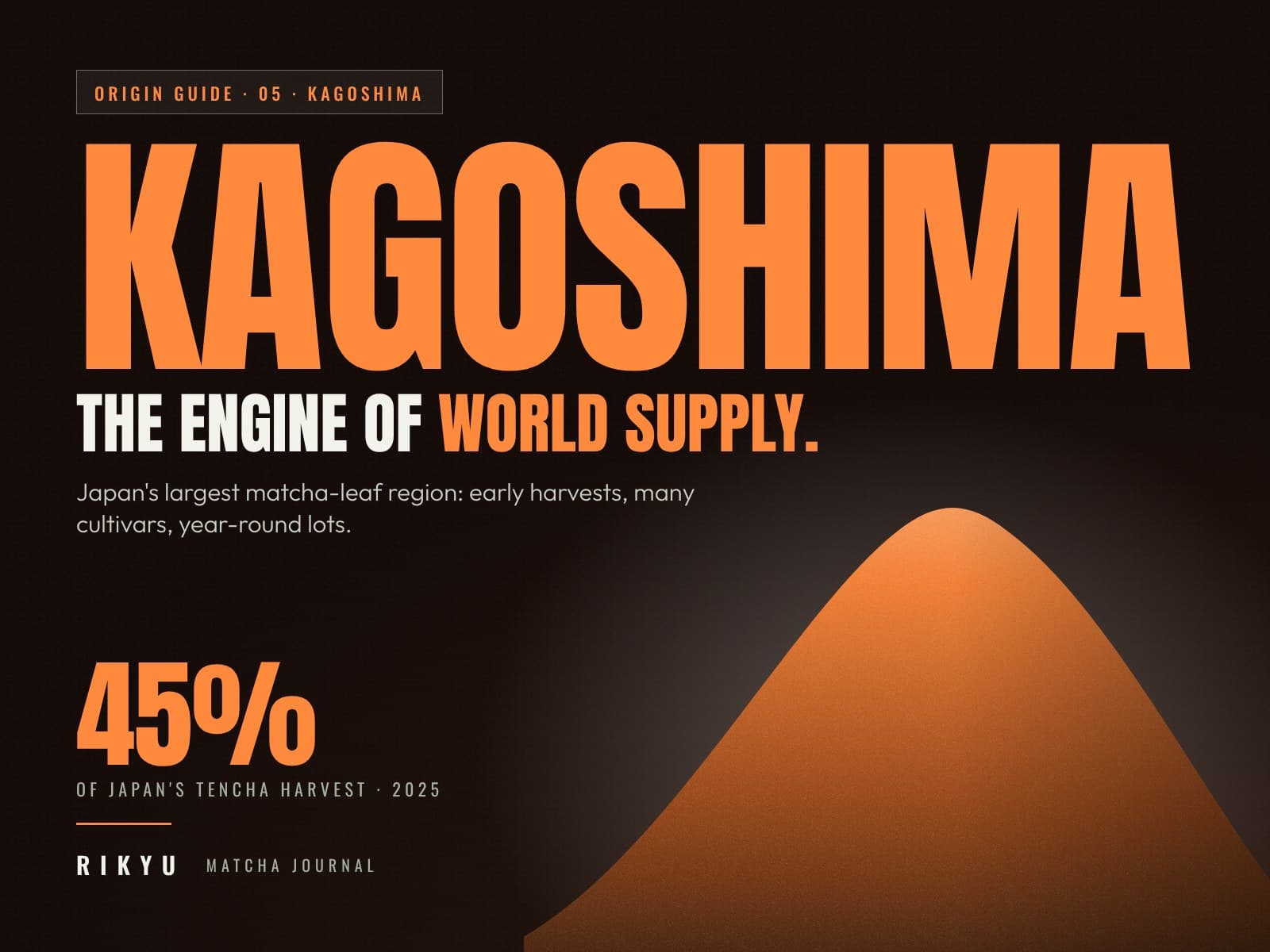
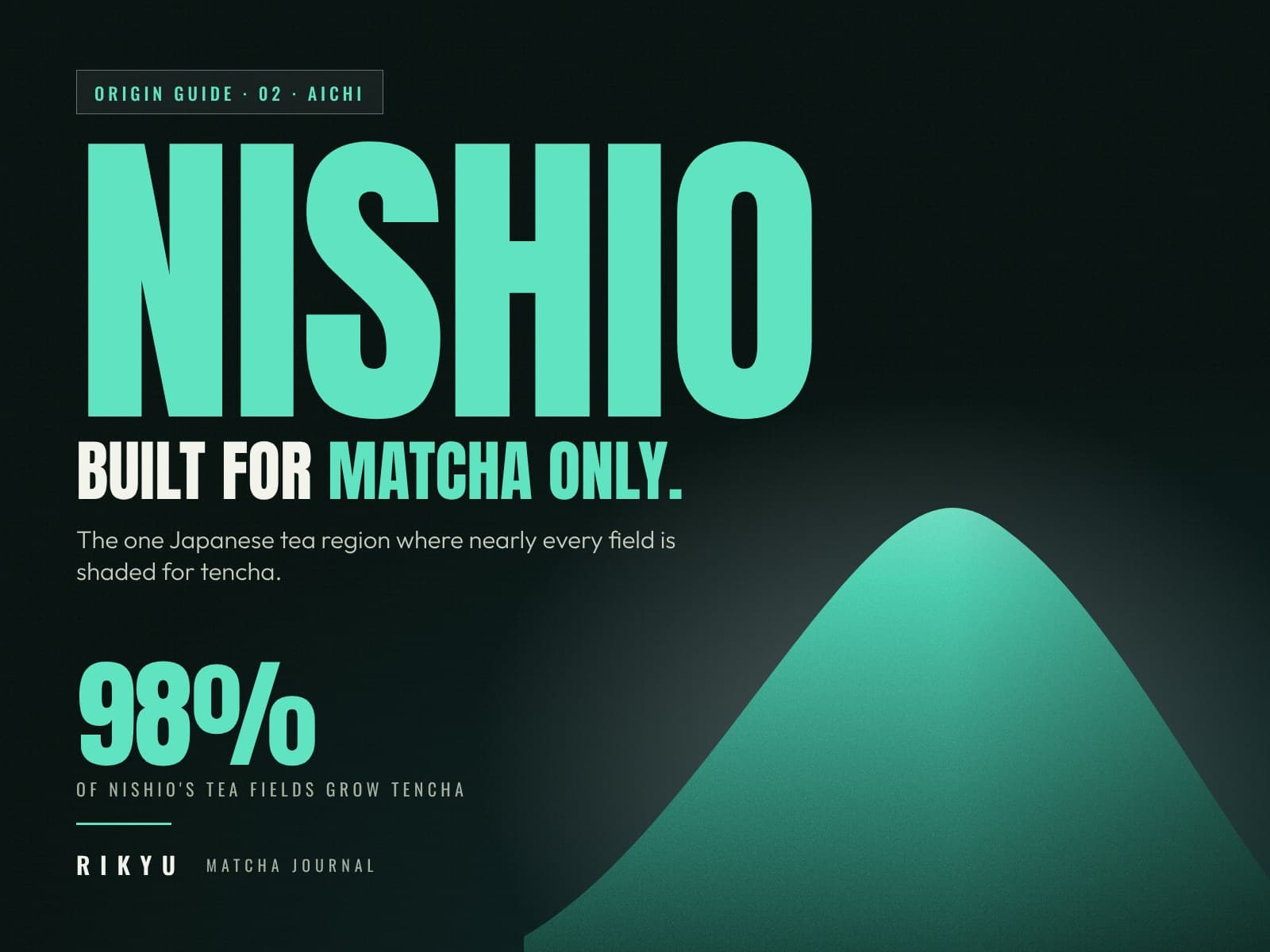
This is the fourth of five origin guides, after Uji, Nishio and Yame. Kagoshima follows, and a comparison table puts all five side by side.
How did a sencha region turn to matcha?
Tea reached Shizuoka in the Kamakura period, when the monk Shoichi Kokushi planted seeds from Song China at Ashikubo in Suruga. In the Meiji era the Makinohara plateau was cleared for tea and exports flowed out through the port of Shimizu, making Shizuoka Japan's biggest tea producer.
Tencha production roughly doubled between 2015 and 2016, but Shizuoka still trailed Kyoto and Aichi for years. The prefecture's official stance, “expand tencha while keeping sencha at the core,” reflected a real dilemma, and the switch happened more slowly than in Kagoshima. The turning point came from three directions at once: flat domestic demand for bottled tea, falling sencha prices, and a surge in overseas demand for matcha. In 2024 Shizuoka lost its first place in crude tea output to Kagoshima, and investment in tencha accelerated.
What is the Shizuoka terroir?
Shizuoka is large and varied. The Makinohara plateau is flat and farmed at scale; Kawane, Tenryu and Honyama are mountain districts with fog; Fujieda and Kakegawa are rolling hills. “Shizuoka matcha” therefore means less than “Uji matcha” or “Nishio matcha” does, and it is better to think of it producer by producer.
The mountain districts produce highly aromatic tea thanks to fog and temperature swings, and the sencha tradition of “drawing out aroma” in the field and the factory has carried into matcha. Shading is mostly direct covering, with scaffold shading limited to a minority of growers, and shading periods tend to be shorter than in Uji or Nishio. That shows up as somewhat lighter color and umami, and in return the fresh green aroma survives.
Which cultivars does Shizuoka use?
Yabukita dominates. It is aromatic and versatile, but for tencha it trails the native Uji cultivars and the early Kyushu cultivars in deep umami and vivid green. That is why Shizuoka matcha is a matcha that competes on aroma. Growers are now planting tencha-oriented cultivars, especially Saemidori, Tsuyuhikari and Okumidori, and the newest lots show it.
How is Shizuoka matcha processed and milled?
Many Shizuoka factories make tencha with sencha steaming and drying lines that have been adapted or converted, rather than with the brick tencha kilns used in Uji and Nishio. The drying process is different, firing is light, and the leaf's green aroma comes forward instead of a roasted note.
Milling is mostly mechanical: ball mills, bead mills and jet mills rather than stone. Bead milling produces a fine particle and preserves color well, and it is far more productive than stone milling, which keeps prices down. Stone-milled versus machine-milled is a question of price and purpose, not of good versus bad: stone for straight premium matcha, bead mill for lattes and everyday use.
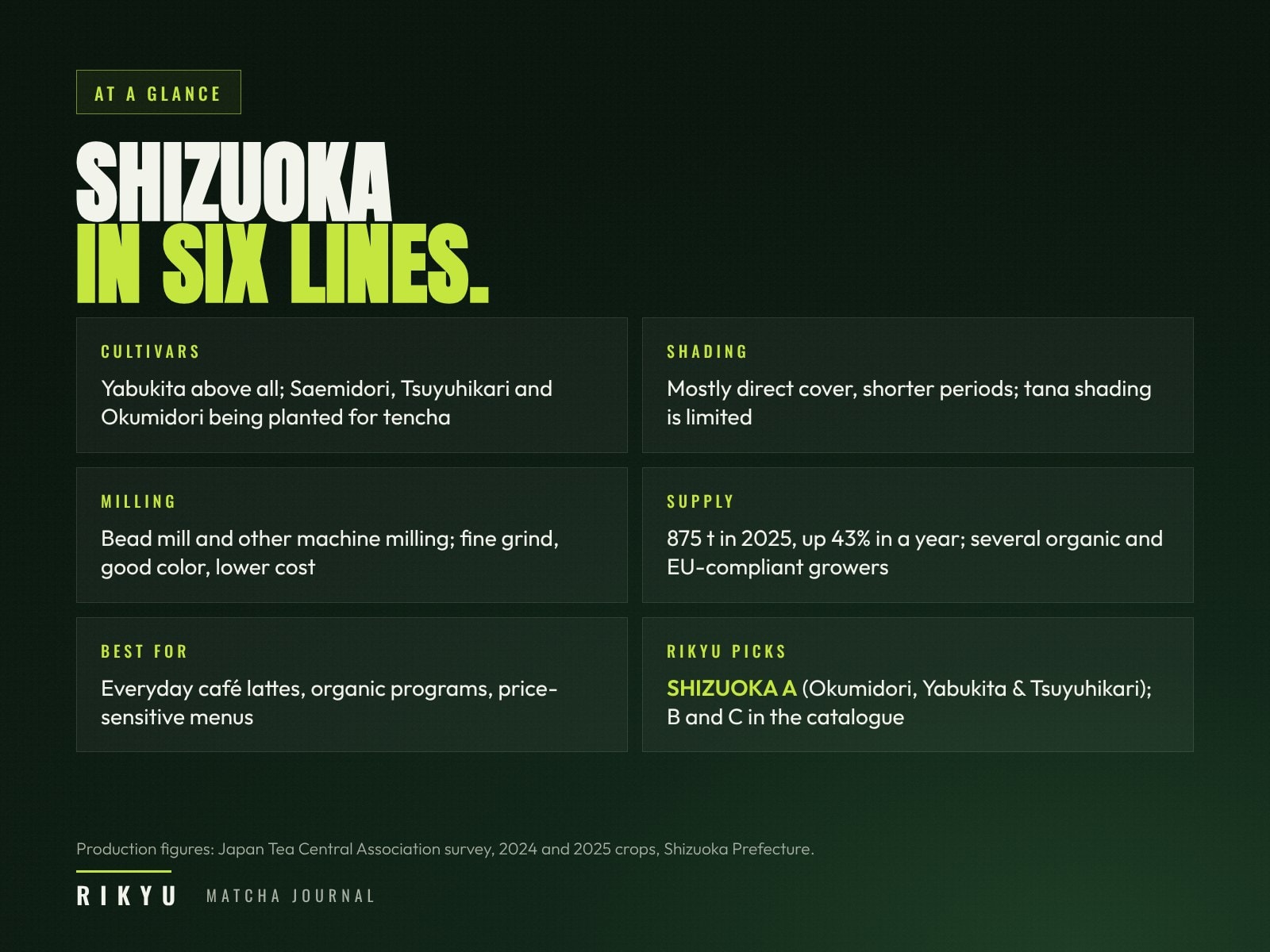
Card: Shizuoka matcha in six lines. Production figures are the 2024 and 2025 Shizuoka Prefecture tencha crops.
What does Shizuoka matcha taste like?
The most aromatic and the most vegetal of the five regions, with umami and sweetness in good balance: a matcha that carries the scent of sencha. The green aroma is strong enough to come through milk, so in a latte Shizuoka matcha reads clearly as matcha. Some producers run a little bitter, so it is worth selecting lots separately for straight drinking and for lattes.
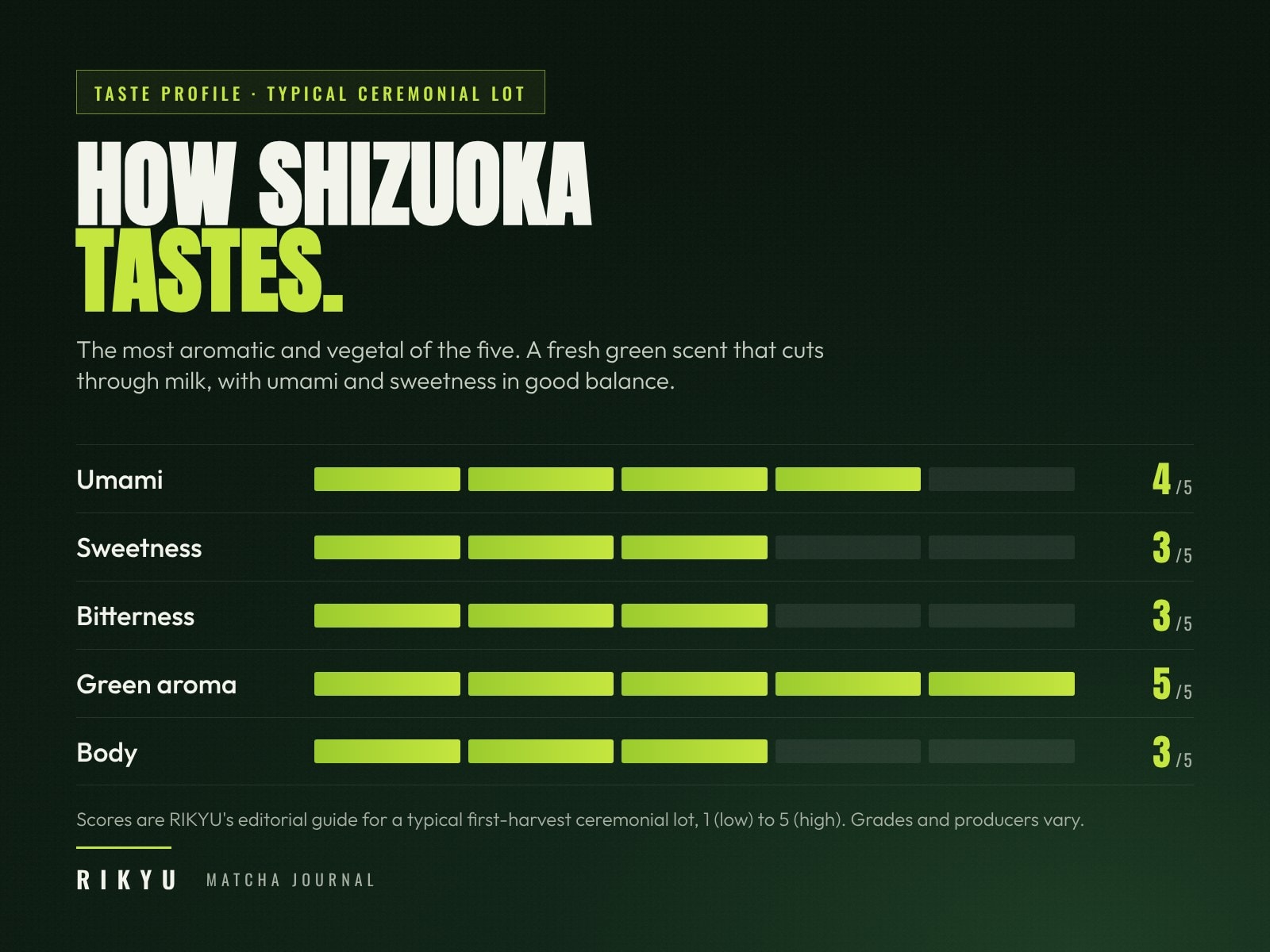
Chart: RIKYU's editorial taste profile for a typical first-harvest Shizuoka ceremonial lot. Individual products vary.
How does Shizuoka fit an overseas café?
Several Shizuoka growers hold organic JAS certification and produce lots that meet EU pesticide limits, which puts Shizuoka alongside Kagoshima as a candidate for a stable EU- and US-bound supply line. Prices are competitive, so Shizuoka is easy to propose as the core grade for a café's everyday lattes. Because growers differ so much, their differences can become your product range: an aroma-forward lot, an organic balanced lot, a slightly bitter lot for sweet drinks.
Overseas tea drinkers already know “Shizuoka” as a sencha name, so the easiest framing is “the aromatic matcha from Japan's great sencha region.” As always, MRL compliance is a property of the lot, not the prefecture, so ask for residue results per lot.
Related: Matcha vs. Green Tea · Why US Cafés Are Asking for Price Lists in 2026
Which RIKYU products come from Shizuoka?
SHIZUOKA A is our balanced Shizuoka matcha, a first-harvest, machine-milled blend of Okumidori, Yabukita and Tsuyuhikari that is not too strong and not too light, the default choice for lattes and sweets and part of our Signature Six. SHIZUOKA B (organic, balanced) and SHIZUOKA C (slightly more bitter, for sweetened drinks) are in the catalogue; A and B are the ones we usually recommend for EU buyers.
Buy from the region that fits your menu
Rikyu Matcha is based in Tokyo and sources matcha directly from producers in Uji, Nishio, Yame, Shizuoka and Kagoshima. Every lot comes with a spec sheet, and we can provide a certificate of origin, a certificate of analysis (COA) and pesticide residue test results on request. If you are deciding between regions for a latte program, a straight-matcha menu or a private label, write to us with your volumes and how you will use it. We answer in English, from Tokyo, and we answer fast.
FAQ
Is Shizuoka known for matcha?
Historically for sencha, but tencha output rose 43% between 2024 and 2025 to 875 tons, making Shizuoka Japan's third-largest matcha-leaf region and its fastest growing.
What does Shizuoka matcha taste like?
Aromatic and green, with balanced umami and sweetness and sometimes a touch more bitterness. The aroma comes through milk well, which makes it a strong latte matcha.
Is Shizuoka matcha stone-ground?
Mostly not. Bead mills and other machine mills are standard, which keeps particle size fine, color good and prices lower. Stone-milled lots exist but are the minority.
Is Shizuoka matcha organic?
Several producers are organic JAS certified and some lots meet EU limits. Certification and residue results are specific to each lot, so ask for documents for the one you buy.
Shizuoka or Kagoshima for everyday lattes?
Both work. Shizuoka leads on aroma and price; Kagoshima leads on umami, color and year-round volume. Many cafés carry one of each.
Sources
Japan Tea Central Association, tencha production by prefecture, 2024 and 2025 crops (via Aichi Prefecture, Japanese)
BCN, crude tea production ranking for the 2024 crop with Kagoshima in first place (Japanese)
Shizuoka Prefecture, tea industry policy on tencha expansion (Japanese)
Regional brand information design study on the shift in tencha production share (Japanese)
Historical and horticultural details reflect standard Japanese tea-industry references; we recommend confirming specific claims with your Shizuoka supplier before reuse.