Kagoshima Matcha: Japan's Largest Matcha Region, Explained
24 October, 2026
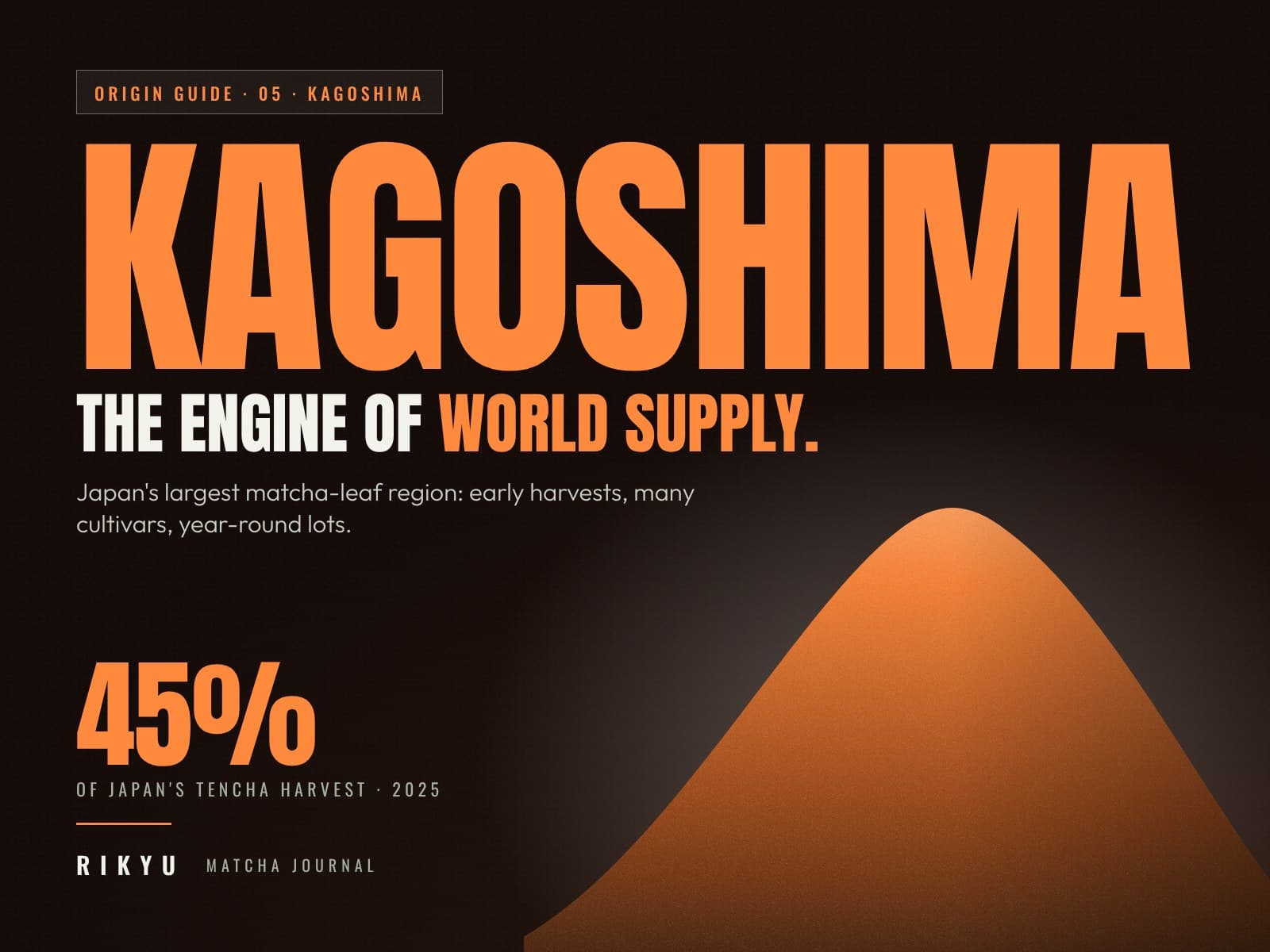
In 2024 Kagoshima overtook Shizuoka to become Japan's largest tea producer for the first time, and in tencha, the leaf for matcha, it grew 2,670 tons in 2025, about 45% of the national harvest. A large share of the Japanese matcha sold overseas starts in Kagoshima. It is the region that supplies the world's matcha in the shadow of the Uji brand. This guide explains how it got so big, what its matcha tastes like, why it is the easiest region to buy organic and EU-compliant lots from, and how to talk about it to customers.
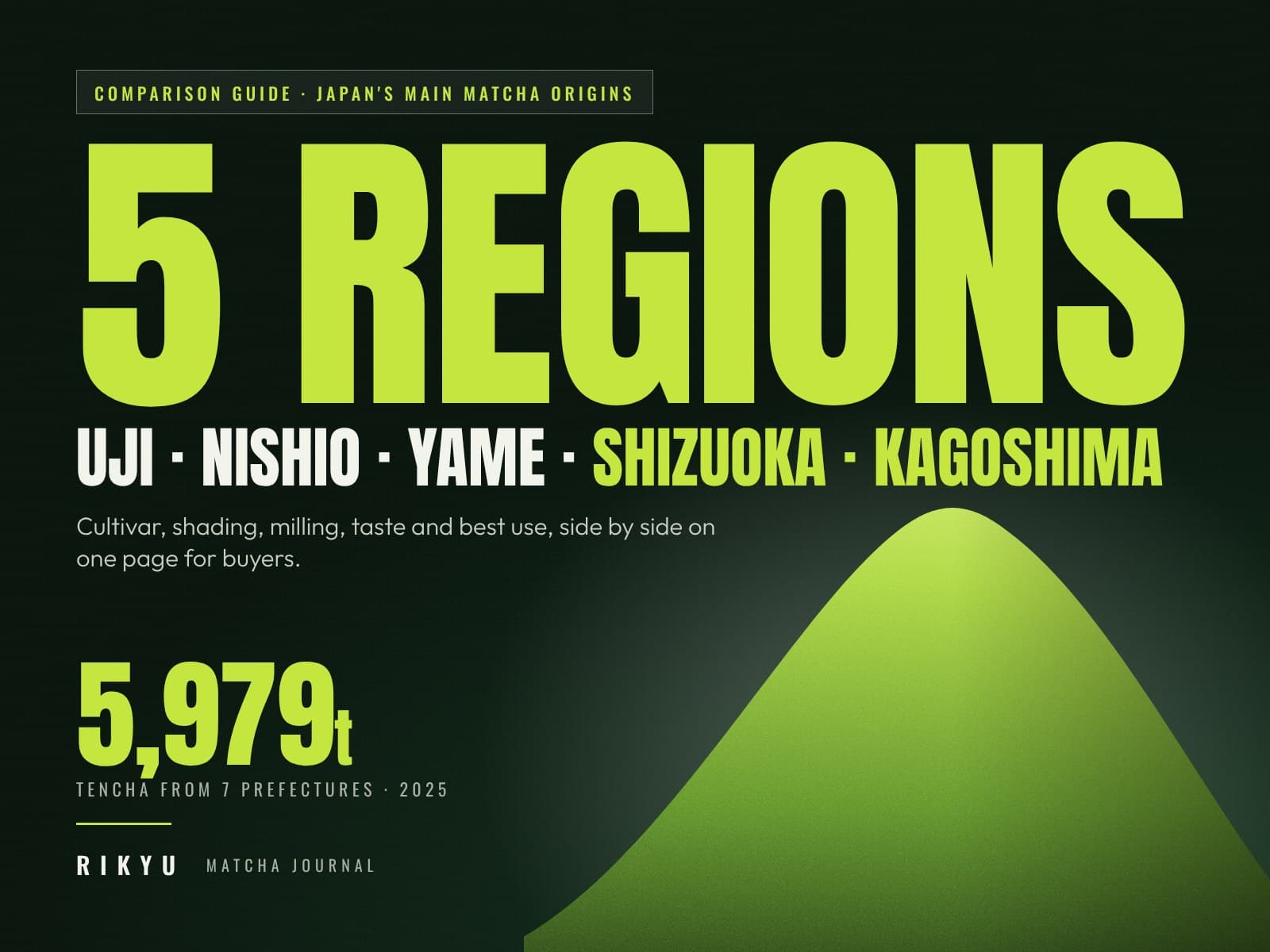
This is the last of five origin guides, after Uji, Nishio, Yame and Shizuoka. A comparison table puts all five side by side.
How did Kagoshima become Japan's biggest matcha region?
Tea has been grown in Kagoshima since the Edo period, but the region's rise came after the war. In the 1960s and 1970s large, flat plateaus in Chiran, Ei, Minami-Kyushu, Kirishima, Shibushi and Osumi were cleared and planted with tea gardens designed from the start for machines. For decades Kagoshima was seen as a sencha and blending-leaf region. In the 2010s it turned to tencha in earnest. In 2012 Kyoto and Aichi together grew nearly 80% of Japan's tencha; by 2020, after the Kagoshima and Shizuoka conversions, that share had fallen to around 40%.
Exports tell the same story. Japan's green tea exports roughly doubled from about ¥16.2 billion in 2020 to ¥36.4 billion in 2024, and around 60% of that is matcha and other powdered tea. Kagoshima's own green tea exports were expected to reach a record in 2025, and the prefecture lists tea as a priority export product.
What is the Kagoshima terroir?
A warm climate gives Kagoshima the earliest first flush in Japan. First-harvest picking starts in early April (the “hashiri shincha”), two to three weeks before Uji. Growers pick three or four times a year, and the second and autumn-winter harvests are of relatively high quality too.
The soil is volcanic: the Shirasu plateaus and black volcanic topsoil drain well and suit large, flat gardens. Because Sakurajima volcano is active, growers manage shading and leaf washing carefully to deal with ash. Direct covering is the norm, applied and removed by machine across whole estates, with scaffold shading reserved for some premium lines. A growing number of producers extend the shading period to secure deeper umami and color.
Related: Visiting a Kagoshima Tea Producer
Which cultivars does Kagoshima grow?
Kagoshima has the widest range of cultivars in Japan. The early-maturing Yutakamidori (rich body, deep color, the region's signature) and Saemidori (vivid green and sweetness, the most promising tencha cultivar), Asatsuyu (so rich in umami it is nicknamed “natural gyokuro”), the late Okumidori (beautiful color), plus Asanoka, Sayamakaori and others. Staggering cultivars with different maturity dates spreads out the harvest, keeps the factories running evenly, and is the real source of Kagoshima's stable supply and competitive pricing. It also makes single-cultivar tencha easy to produce.
Related: Single Estate vs. Single Origin vs. Single Cultivar · Harvest Timing in Uji
How is Kagoshima matcha processed and milled?
Large tencha factories and large lot sizes. Kagoshima is the only one of the five regions with the capacity to supply the same cultivar at the same specification continuously through the year. Firing is light in most factories, so instead of Uji's roasted note the leaf's own umami and deep green come forward. Stone-milled premium lines exist, but volume lines are machine-milled. Tencha can also be supplied unground, which makes local milling possible in countries with high tariffs on finished matcha.
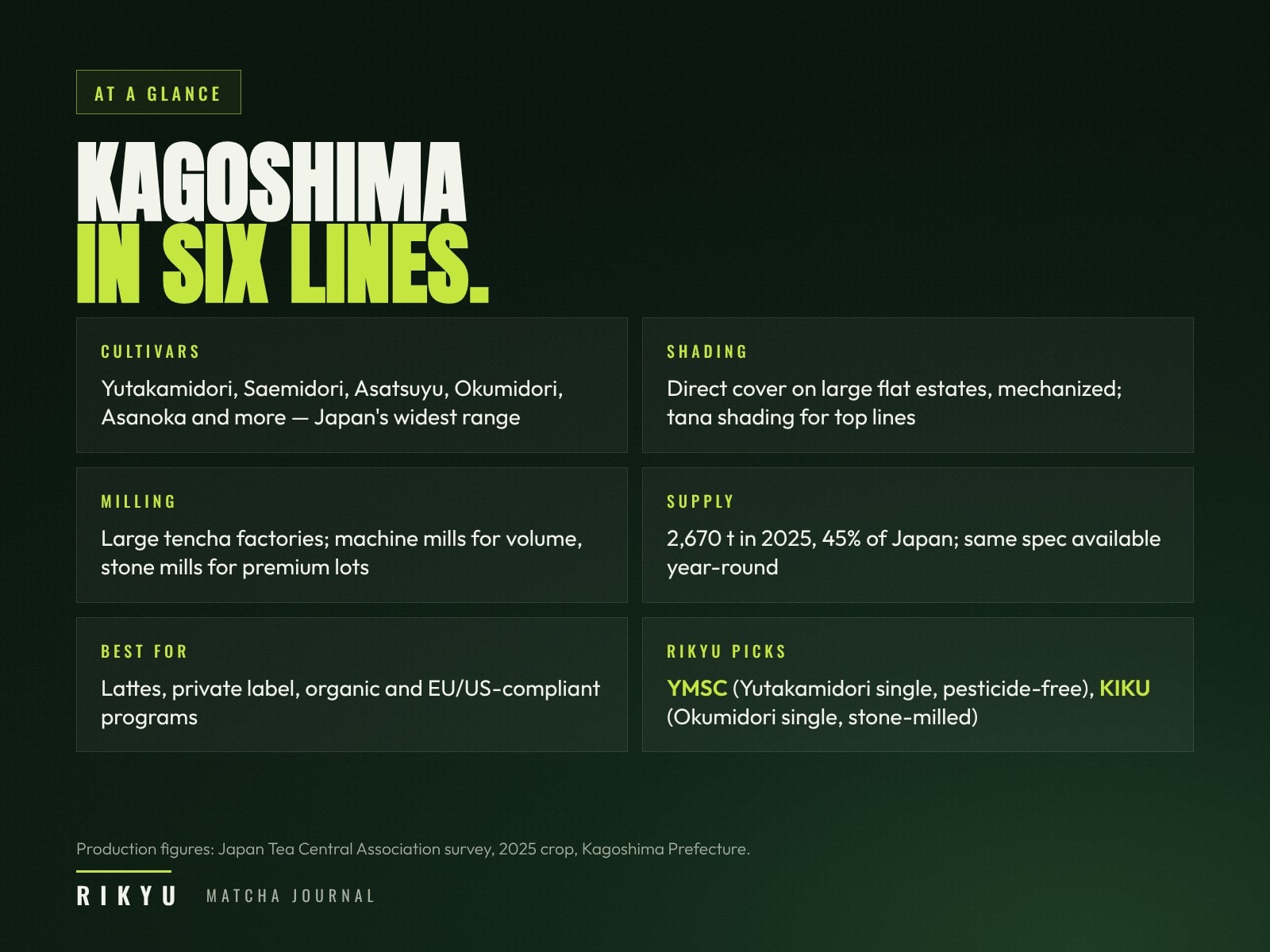
Card: Kagoshima matcha in six lines. Production figure is the 2025 Kagoshima Prefecture tencha crop.
Why is Kagoshima the easiest region for organic and EU-compliant matcha?
Large estates with systematic management make certification practical. Kagoshima has many gardens certified organic under JAS, USDA and EU rules, and some producers can supply lots in which every item on the EU maximum residue level (MRL) list tests as not detected. Today, matcha that meets EU and US compliance from the outset comes mainly from Kagoshima and parts of Shizuoka. One caution that applies to every region: MRL compliance is determined lot by lot, not by prefecture, so ask for the residue test results for your lot.
What does Kagoshima matcha taste like?
Very strong umami, deep green color and a pleasant, moderate bitterness. The balance of sweetness, umami and bitterness is good, and the flavor does not disappear in milk, which is why it is the region we find easiest to recommend to overseas cafés as “the latte matcha.” Drunk straight, it is more direct than Uji and the finish is shorter. It suits usucha, lattes and confectionery; for koicha, choose the premium lines.
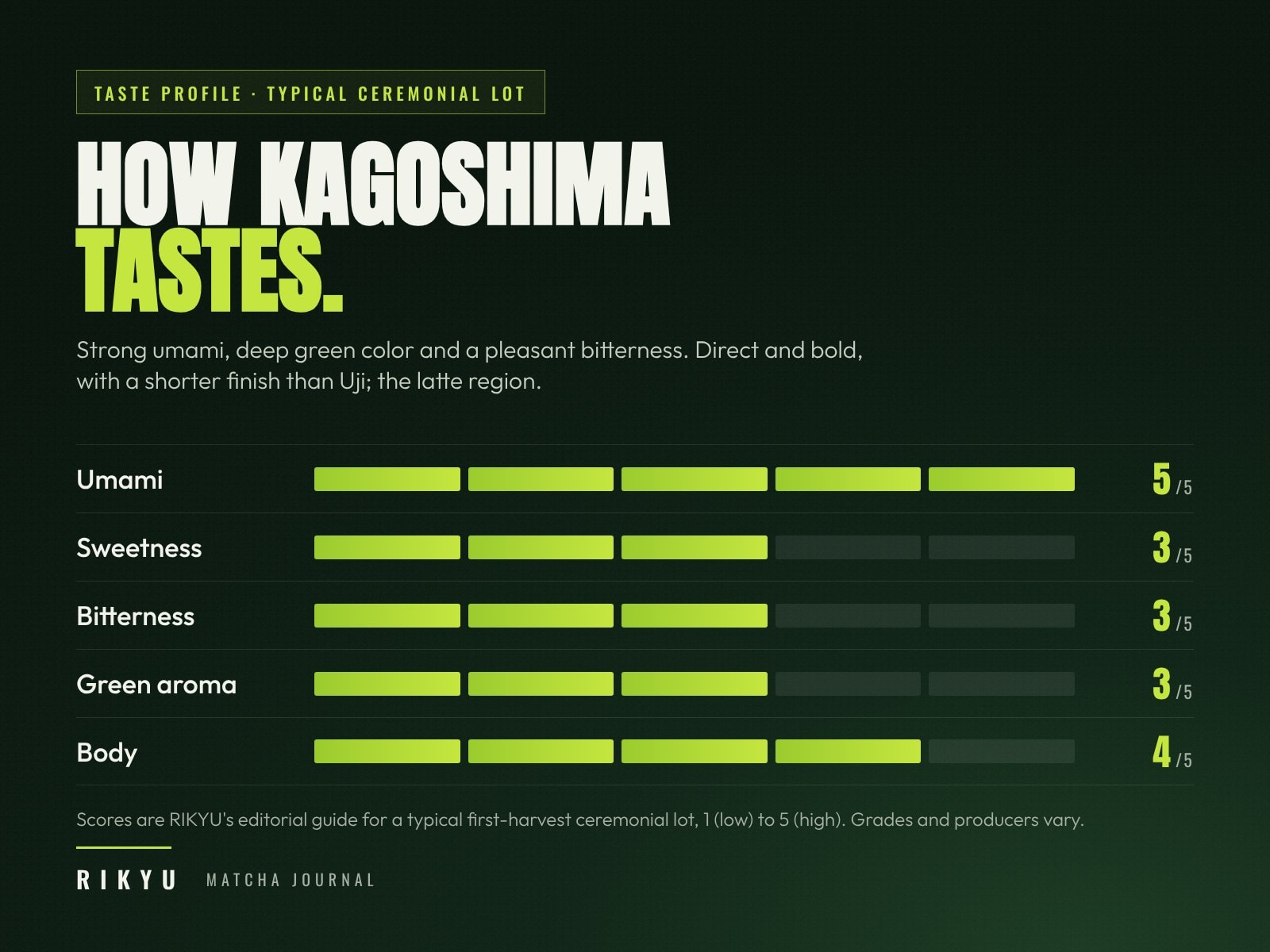
Chart: RIKYU's editorial taste profile for a typical first-harvest Kagoshima ceremonial lot. Individual products vary.
How does Kagoshima fit an overseas café?
Kagoshima is the region that satisfies four requirements at once: stable supply, the same quality all year, sensible pricing, and organic or MRL-compliant options. That makes it the backbone of an overseas B2B matcha program, and it offers ceremonial grades at approachable prices. Because “Kagoshima” has less name recognition abroad than Uji, build the story on facts: Japan's largest matcha-leaf region, Sakurajima and volcanic soil, the earliest first harvest in Japan, and single-cultivar lots. We use the name Kagoshima, never “Satsuma,” across our site.
Related: Japanese Matcha vs. Chinese Matcha · Your Own Matcha Brand, From Just 100 Cans
Which RIKYU products come from Kagoshima?
YMSC is a single-cultivar Yutakamidori from pesticide-free farming: bright green, clean and refreshing, first harvest, machine-milled, and the base of our private-label program. KIKU is the second Kagoshima cultivar in our Signature Six, a stone-milled single-cultivar Okumidori from the same region and grade, with early harvests and a clean cup. Together they let a café offer two single-cultivar matchas from one region at a steady price.
Buy from the region that fits your menu
Rikyu Matcha is based in Tokyo and sources matcha directly from producers in Uji, Nishio, Yame, Shizuoka and Kagoshima. Every lot comes with a spec sheet, and we can provide a certificate of origin, a certificate of analysis (COA) and pesticide residue test results on request. If you are deciding between regions for a latte program, a straight-matcha menu or a private label, write to us with your volumes and how you will use it. We answer in English, from Tokyo, and we answer fast.
FAQ
Is Kagoshima matcha good?
Yes. Kagoshima matcha has strong umami, deep color and moderate bitterness, and it keeps its flavor in milk. Premium stone-milled lines exist alongside the volume grades.
How much of Japan's matcha comes from Kagoshima?
Kagoshima grew 2,670 tons of tencha in 2025, about 45% of the national harvest, making it Japan's largest matcha-leaf region.
Is Kagoshima matcha organic?
Many Kagoshima gardens hold JAS, USDA or EU organic certification, and some lots test not-detected across the EU MRL list. Certification and residue results are lot-specific, so ask for documents for the lot you buy.
Why is Kagoshima matcha cheaper than Uji?
Large, mechanized estates, direct covering, several harvests a year, staggered cultivars that keep factories running evenly, and mostly machine milling. The result is the same specification available all year at a steady price.
Kagoshima or Uji for my café?
Many cafés use both: Kagoshima for lattes and daily volume, Uji for a flagship straight matcha. Choose by use rather than by rank.
Sources
Japan Tea Central Association, tencha production by prefecture, 2024 and 2025 crops (via Aichi Prefecture, Japanese)
Nagasaki Customs, special report on Kagoshima green tea exports (October 2025, Japanese)
BCN, crude tea production ranking for the 2024 crop with Kagoshima in first place (Japanese)
Kagoshima Prefecture, the state of Kagoshima's tea industry (2026, Japanese)
Regional brand information design study on the shift in tencha production share (Japanese)
Historical and horticultural details reflect standard Japanese tea-industry references; we recommend confirming specific claims with your Kagoshima supplier before reuse.