Yame Matcha: Sweetness from Japan's Gyokuro Country
24 October, 2026
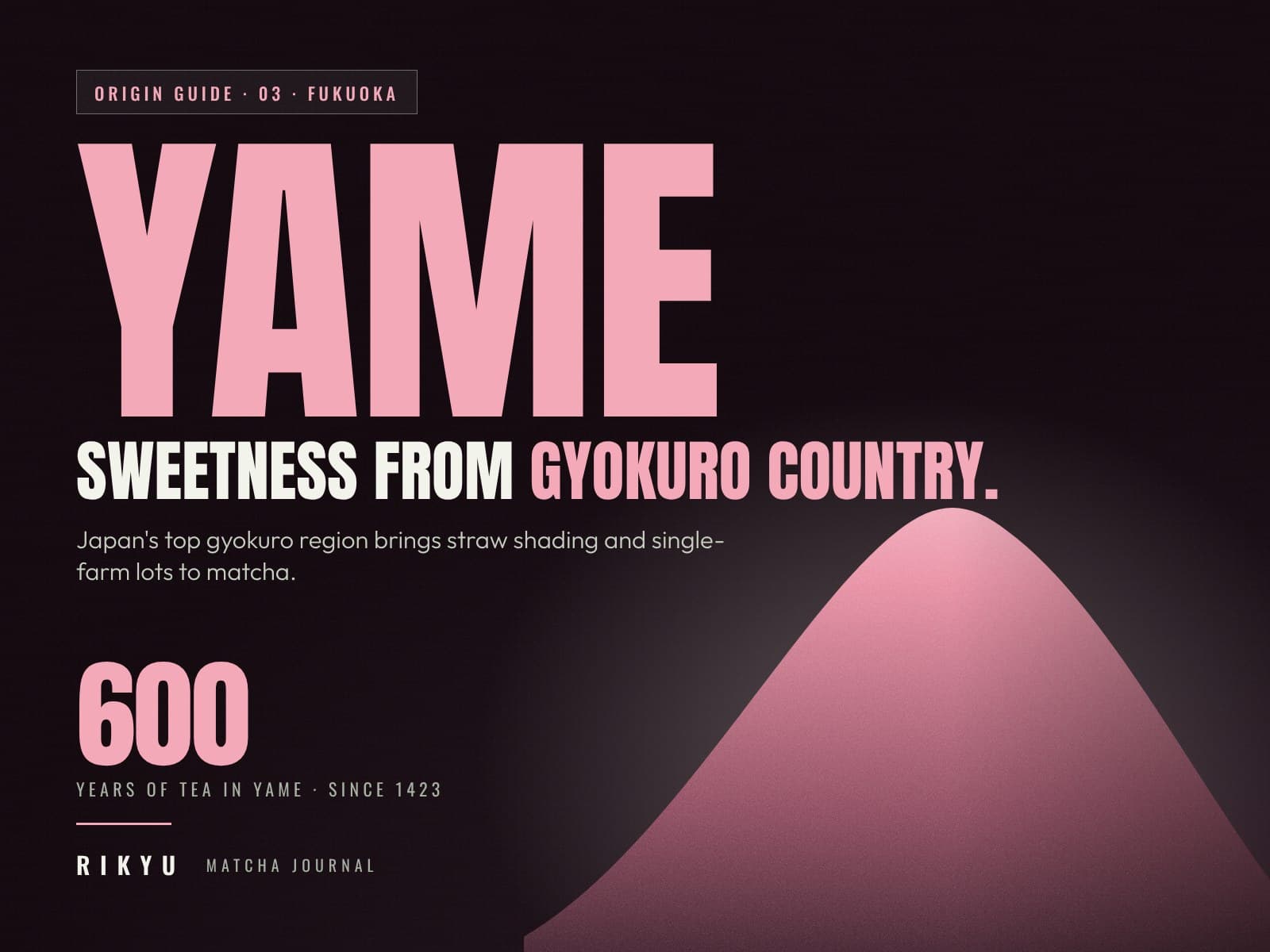
Yame, in the hills of southern Fukuoka on the island of Kyushu, is Japan's leading gyokuro region. Gyokuro is a shaded, whole-leaf tea, and the shading skills Yame developed for it over generations are now being applied to tencha for matcha. The result is a matcha with a distinct personality: sweet, soft and low in bitterness. Supply is small, but for the right café it is a memorable product. This guide covers Yame's history, terroir, cultivars, taste and the best way to use it.
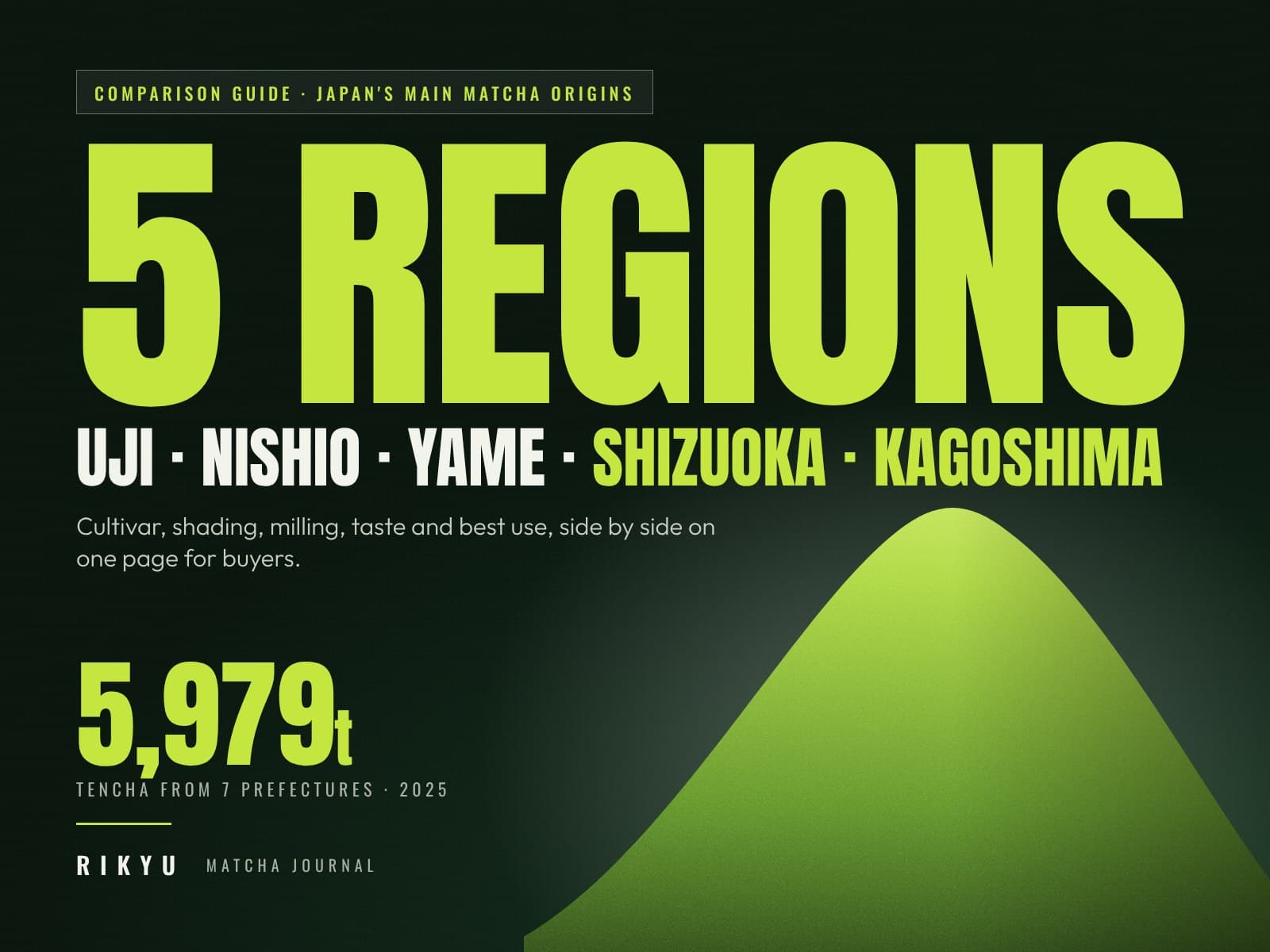
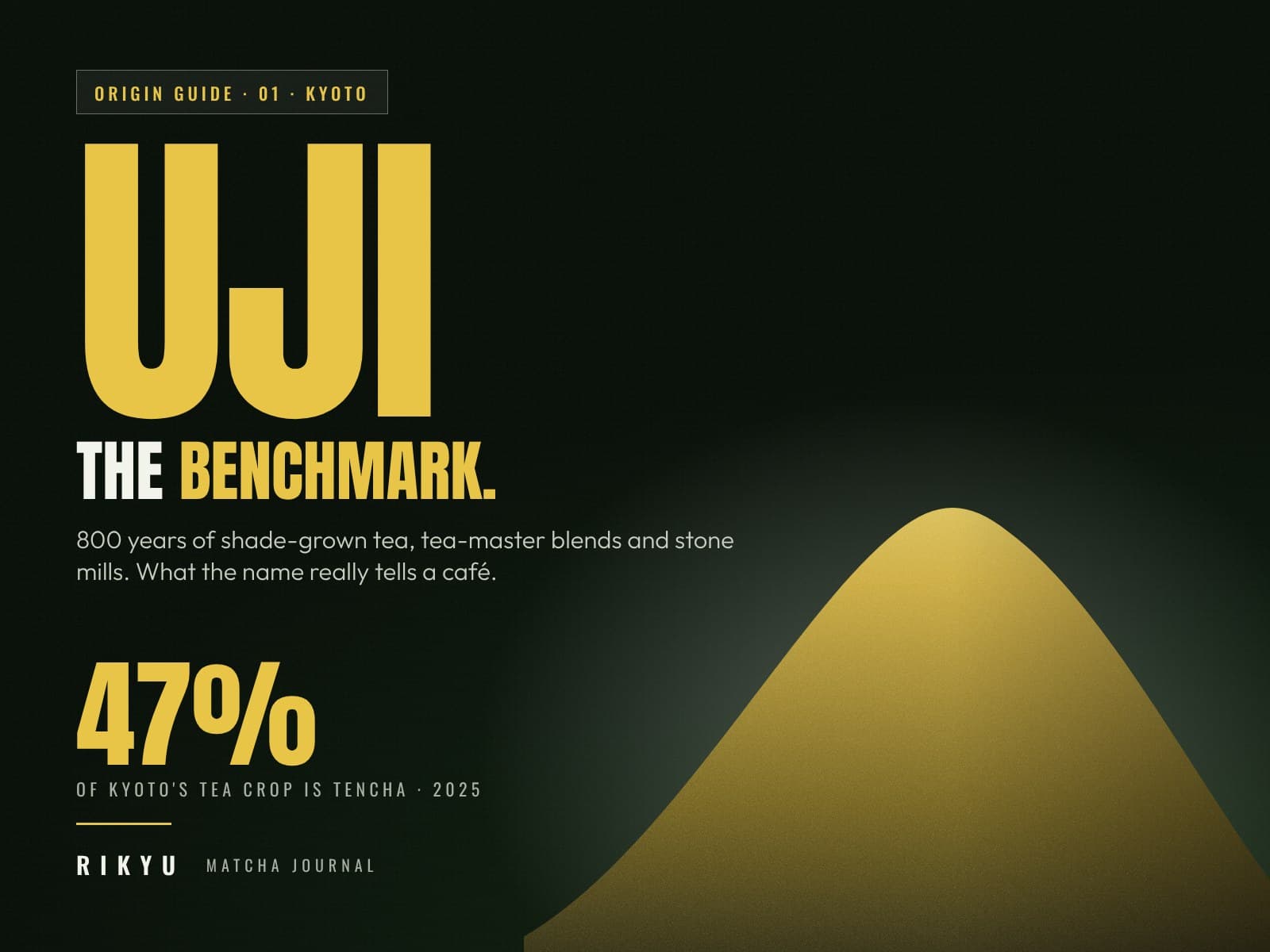
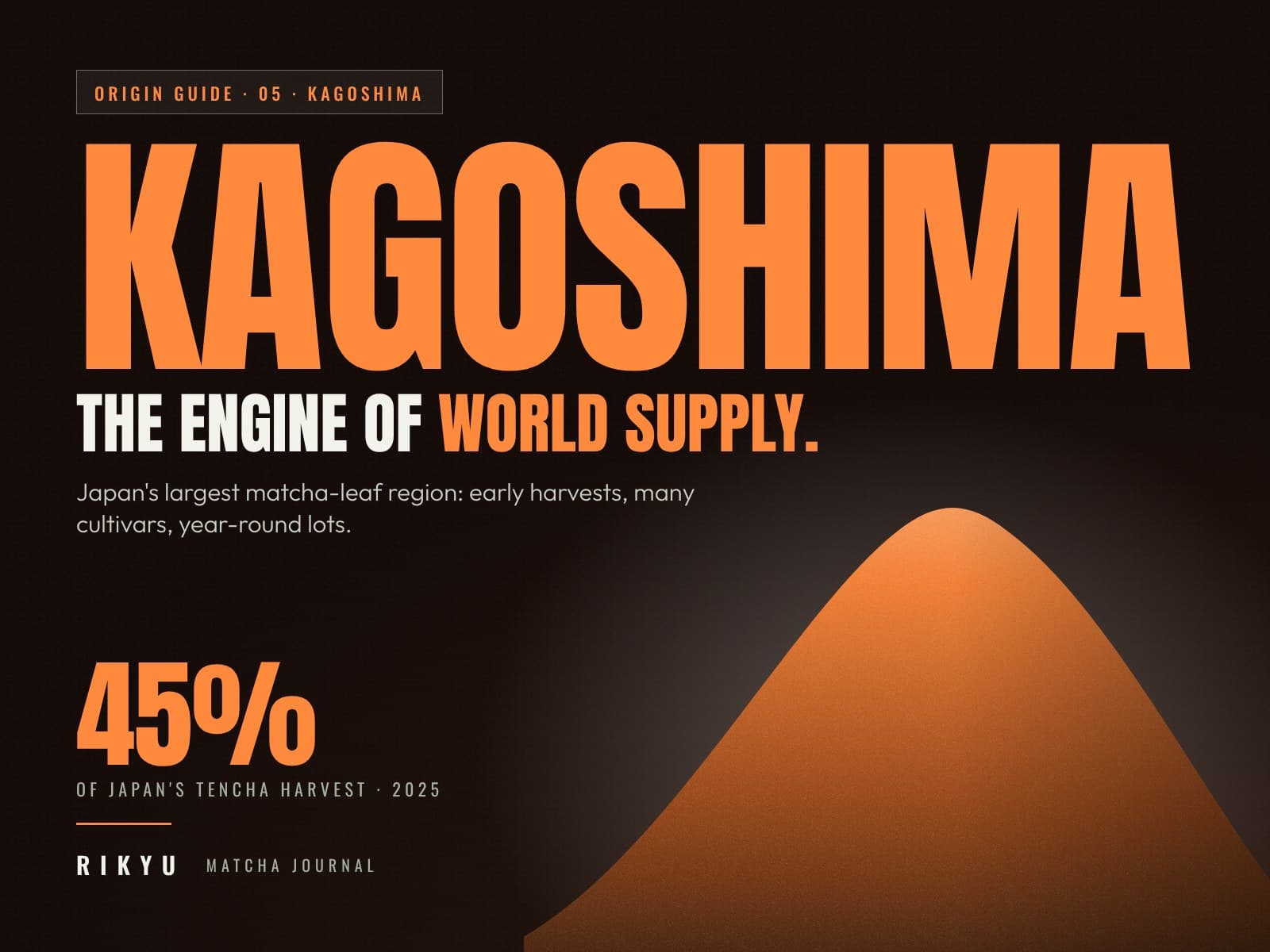
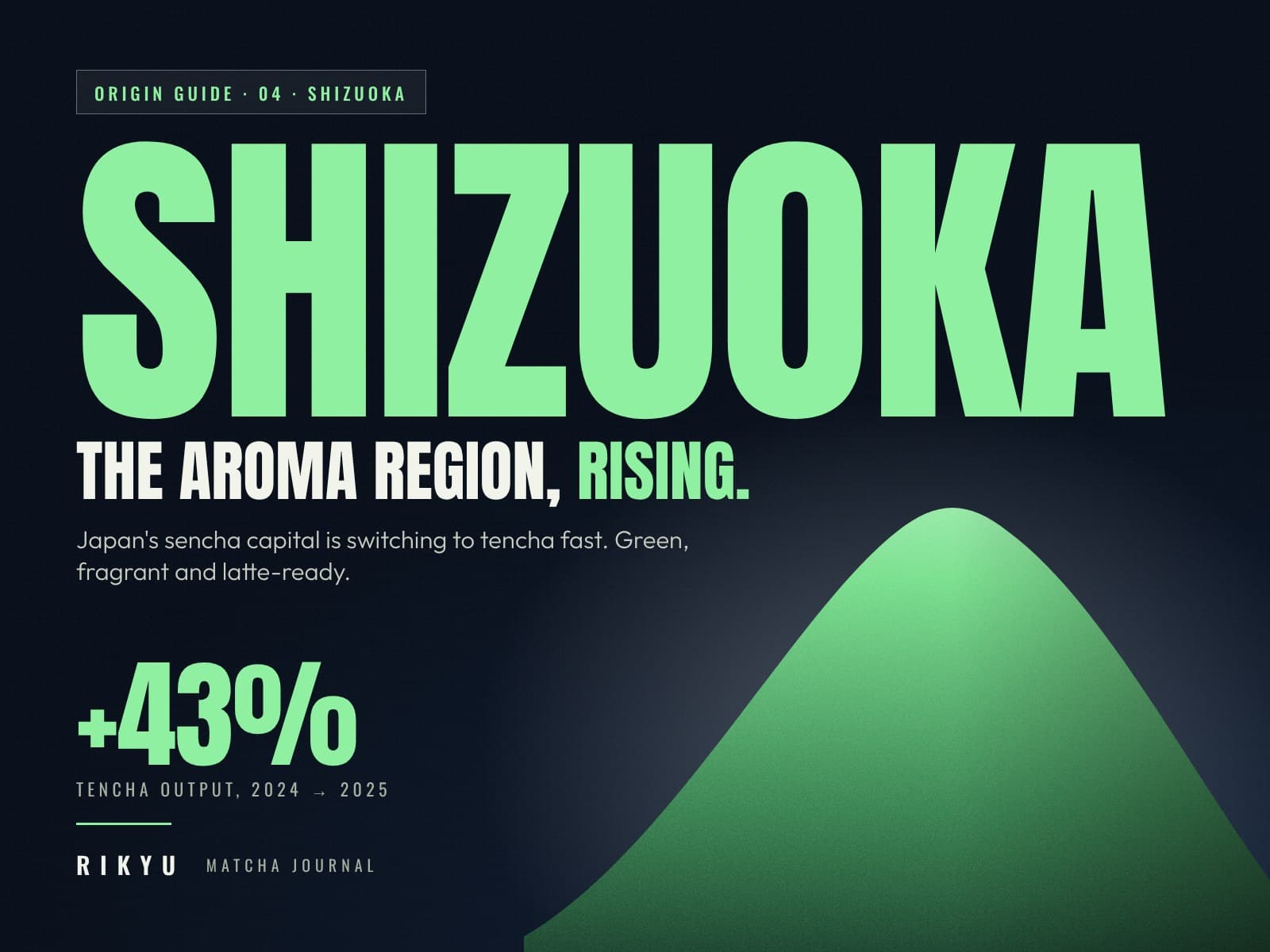
This is the third of five origin guides, after Uji and Nishio. Shizuoka and Kagoshima follow, and a comparison table puts all five side by side.
What is Yame's tea history?
Tea in Yame dates to 1423, when the Zen monk Eirin Shuzui returned from Ming China and planted seeds at Reiganji temple in what is now Kurogi, Yame City, teaching the local people how to process the leaf. That gives the region 600 years of tea growing.
Yame grew into Japan's premier gyokuro region and has taken the production-area award in the gyokuro division of the national tea competition for decades in a row. In 2015 “Yame Dentou Hon Gyokuro” (Yame Traditional Authentic Gyokuro) was registered as a Geographical Indication. The GI requires natural, unpruned bushes, scaffold shading with rice straw, and hand-picking. For Yame's growers, shading is not a technique learned for matcha; it is the technique they already had.
What is the Yame terroir?
The gardens sit on the eastern edge of the Chikugo Plain, in the upper reaches of the Yabe and Hoshino rivers. The mountain districts of Hoshino, Kurogi and Joyo see dense fog morning and evening and a wide swing between day and night temperatures. Fog softens strong sunlight and keeps the leaf tender. Rainfall is relatively high and the soil is water-retaining volcanic earth, conditions that keep umami compounds in the leaf and let sweetness come through.
The gyokuro culture also shapes how Yame shades its tencha. Rice-straw scaffold shading is still practiced, alongside synthetic cloth on scaffolds and some direct covering. Even where cloth is used, the instinct in Yame is to “cover carefully on a scaffold” rather than drape.
Related: Tencha, Gyokuro and Kabusecha: Three Shaded Teas
Which cultivars does Yame use for matcha?
Yabukita leads, with the Kyushu favorites Saemidori and Okumidori alongside. Yabukita-led Yame matcha is aromatic and a little lighter in character than Kagoshima's early-cultivar matcha. Because fields are small and often farmed by a single family, single-farm and single-cultivar tencha is comparatively easy to find here.
How is Yame matcha processed and milled?
Stone milling is the norm for Yame matcha. Firing in the tencha kiln is lighter than in Uji, so instead of the roasted hika note, Yame matcha keeps more of the leaf's own sweet aroma.
The structure of the region, many small gardens and no strong blending tradition, means Yame matcha shows vintage and field differences from year to year. For an overseas café that wants to tell a “single estate” or “single cultivar” story, Yame is one of the two regions where that story can be told truthfully (the other is Kagoshima).
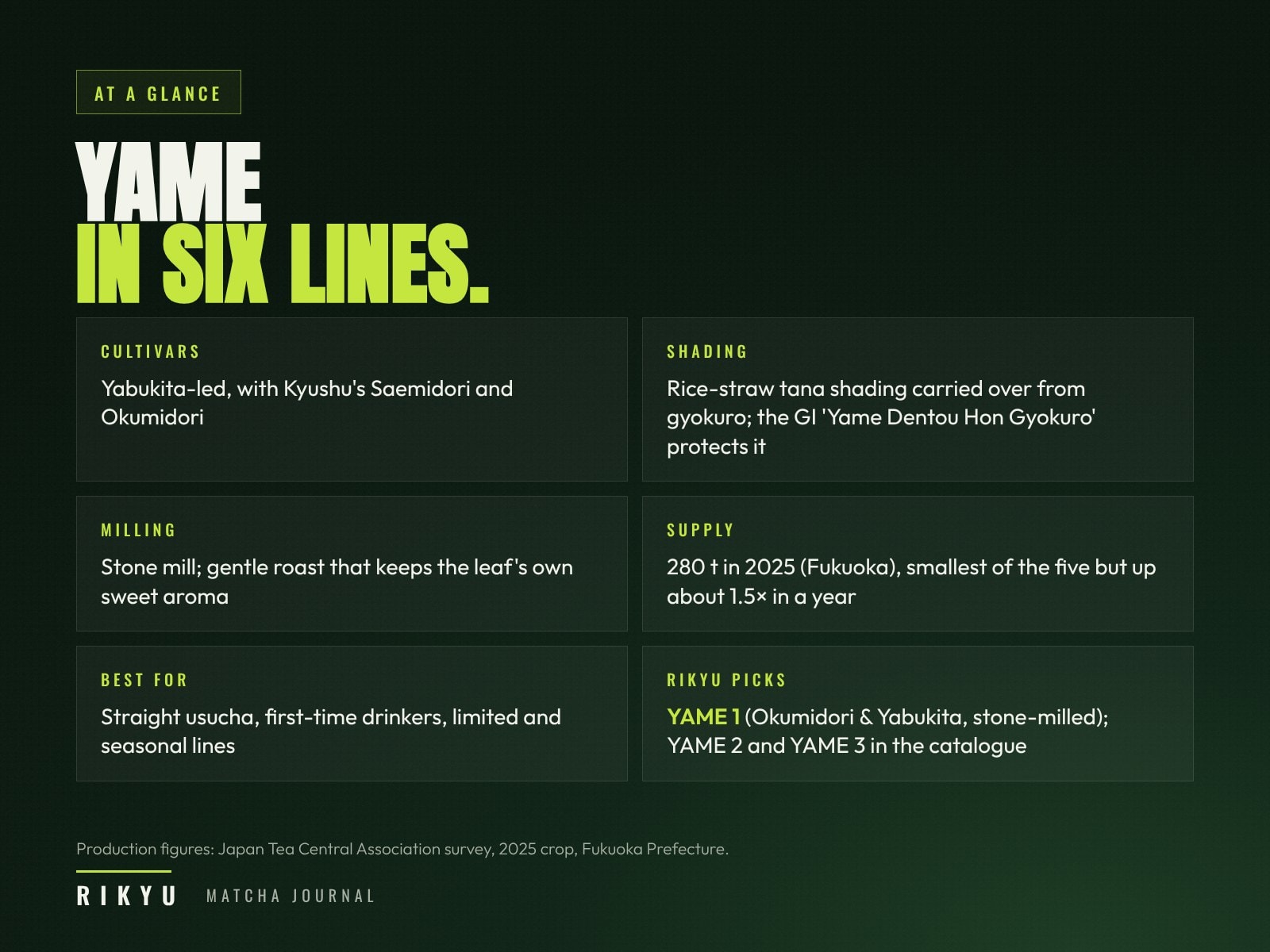
Card: Yame matcha in six lines. Production figure is the 2025 Fukuoka Prefecture tencha crop.
Related: Single Estate vs. Single Origin vs. Single Cultivar
What does Yame matcha taste like?
Sweetness leads. Umami is soft rather than heavy, and bitterness and astringency are low. It is the matcha we reach for when someone says they have never liked matcha, and the one that shows best as a straight usucha with nothing added. Where Uji builds its structure on umami and roast, Yame builds its impression on sweetness and smoothness.
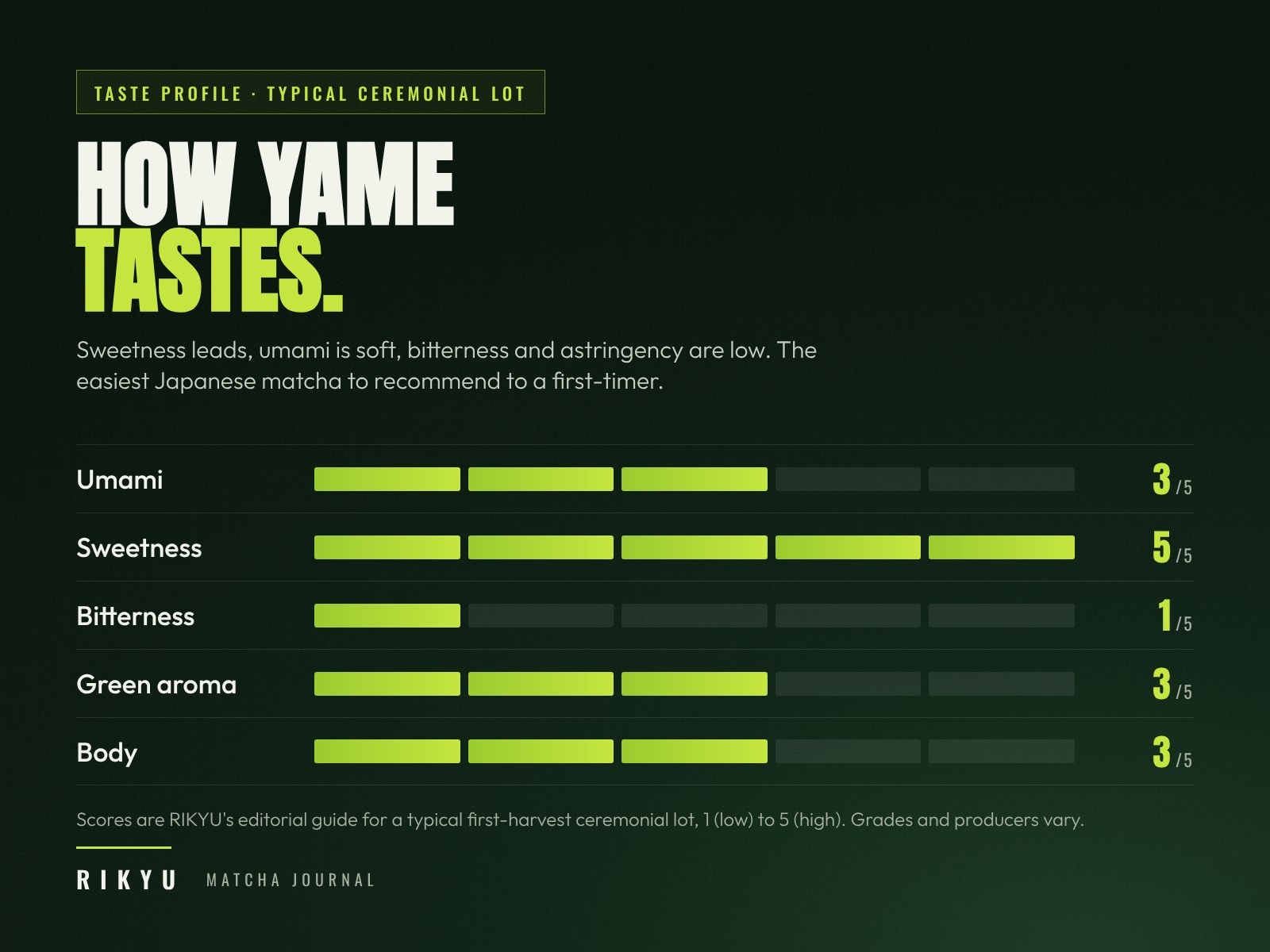
Chart: RIKYU's editorial taste profile for a typical first-harvest Yame ceremonial lot. Individual products vary.
How does Yame fit an overseas café?
“Japan's No. 1 gyokuro region” is a line that travels well, and explaining that gyokuro and matcha come from the same shading skill tells a customer why Yame matters. Fukuoka's tencha crop was 280 tons in 2025, the smallest of the five main regions, though it grew by about 1.5 times from 192 tons in 2024. Demand for its quality is running ahead of supply.
That makes Yame a limited-lot, seasonal or premium line rather than the backbone of a high-volume menu. It pairs naturally with a steadier region for daily lattes. As with every region, EU pesticide (MRL) compliance is decided lot by lot and must be checked per farm; do not assume it from the name.
Which RIKYU products come from Yame?
YAME 1 is a stone-milled, first-harvest blend of Okumidori and Yabukita with gyokuro-style shading, concentrated umami and a notably smooth finish; it is the Yame product in our Signature Six. YAME 2 (balanced) and YAME 3 (single cultivar, umami-forward) are in the catalogue for cafés that want to tell a single-cultivar story.
Buy from the region that fits your menu
Rikyu Matcha is based in Tokyo and sources matcha directly from producers in Uji, Nishio, Yame, Shizuoka and Kagoshima. Every lot comes with a spec sheet, and we can provide a certificate of origin, a certificate of analysis (COA) and pesticide residue test results on request. If you are deciding between regions for a latte program, a straight-matcha menu or a private label, write to us with your volumes and how you will use it. We answer in English, from Tokyo, and we answer fast.
FAQ
Is Yame known for matcha or gyokuro?
Historically gyokuro. Yame has led the gyokuro division of Japan's national tea competition for decades. Its tencha for matcha uses the same shading skills and is growing quickly, from 192 tons in 2024 to 280 tons in 2025.
What does Yame matcha taste like?
Sweet, smooth and low in bitterness, with soft umami. It is especially good as straight usucha and for people new to matcha.
Can I get single-cultivar matcha from Yame?
Yes. Small family gardens and a weak blending tradition make single-farm and single-cultivar lots relatively common. RIKYU's YAME 3 is one example.
Is Yame matcha good for lattes?
It works, but its gentle profile is easily covered by milk. Most cafés use Yame for straight matcha and a bolder region such as Kagoshima for lattes.
Is Yame matcha available year-round?
Volumes are small, so availability varies by lot. Treat it as a limited or seasonal line unless your supplier confirms otherwise.
Sources
Japan Tea Central Association, tencha production by prefecture, 2024 and 2025 crops (via Aichi Prefecture, Japanese)
MAFF Geographical Indication register, Yame Dentou Hon Gyokuro (2015, Japanese)
Fukuoka Prefecture and Yame City, history of Yame tea (Japanese)
National Tea Competition results, gyokuro division (Japanese)
Historical and horticultural details reflect standard Japanese tea-industry references; we recommend confirming specific claims with your Yame supplier before reuse.