Tencha (the leaf that becomes matcha), gyokuro and kabusecha are all shade-grown teas from Uji. Only two things separate them: the length of shading (20 days or more for tencha and gyokuro, around 14 days for kabusecha) and one processing decision — whether the steamed leaves are kneaded. Tencha is the only one that is never kneaded, and that is why only tencha can become matcha.
"I saw a product called gyokuro powder. How is it different from matcha?" A very good question, because the two teas grow under almost identical conditions. Part five of Learning Ujicha explains where they part ways.
What Does Shade-Growing Actually Do?
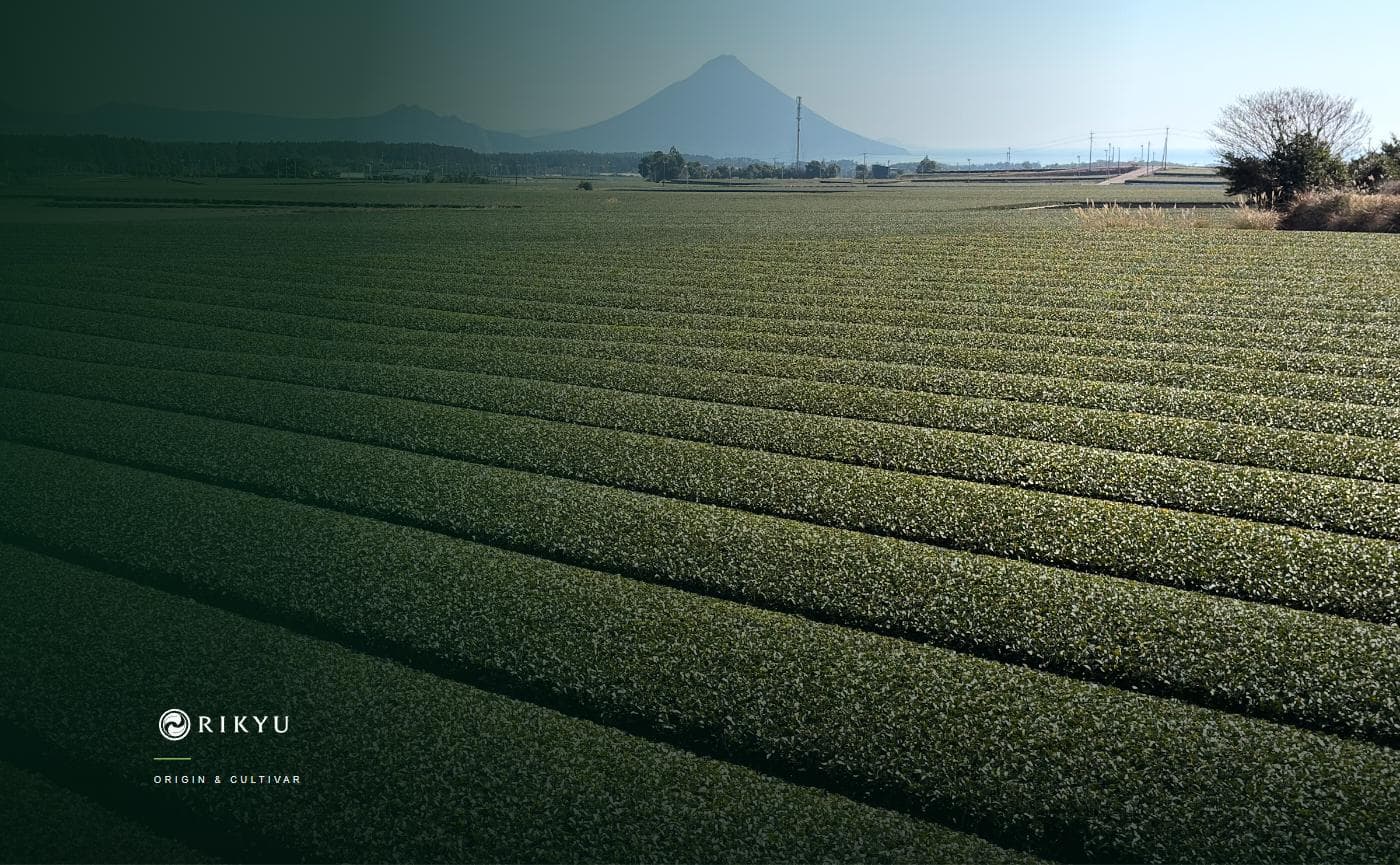
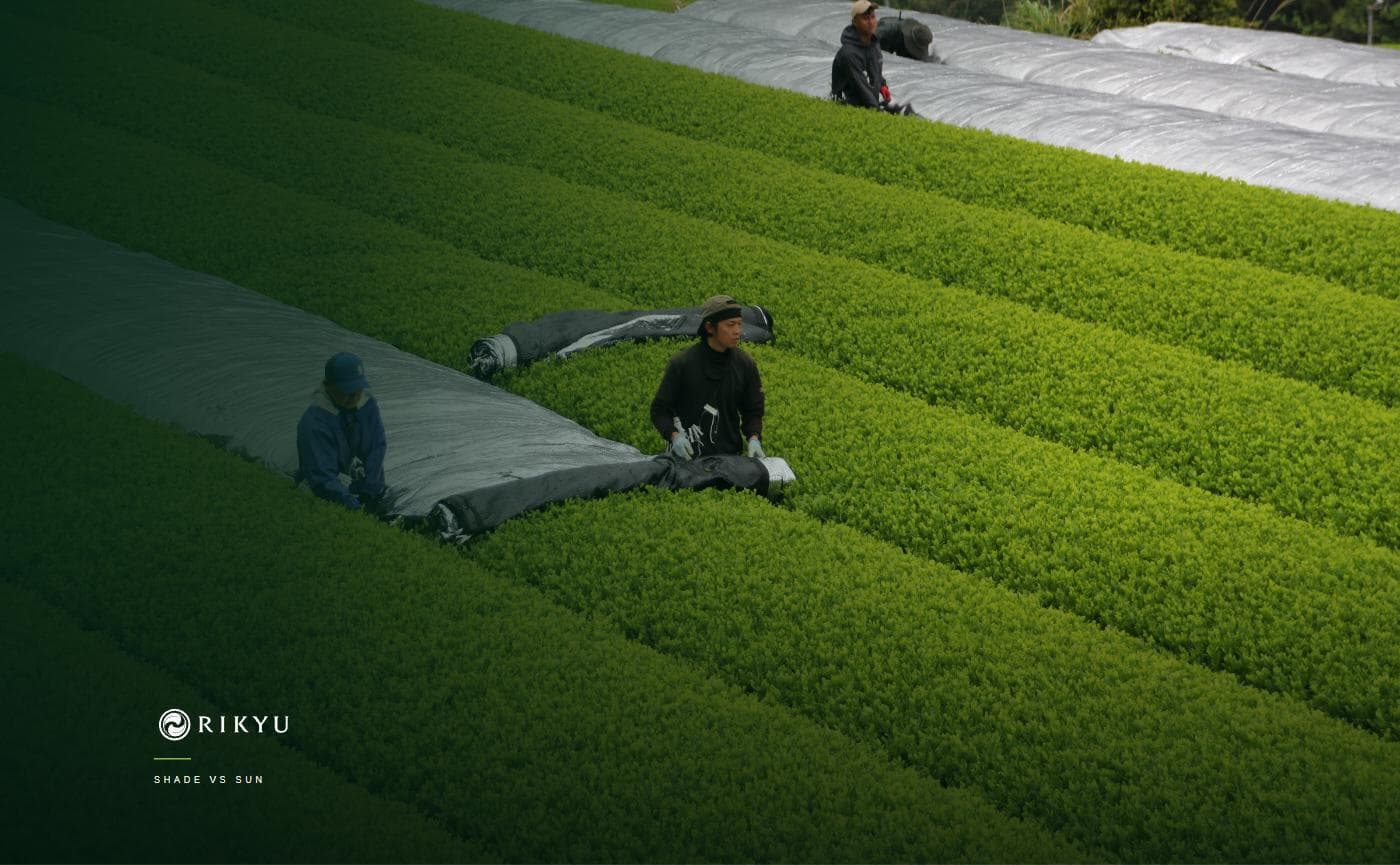
In April, as the new buds begin to appear, the entire garden is covered with reed screens, straw or synthetic cloth to block direct sunlight. In the leaf, sunlight converts the umami amino acid theanine into astringent catechins; blocking the light suppresses that conversion, so the tea stays low in astringency and rich in umami. Starved of light, the leaves also produce more chlorophyll and grow thinner, softer and a deeper green.
Uji preserves two ways of doing this. Honzu is the traditional method: a shelf of logs and bamboo is built over the garden, reed screens are spread across it, and straw is layered on top. The modern method uses steel frames and black synthetic cloth, usually in two layers for ventilation so the garden does not overheat. The goal in both cases is the same — a cool, humid, dim environment around the young buds.
Where Do the Three Teas Diverge?
Tencha (→ matcha) — shaded 20+ days; steamed, then dried without kneading; flat leaf fragments, stone-ground to powder; drunk whole. Umami, sweetness and color delivered as a powder.
Gyokuro — shaded 20+ days; steamed, then kneaded into fine needles; steeped slowly at low temperature. The pinnacle of umami, mellow and round.
Kabusecha — shaded around 14 days; steamed and kneaded; steeped between sencha and gyokuro temperatures. Sencha's freshness plus gyokuro's umami.
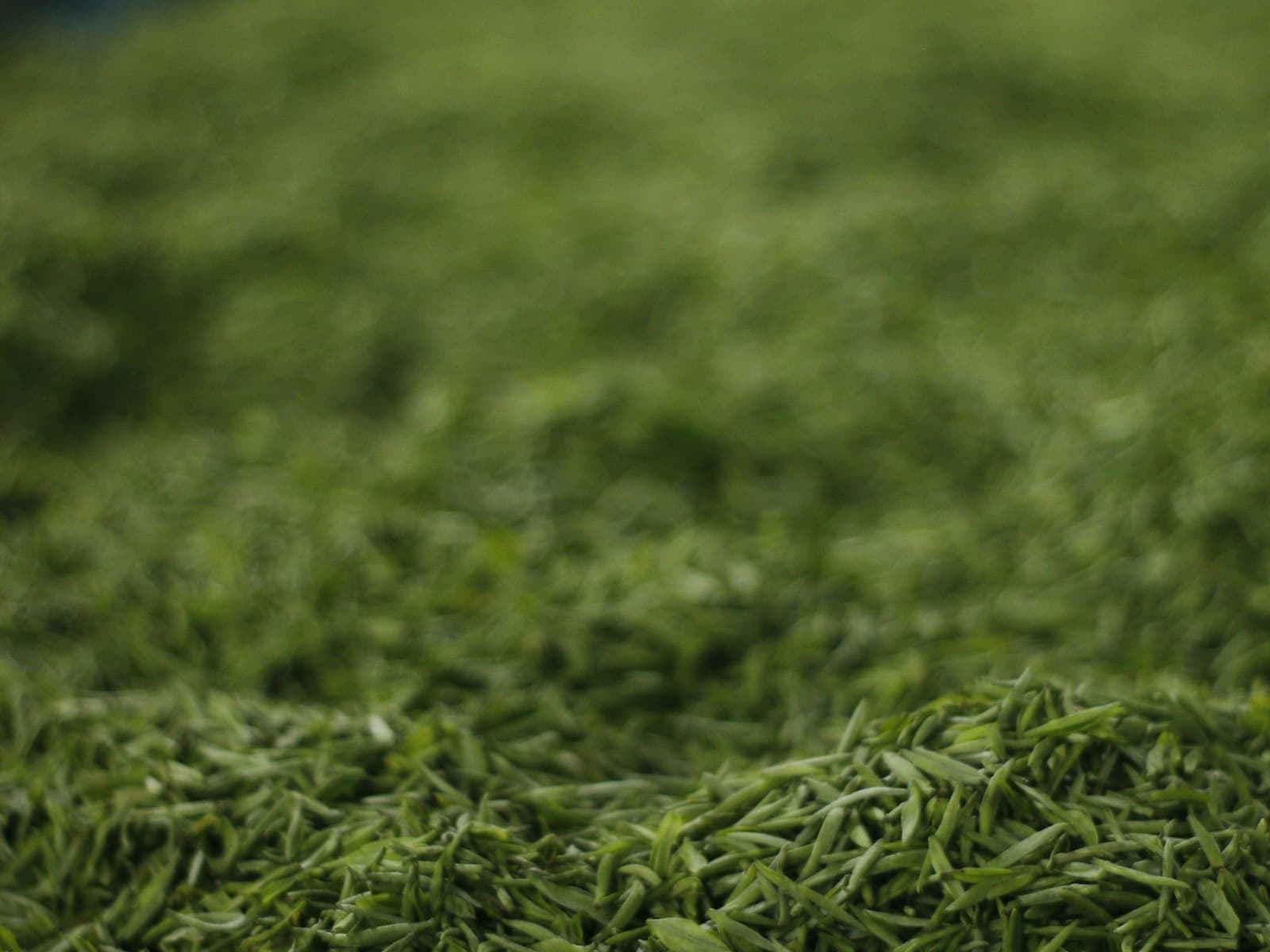
Gyokuro vs. tencha comes down to kneading. Shading conditions are almost the same. Gyokuro is kneaded into slender needles and designed to release its flavor into hot water. Tencha is dried flat, stripped of stems and veins so only the leaf flesh remains, and then ground into matcha.
Kabusecha vs. gyokuro comes down to shading time. Two weeks of cover gives kabusecha a character that keeps sencha's aroma while adding a layer of umami.
So Is "Gyokuro Powder" Matcha?
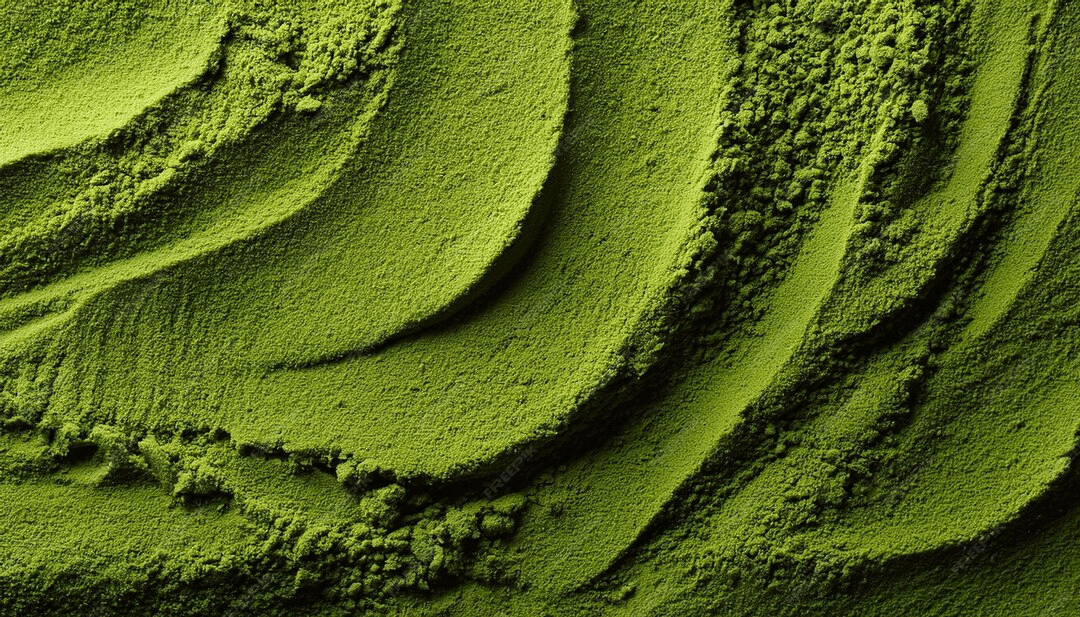
No. Powdered gyokuro is made from kneaded leaves, not tencha. Grinding a kneaded leaf produces a different particle, with a different feel on the palate when whisked into water. In the same way, ground sencha is "green tea powder," not matcha. The word matcha belongs only to unkneaded tencha ground on a stone mill.
Ask your supplier: "Is the raw material of this matcha tencha? How many days was it shaded, and by which method — honzu or synthetic cloth?"
FAQ
Does longer shading always mean better matcha?
Longer shading gives deeper umami and color, but it also stresses the plant and raises cost. The ideal shading period depends on the use — usucha, latte or pastry.
Why is honzu matcha so expensive?
Because the shelves are built by hand and the reed screens and straw are added in stages as the buds grow. The labor is on a different scale, so honzu is reserved for the very top grades of tencha and gyokuro.
Learning Ujicha, part 5 of 10. Next: Ichibancha, Nibancha, Sanbancha — How Harvest Timing Works in Uji.
Curious what a 20-day-shaded tencha tastes like as matcha? We're happy to send samples. 📩 Request a sample or get in touch with our team