Japanese Tea Types Explained: Why Every Name Is a Recipe, Not a Variety
01 November, 2026
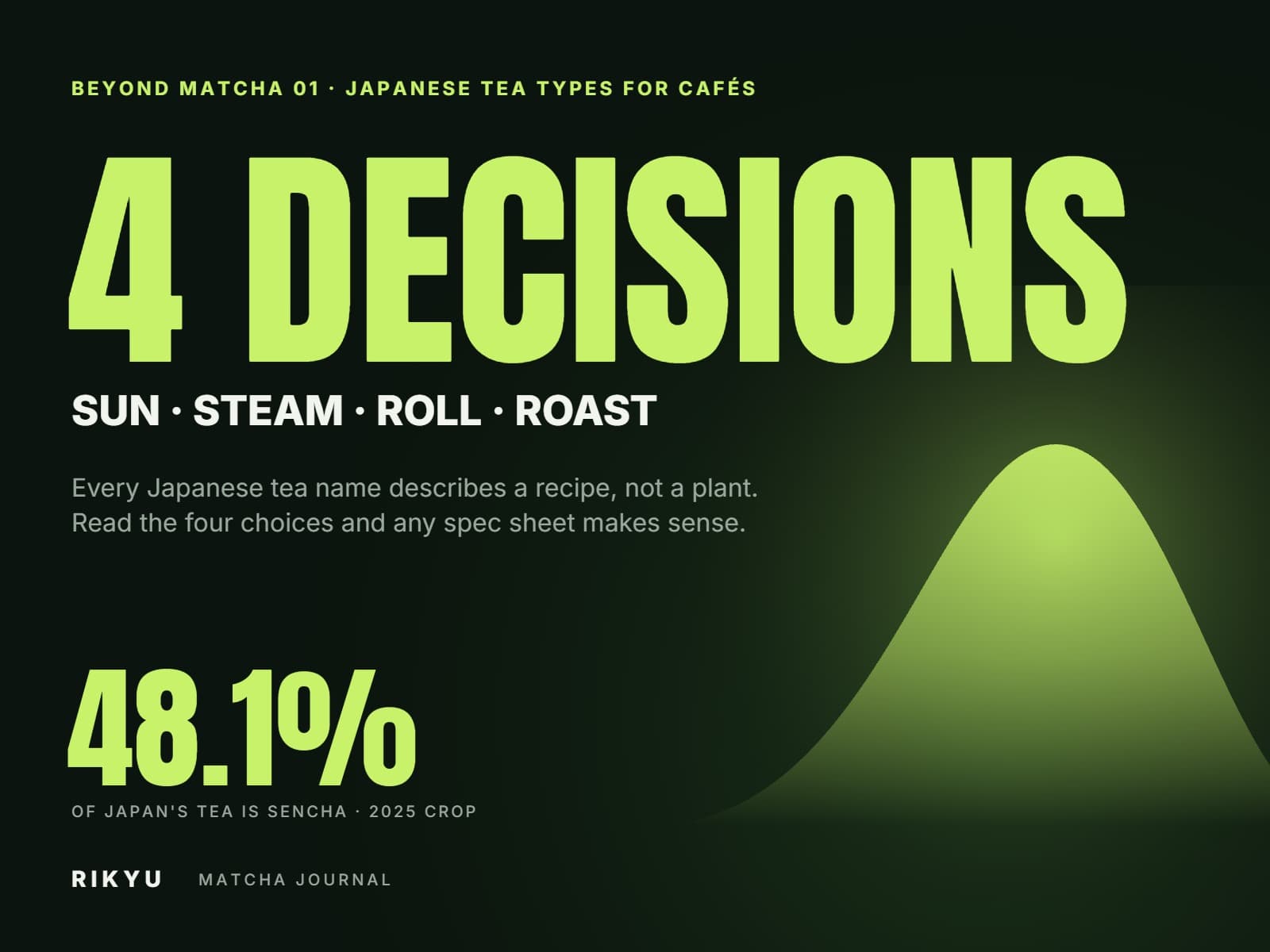
Japanese tea names are not plant varieties. Almost every name you see on a wholesale list describes a recipe: how the leaf was grown, how it was heat-treated, whether it was rolled, and what was done to it afterwards. Nearly all of it is unoxidised green tea from one plant. Sencha, gyokuro, tencha, bancha, hojicha and genmaicha are the same leaf taken down different roads, and matcha is one of those roads. Once you can read the four decisions behind a name, every spec sheet becomes easy, and so does the menu.
This is the first article in our Beyond Matcha series for cafés and buyers. The next four go deeper on matcha, tencha and gyokuro, bancha, hojicha and Japan's fermented and pan-fired teas.
What counts as Japanese tea?
In the trade, Japanese tea means green tea made in Japan. That became official on 10 July 2026, when “Japanese Tea” (Nihoncha) was registered as a Geographical Indication at the request of the Japan Tea Central Association. The registration covers all unoxidised green tea grown and processed in Japan: sencha, gyokuro, matcha, kamairicha and the rest. It does not cover Japanese black tea (wakocha) or Japanese oolong, which are made in Japan but are not green tea. The background is the growing volume of “Uji matcha” milled from Chinese leaf; the GI mark is now the simplest way for an importer to tell the two apart.
Related: Is Your Uji Matcha Really from Uji? · Matcha vs Green Tea: What's the Real Difference?
What are the four decisions that name a Japanese tea?
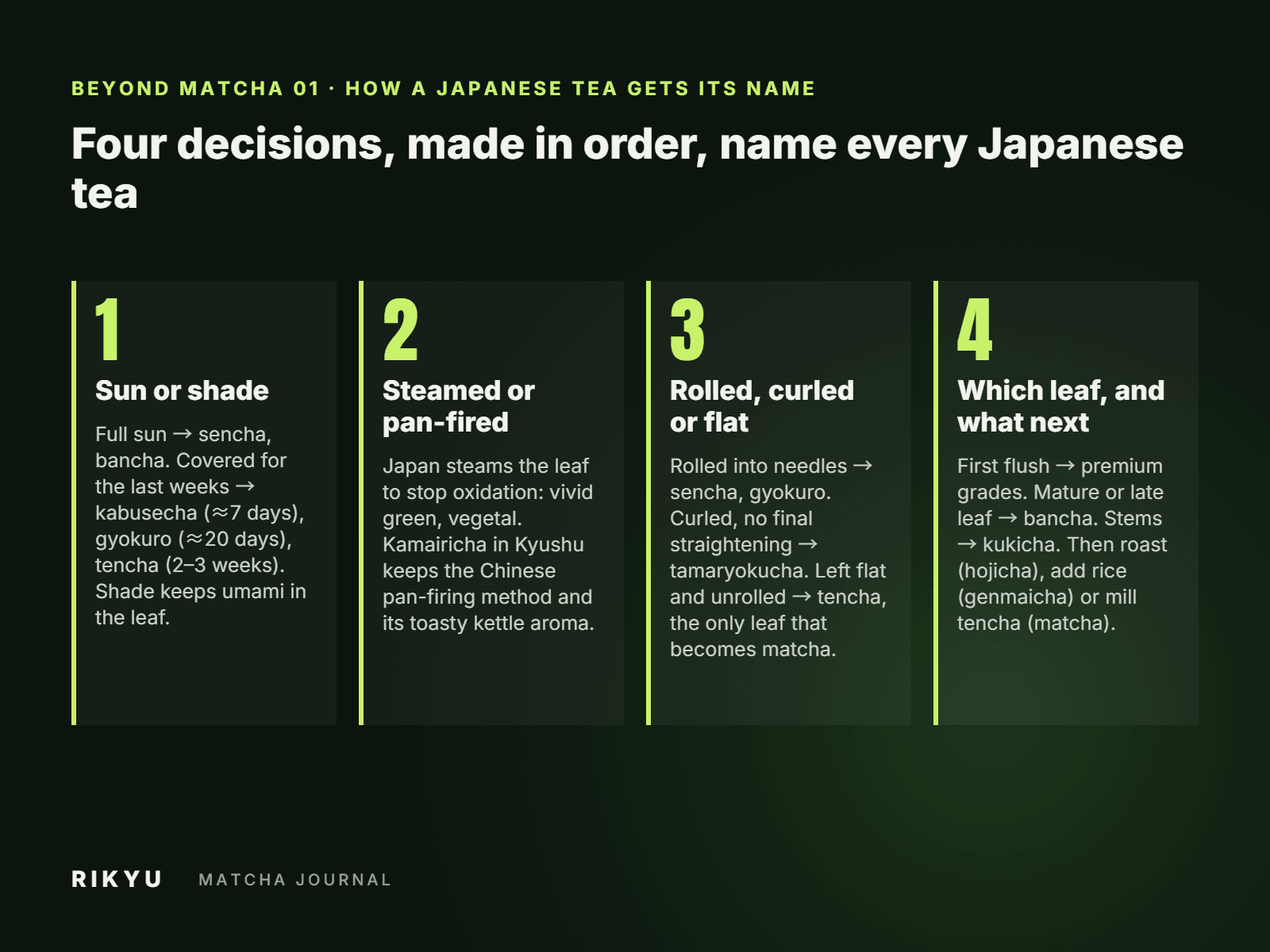
Every Japanese green tea is the result of four choices made in sequence. Change one and the name changes.
1. Sun or shade
Leaf grown in full sun becomes sencha, bancha and their derivatives. Leaf grown under cover for the last weeks before harvest becomes the “covered teas” (ooicha): kabusecha after about 7 days of shade, gyokuro after about 20 days, and tencha after 2 to 3 weeks. Shade slows the conversion of theanine (umami) into catechins (astringency), so the longer the cover, the sweeter and darker green the leaf.
2. Steamed or pan-fired
The leaf must be heated within hours of picking to stop oxidation. Japan steams; China pan-fires. Steaming is why Japanese green tea is vivid green and vegetal rather than toasty. The exception is kamairicha, the pan-fired tea of northern Kyushu, which keeps the Chinese method and tastes of it.
3. Rolled, curled or left flat
After steaming, sencha is kneaded and rolled into needles so its compounds extract quickly in the pot. Tamaryokucha (“guricha”) skips the final straightening pass and comes out curled. Tencha is not rolled at all: the flat, dried leaf is destemmed, deveined and stone-milled into matcha. This is the single decision that separates gyokuro from matcha. The growing is almost identical; gyokuro is rolled, tencha is not.
4. Which leaf, and what happens next
First-flush buds make the premium grades. Leaf that was left to harden, late shoots and the autumn and winter pickings make bancha. Stems sorted out at the refinery become kukicha (karigane when they come from gyokuro or tencha). Then come the secondary processes: roast any of these and you have hojicha; blend with roasted rice and you have genmaicha; mill tencha and you have matcha.
How do the main types line up?
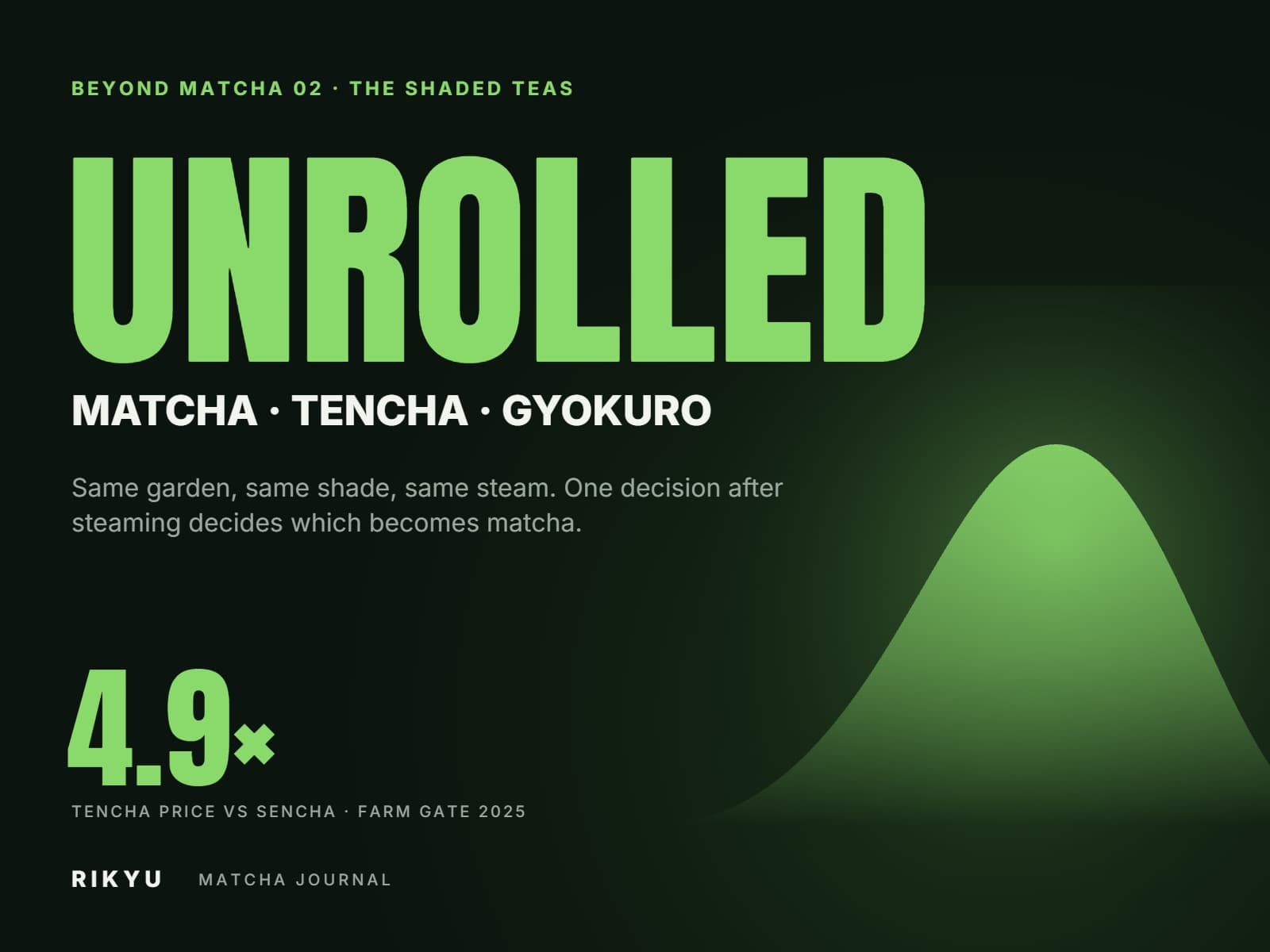
The table below is the whole map on one page, with the share of Japan's 2025 crude-tea (aracha) output and the average farm-gate price for each type where the national survey tracks it. Sencha is still half of everything Japan makes. Tencha is under a tenth of the volume but commands 4.9 times the sencha price, which is the whole story of the last decade in one ratio.
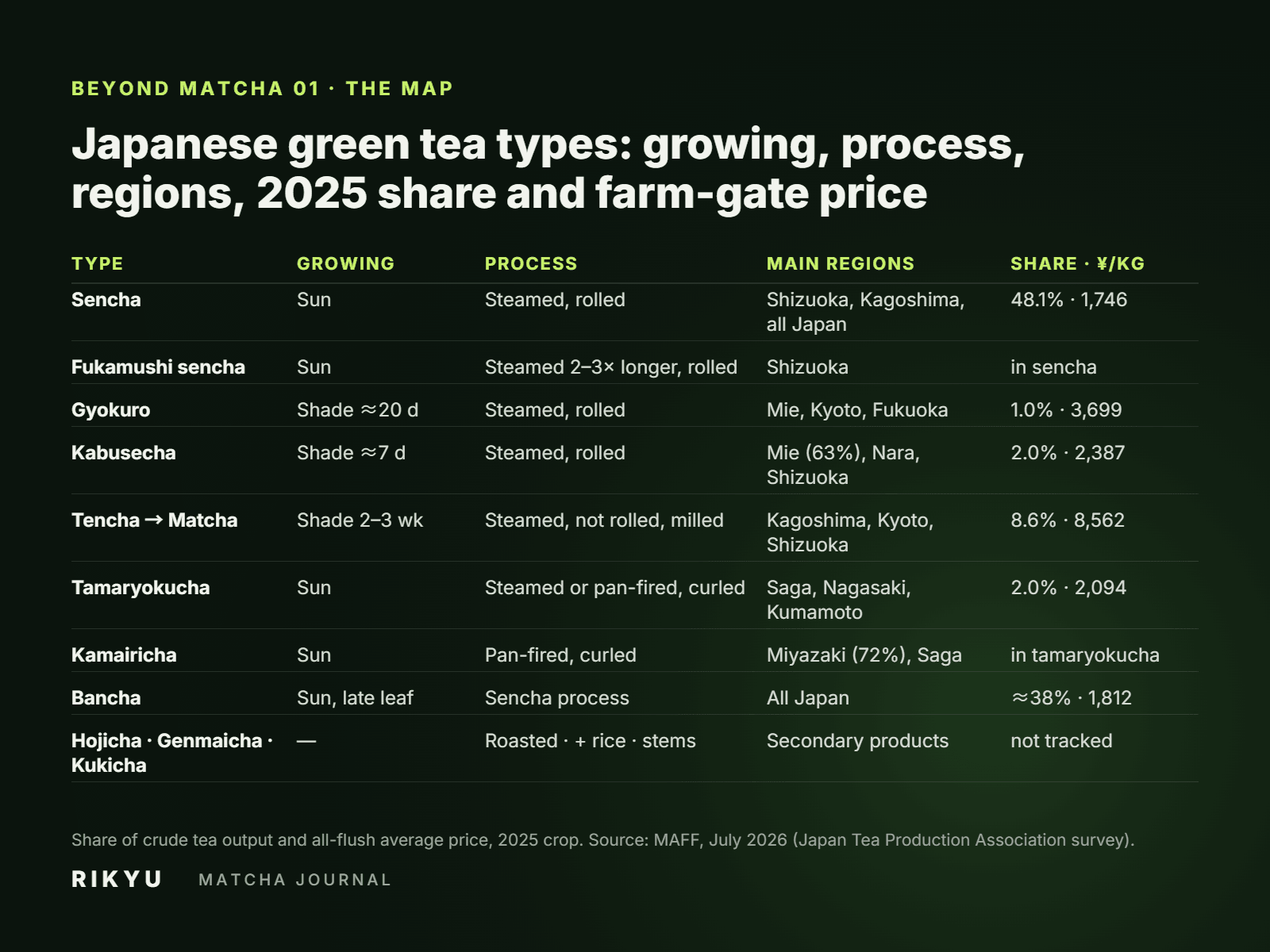
Sencha: sun-grown, steamed, rolled. 48.1% of output, ¥1,746/kg. Everywhere, led by Shizuoka and Kagoshima.
Fukamushi sencha: sencha steamed two to three times longer. Finer leaf, cloudier cup, rounder taste. Shizuoka's signature.
Gyokuro: shaded about 20 days, steamed, rolled. 1.0%, ¥3,699/kg. Mie, Kyoto, Fukuoka.
Kabusecha: shaded about 7 days, steamed, rolled. 2.0%, ¥2,387/kg. Mie grows 63% of it.
Tencha / matcha: shaded 2 to 3 weeks, steamed, not rolled, milled. 8.6%, ¥8,562/kg. Kagoshima, Kyoto, Shizuoka.
Tamaryokucha: steamed or pan-fired, curled. 2.0%, ¥2,094/kg. Saga, Nagasaki, Kumamoto.
Kamairicha: pan-fired, curled. Miyazaki makes 72% of Japan's total.
Bancha: mature or late-season leaf, sencha process. The rest of the volume, ¥1,812/kg on average.
Hojicha, genmaicha, kukicha, konacha: secondary products made from the teas above; not tracked separately at farm gate.
Related: Tencha, Gyokuro, Kabusecha: Three Shade-Grown Teas · First Harvest vs Second Harvest
Where does each tea come from?
Japan grows about 75,000 tons of crude tea a year on 33,400 hectares, and the types are strongly regional. Shizuoka (24,100 t in 2025) is sencha country, especially deep-steamed. Kagoshima (30,000 t) overtook Shizuoka in 2024 to become the largest producer for the first time since records began, and it now grows more tencha than anywhere else. Mie leads gyokuro and kabusecha. Kyoto is second in gyokuro and tencha and is where the shading and rolling techniques were invented. Fukuoka's Yame is third in gyokuro. Miyazaki leads kamairicha; Saga, Nagasaki and Kumamoto make most of the tamaryokucha. If a supplier tells you where a leaf grew, you already know roughly what kind of tea it is likely to be.
Related: Japanese Matcha Regions Compared · Kagoshima Matcha, Explained
What does this mean for your café?
Three practical habits follow from the map.
Fix your vocabulary. Write “matcha” only for stone-milled tencha. Write “green tea powder” or “powdered sencha” for anything else, and write “hojicha (leaf)” and “hojicha powder” as two different items. Your staff, your suppliers and your customers will stop talking past each other.
Ask three questions on every spec sheet. How many days of shade? Which flush (first, second, autumn)? Which prefecture was the crude tea made in? Those three answers place any Japanese tea on the map and predict its price.
Buy by use, not by hierarchy. Gyokuro is not “better sencha”, and bancha is not “worse sencha”. They are built for different cups. The right question is which tea fits the drink you are selling at the price you are charging.
Source every type from one Tokyo desk
Rikyu Matcha is based in Tokyo and buys directly from producers in Uji, Nishio, Yame, Shizuoka and Kagoshima. Our core is ceremonial and latte-grade matcha, and we also supply hojicha powder and genmaicha powder for café programs, with a spec sheet, certificate of analysis and pesticide residue results on request. If you are building a Japanese tea menu beyond matcha and want one supplier who can explain every line on it, write to us with your volumes and how you will use each tea. We answer in English, from Tokyo, and we answer fast.
FAQ
Is matcha a green tea?
Yes. Matcha is shade-grown green tea (tencha) that is steamed, dried without rolling and stone-milled. “Matcha vs green tea” is a comparison between a child and its parent category.
Is sencha the same as green tea?
Sencha is the most common style of Japanese green tea, about half of all production, but gyokuro, bancha, tencha and kamairicha are green teas too.
What is the difference between bancha and hojicha?
Bancha is a raw material: tea made from mature or late-season leaf. Hojicha is a process: any green tea that has been roasted. In some regions of Japan the word bancha is used for roasted tea, which is why the two get confused.
Why is tencha so much more expensive than sencha?
Shading costs labour and reduces yield, tencha is only made from the best flushes, and demand for matcha has tripled production since 2014 without catching up. In 2025 the average crude-tea price was ¥8,562/kg for tencha against ¥1,746/kg for sencha.
Does Japan make black tea?
Yes, in small amounts, called wakocha. It is made from the same plant but fully oxidised, so it is not covered by the Japanese Tea GI and is not what buyers mean by Japanese tea.
Sources
Ministry of Agriculture, Forestry and Fisheries (MAFF), “Cha wo meguru josei” (Situation of Tea), July 2026: tea types, production shares and crude-tea prices for the 2025 crop, prefecture ranking, Japanese Tea GI registration (Japanese)
MAFF, tea situation report, September 2023: top prefectures by tea type (Japanese)
Kyoto Prefecture, “Types and classification of Japanese tea”, based on the Japan Tea Central Association's tea reference materials (Japanese)
Japan Tea Central Association, Green Tea Labelling Standard: definitions of matcha and tencha (Japanese)