Munich's Matcha Specialists, and the Four Cafés We Left Samples With
29 October, 2026
Field notes by Demi, Customer Success Specialist at RIKYU Matcha Company. Part 2 of 3.
In Part 1, I wrote about how matcha is everywhere in Munich. This time I want to look at the shops that are trying to sell it properly, and at the four cafés where we left RIKYU samples, including two where I got to sit down with the owner.
The Specialists Putting Origin on the Sign
The most interesting thing I saw in Munich was that some shops are already telling customers where their matcha comes from.
P&T (Paper & Tea) is a tea specialist that uses a ceremonial matcha from Kagoshima. When I asked, the staff said they contract directly with the farm. Unusually for Europe, you can order matcha straight, 80 ml for €5.50, not just as a latte. The retail side is strong too: tins, whisks, and a “Find your Matcha” guide card at the counter.
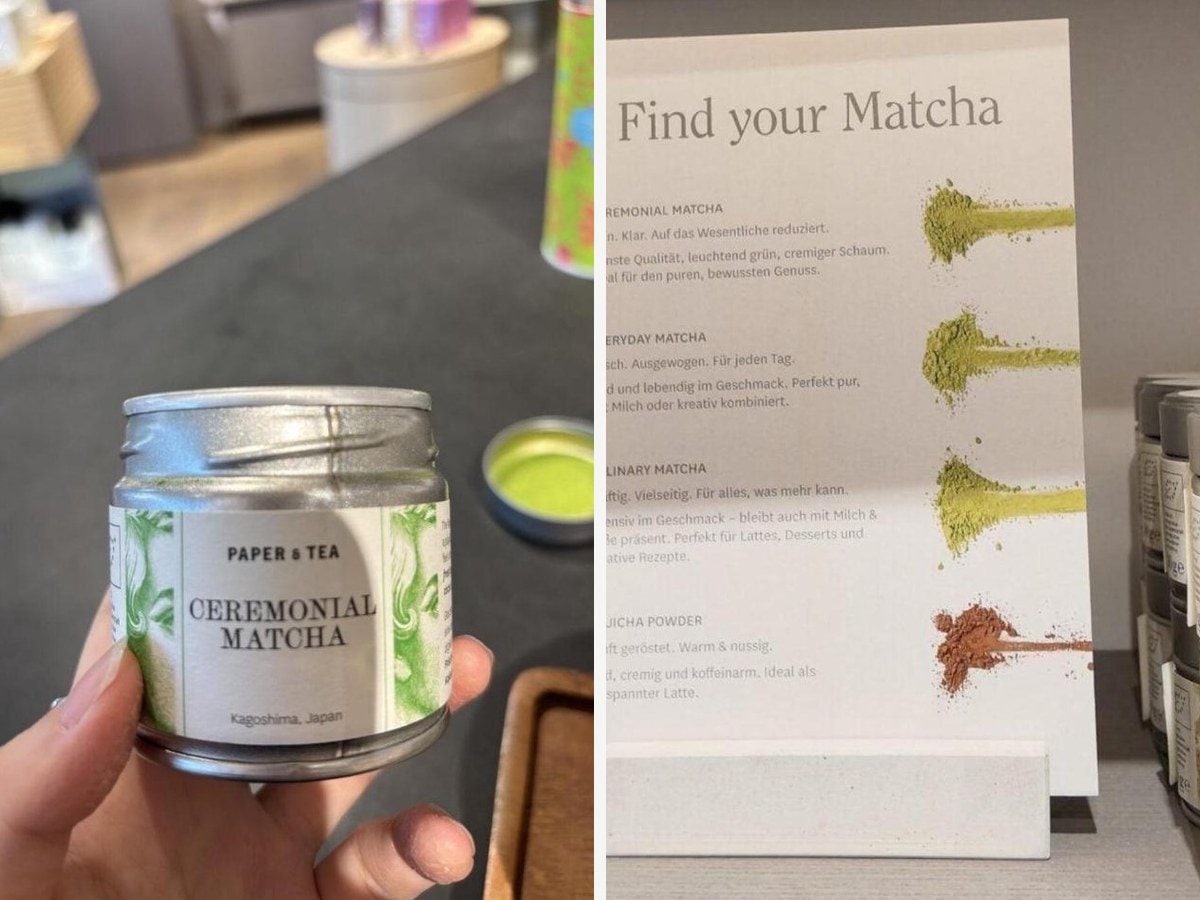
Left: P&T's ceremonial matcha tin says it plainly: Kagoshima, Japan. Right: the “Find your Matcha” card, with ceremonial, everyday, culinary, and hojicha powder.
ORII is a matcha-only café a few doors away, all concrete and gallery lighting. Its own tin reads “CEREMONIAL BIO MATCHA / KIRISHIMA JAPAN / 30g”, and the range is named by origin: SOLSTICE from Kirishima, HORIZON NO. 2 from Kagoshima, in 30 g and 50 g. They sell their own bamboo scoop. The board outside said “A CHANGE OF SEASON”, with three autumn lattes: Whipped Honey, Earl Grey, and White Choc Raspberry.
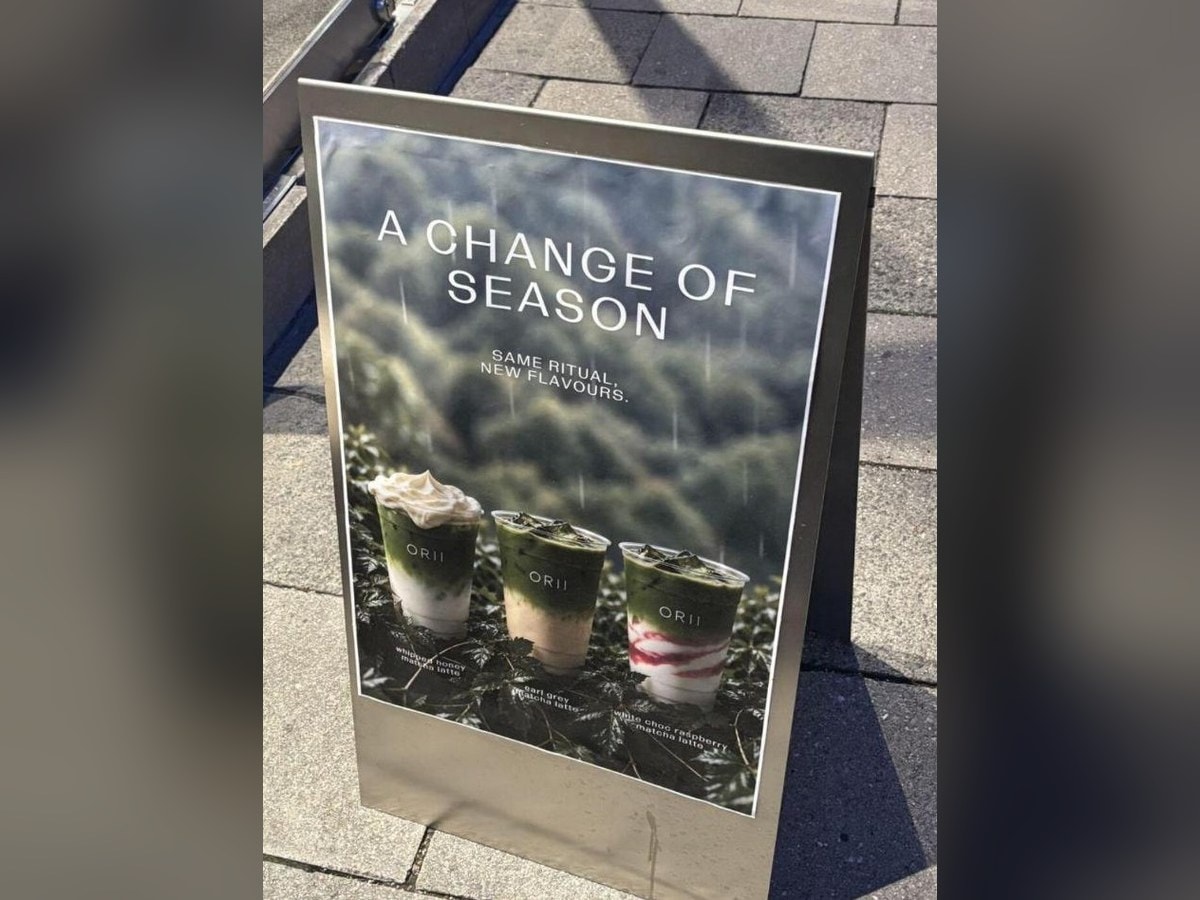
ORII's autumn board: whipped honey, earl grey, and white choc raspberry matcha lattes.
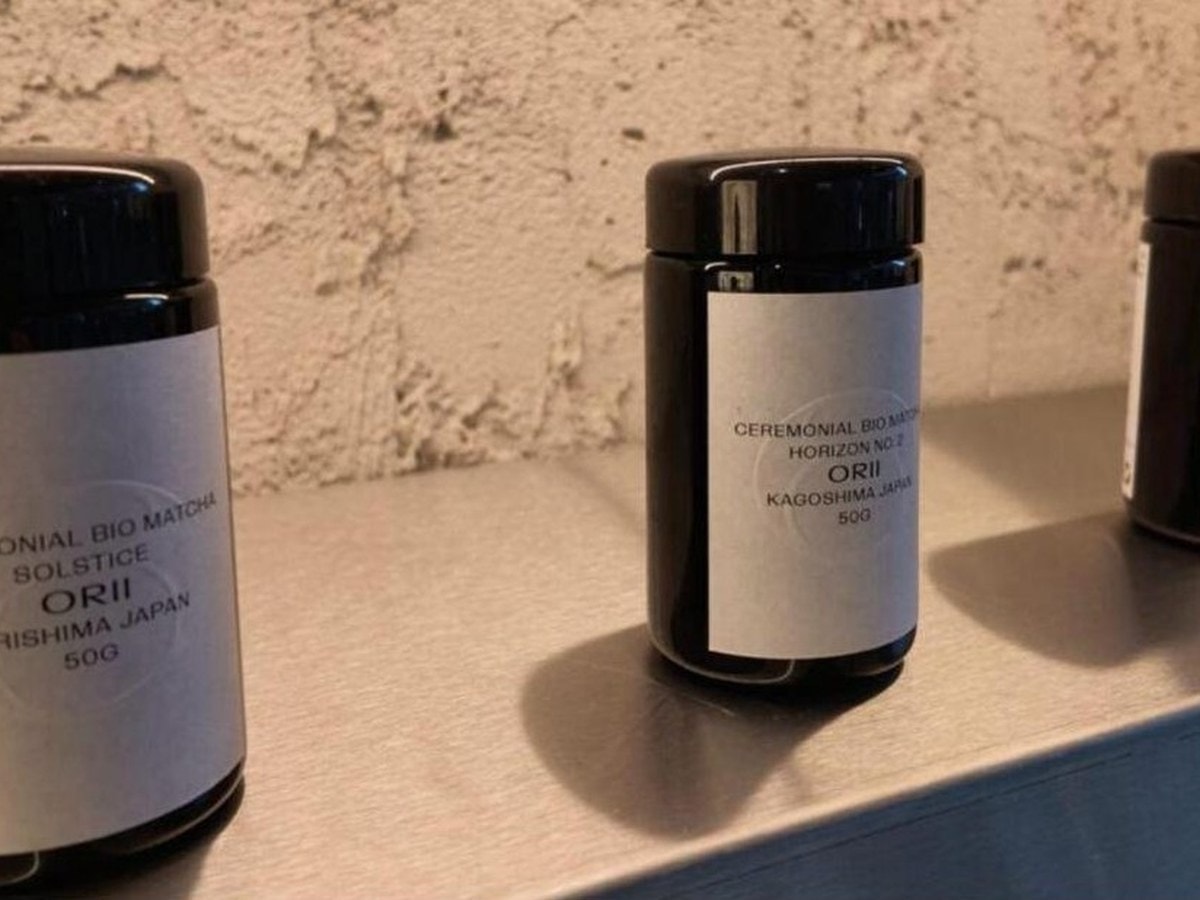
ORII's own jars, named by origin: SOLSTICE (Kirishima) and HORIZON NO. 2 (Kagoshima).
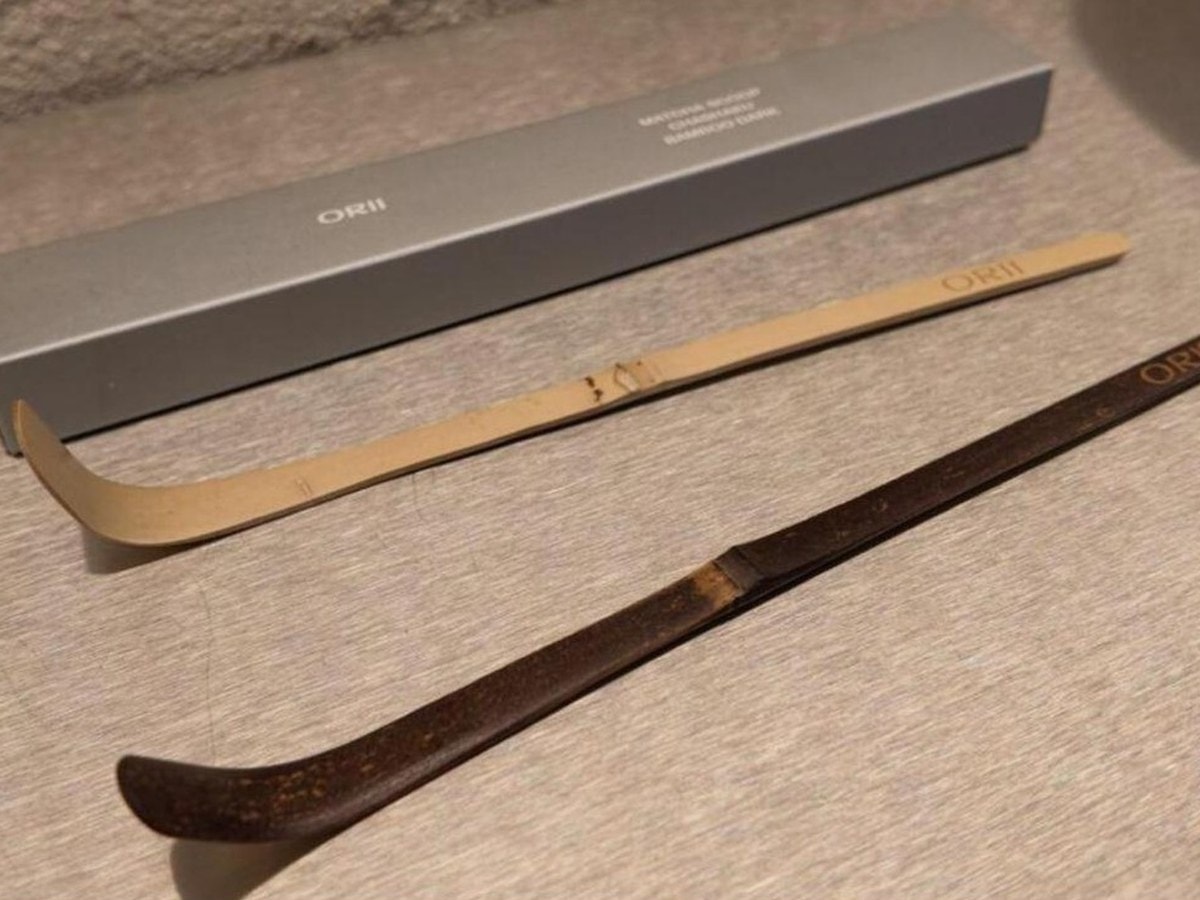
Even the chashaku carries the ORII name.
Compare that with the supermarket or department-store matcha, which rarely says more than “Japanese, organic”. These two shops are leading with Kagoshima and Kirishima. In this city, being able to explain origin and grade is already becoming a point of difference.
The Four Cafés We Left Samples With
We handed RIKYU matcha samples to four cafés in Munich: two in person, two through a friend who lives there.
Ciao Amore is an Italian-style café. We'd been in touch beforehand, so I handed over the sample myself. The matcha latte is €5.90, the highest hot-latte price I paid on the trip. My honest note: “very hot, very little matcha, mostly water.” Which is exactly why it's worth having them taste a sample.
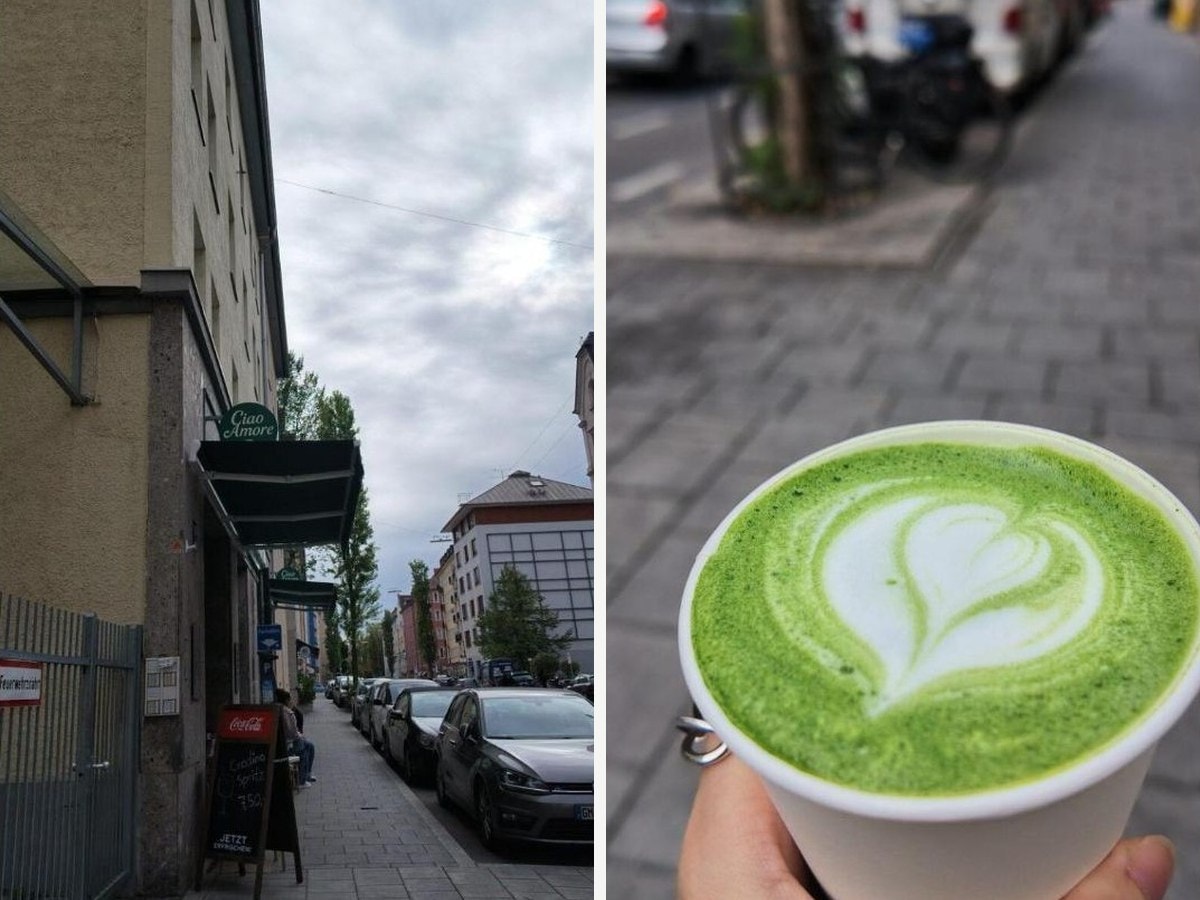
Ciao Amore: the storefront, and the €5.90 matcha latte. Pretty on top, thin underneath.
VANA is an Asian grocery with a café attached. I made an appointment and sat down with the owner. The menu runs to about 18 matcha drinks, five of them coconut-based, and the autumn list includes a Christmas Matcha, a Gingerbread Matcha, and a Matcha Dream topped with dango. I asked the owner for the Earl Grey Matcha (€6.00) I'd spotted on Instagram, and it was good: the black tea worked with the matcha, and it wasn't too sweet.
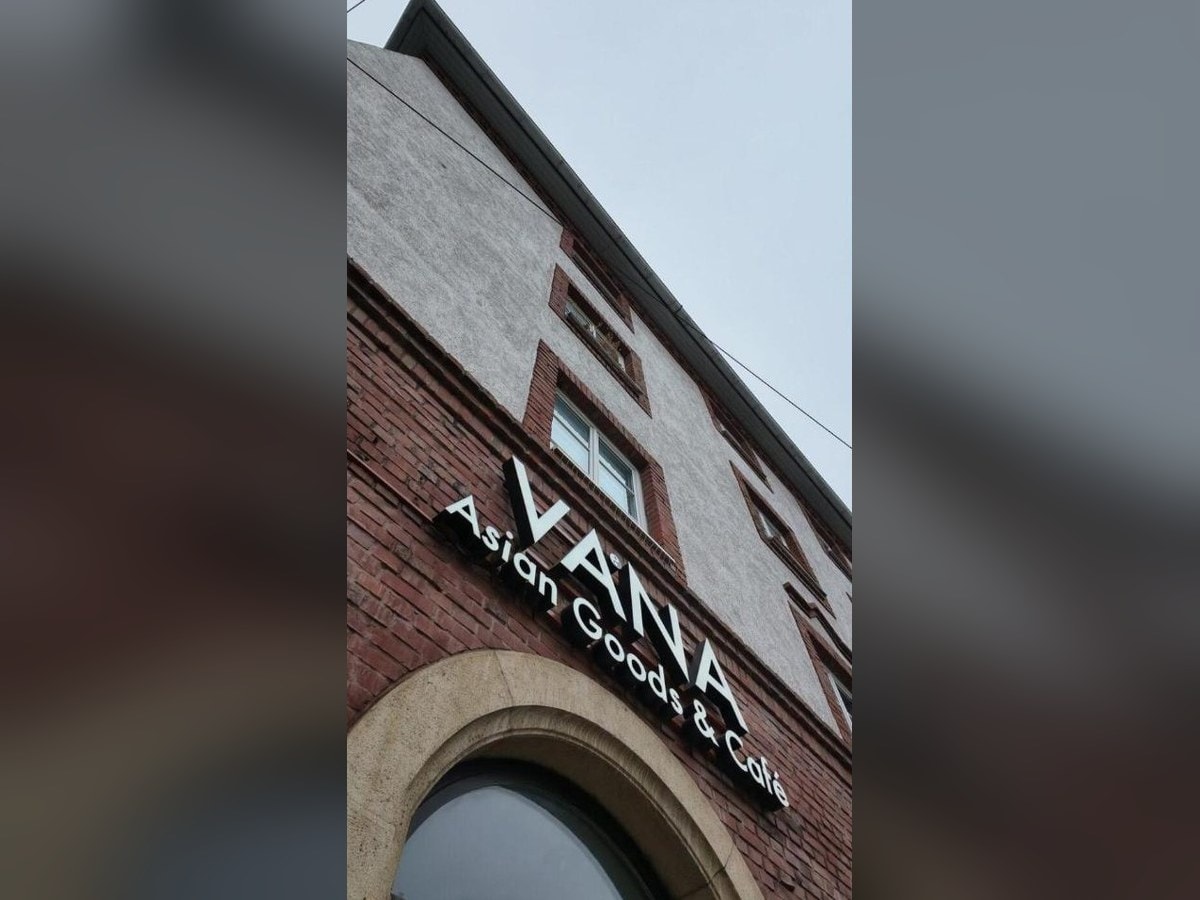
VANA: Asian grocery on one side, matcha café on the other.
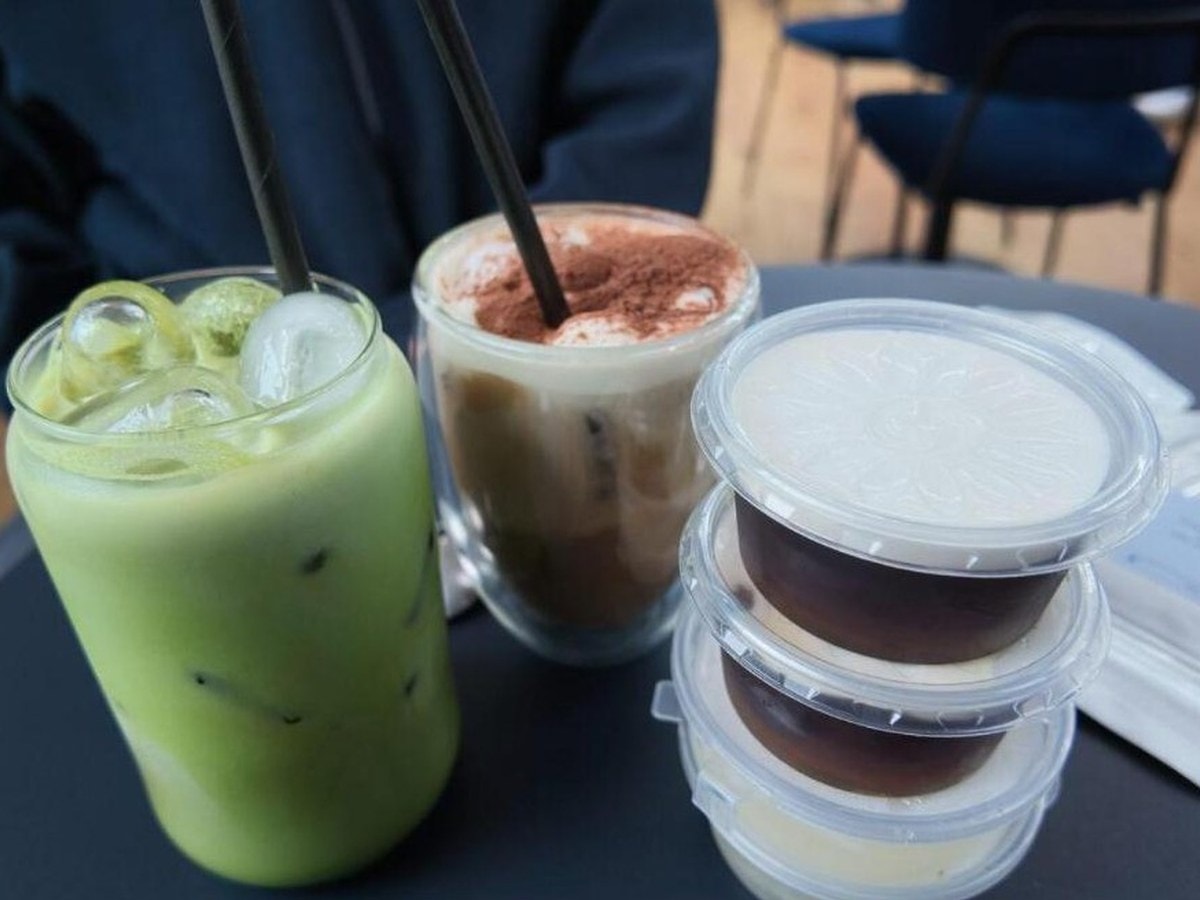
Iced matcha at VANA, and the RIKYU sample pouch we left with the owner.
Coffee Box is a café where a German friend of mine works the register. The matcha latte is €4.60, and the matcha is sourced via the UK. According to my friend, people of all ages and genders order it, with one exception: older customers rarely do. Many don't know what matcha is and see it as “a trend”. My friend passed our sample on to the boss.
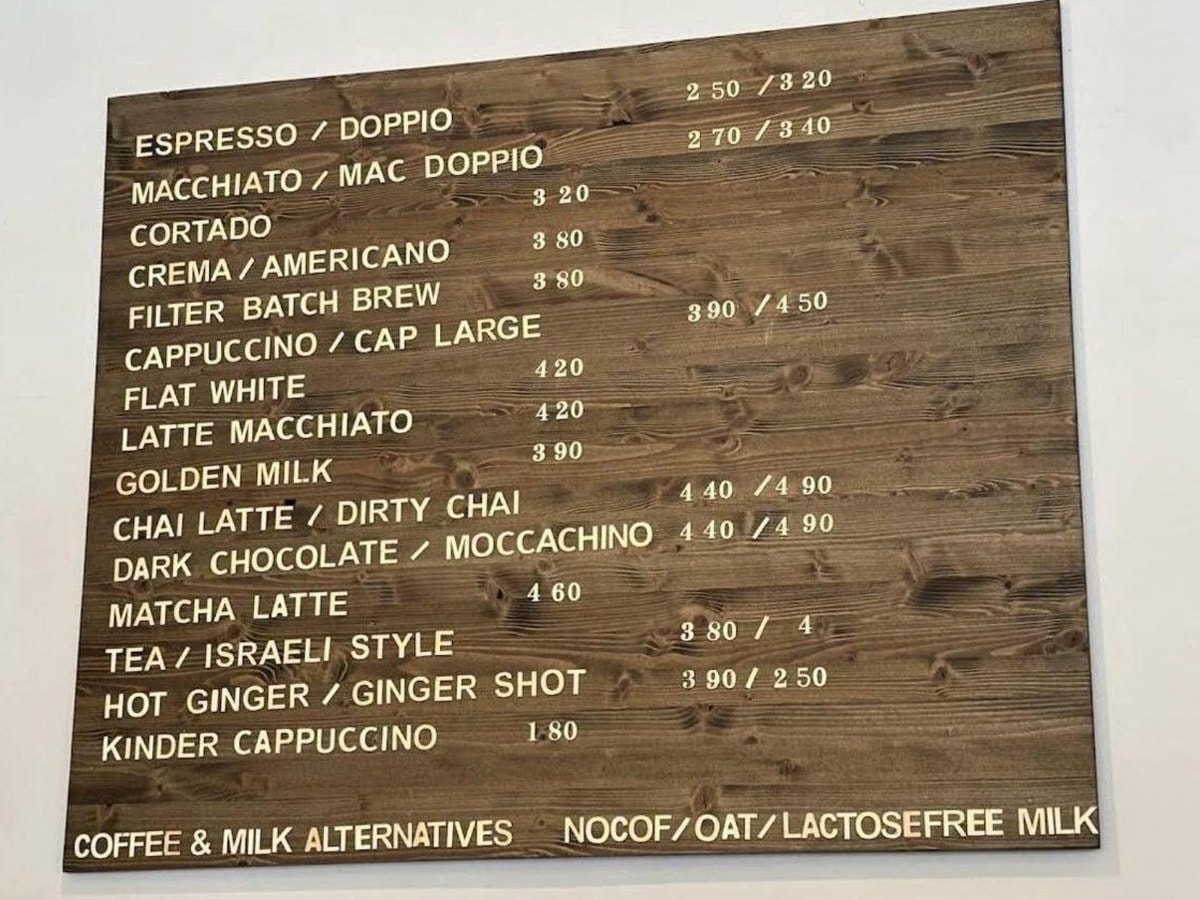
Coffee Box's board: matcha latte €4.60, between the chai and the tea.
Matcha Rina is a matcha café near Odeonsplatz. It was closed when I went by, so my friend dropped the sample off later. Judging from the menu photos on Google Maps, there are eight matcha drinks (€5.90 to €9.90), plus a matcha spritz (€14.90), matcha croissants, their own matcha tin (€39.90) and a whisk (€14.90). A complete matcha world in one shop.
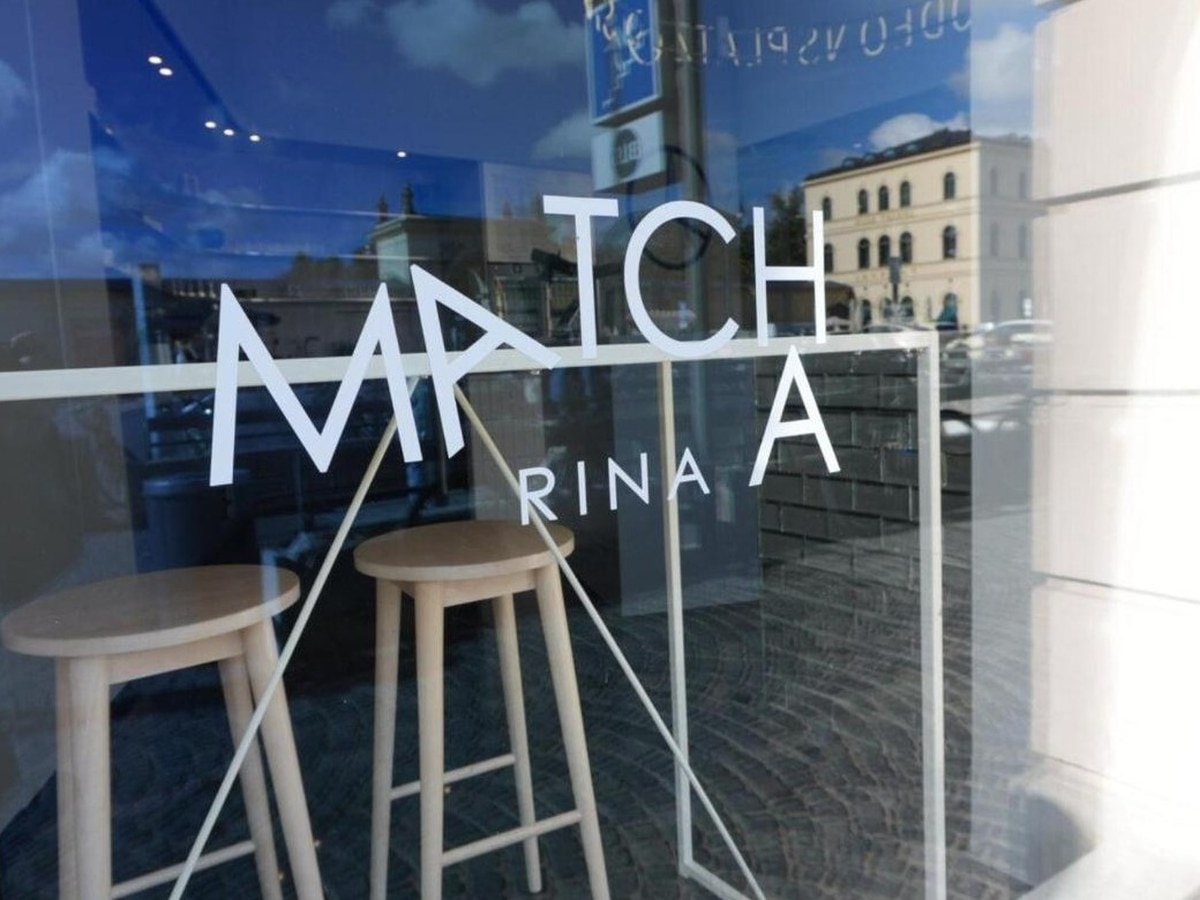
Matcha Rina, near Odeonsplatz. Closed the day I passed; a friend dropped the sample off later.
What I Learned Talking to the Shops
A few things came up again and again.
Sourcing is all over the place. Some buy through the UK; some contract directly with a farm. A Japanese supplier you can simply message and hear back from is not yet the norm.
The go-to variations are coconut, strawberry, and black tea or chai. I saw the same three families in every city.
Matcha isn't only a young person's drink. But there is still a large group of people who have never heard of it.
Closing Thoughts
I'm looking forward to hearing what the four cafés make of the samples. Next time: Italy, from a brand café terrace in Milan to McDonald's in Rome and the supermarket checkout in Pescara, and finally, what all of this means if you run a café.
Next: Part 3, Matcha at McDonald's: Notes from Italy, and What a Café Can Do About the “Watery Latte” Problem.