Matcha at McDonald's: Notes from Italy, and What a Café Can Do About the “Watery Latte” Problem
29 October, 2026
Field notes by Demi, Customer Success Specialist at RIKYU Matcha Company. Part 3 of 3.
After two posts on Munich, this last one is about Italy. I passed through Milan, Florence, Rome and Pescara, and found matcha everywhere from brand cafés to McDonald's to the supermarket checkout. At the end, I've put together the prices I collected across the whole trip, and a few thoughts for anyone who runs a café.
Milan: A Terrace Full of Matcha Lattes
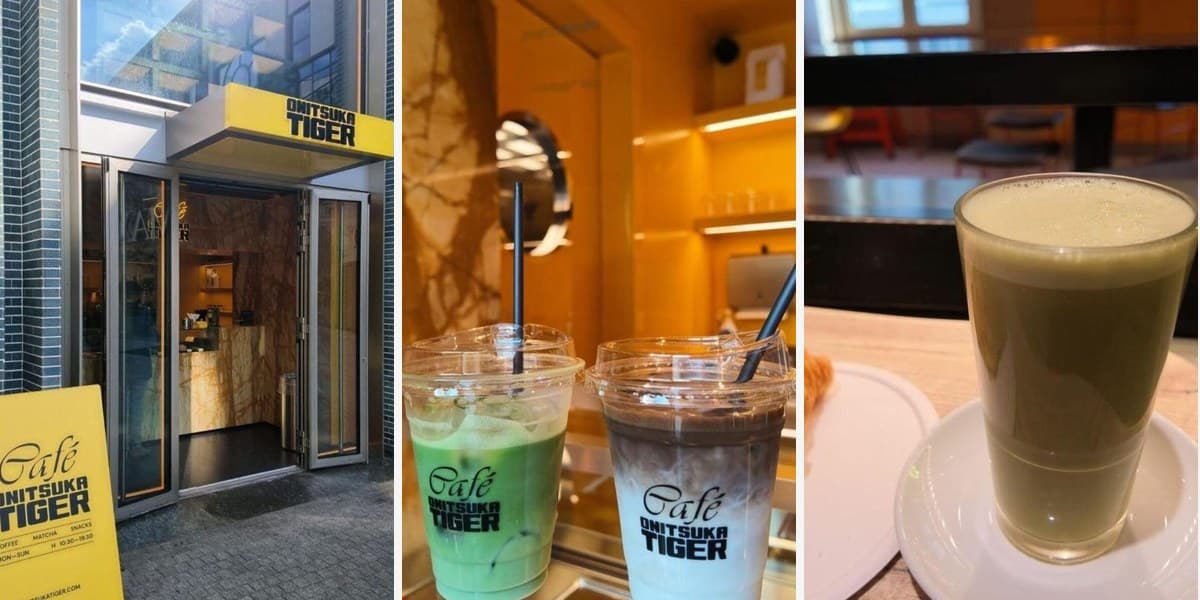
The sign at Café Onitsuka Tiger reads “COFFEE / MATCHA / SNACKS”: matcha billed on the same level as coffee. A matcha latte is €6.00, strawberry or mango matcha €7.00, against a cappuccino at €4.50. The colour was lovely, but the oat milk took over and the matcha disappeared behind it.
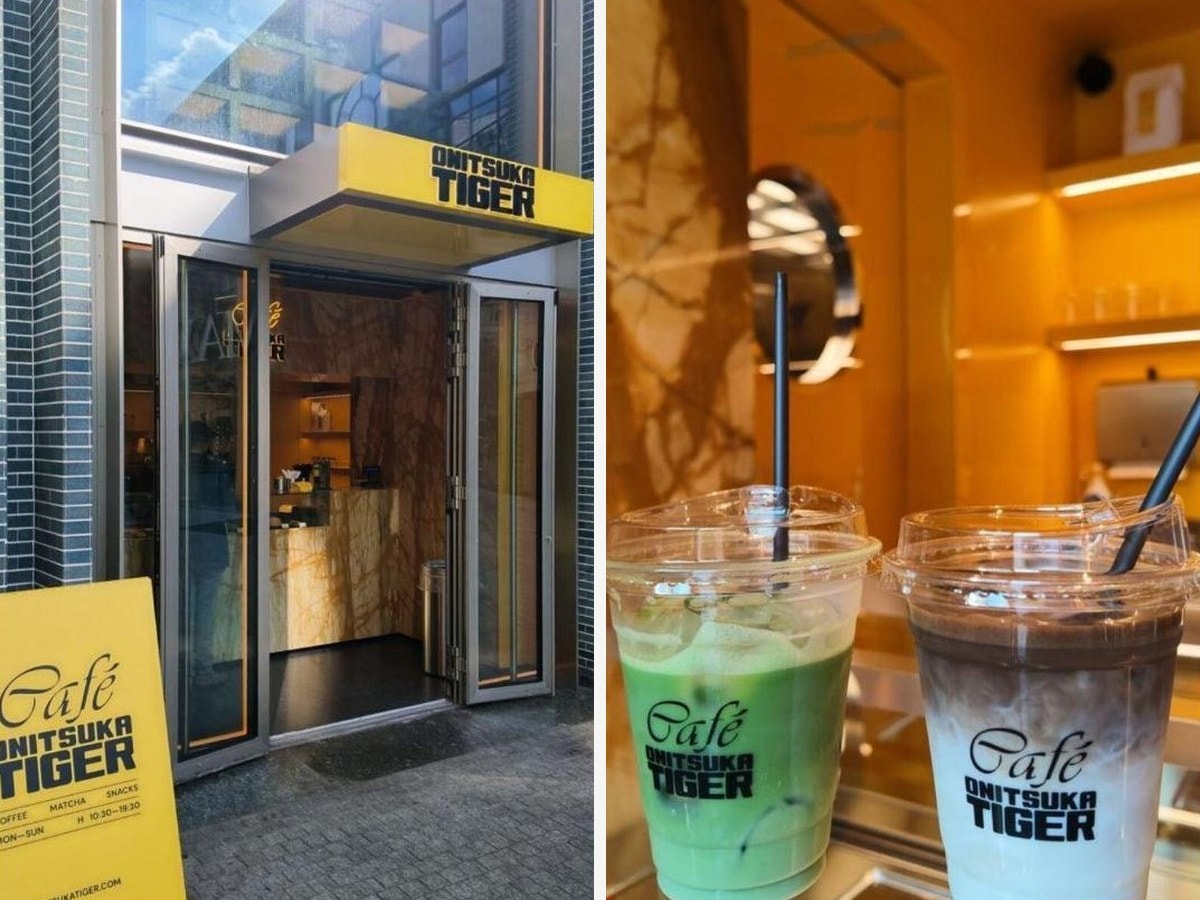
Café Onitsuka Tiger in Milan: COFFEE / MATCHA / SNACKS on the sign, and an iced matcha latte that lost to the oat milk.
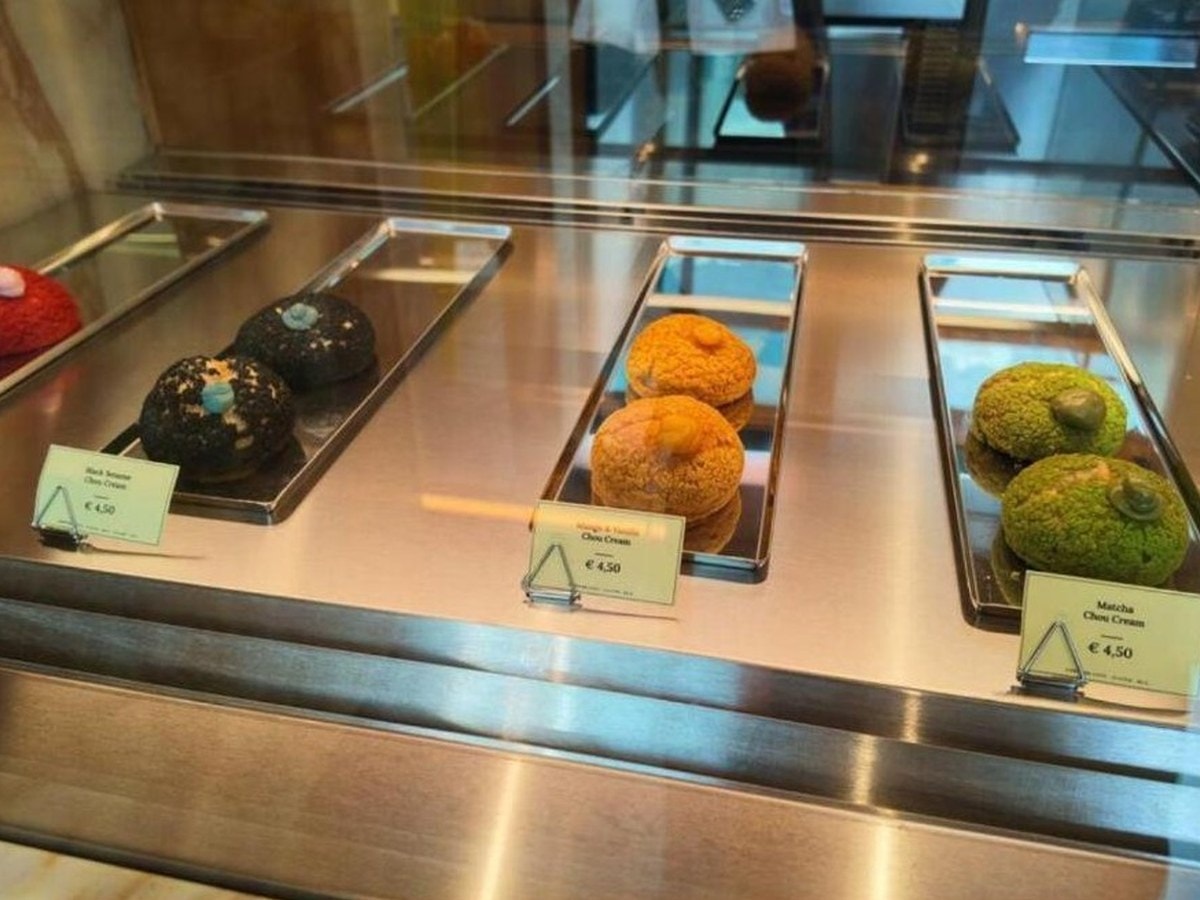
Matcha chou cream, €4.50, in the same case as black sesame and mango.
At Cafe Kitsuné, almost everyone on the terrace was drinking a matcha latte: men and women, every age. If you still picture the matcha latte as a drink for young women, that picture is out of date, at least here.
Florence, Rome, Pescara: Gelato, McCafé, and the Checkout Aisle
In Florence, the gelateria Perché no! had a flavour labelled “MAT-CHA GREEN TEA”. Pale in colour and pale in taste, but three people ordered it while I was there. In a café fridge I found a bottled “Thè Verde Matcha” from San Benedetto, one of Italy's biggest drinks brands.
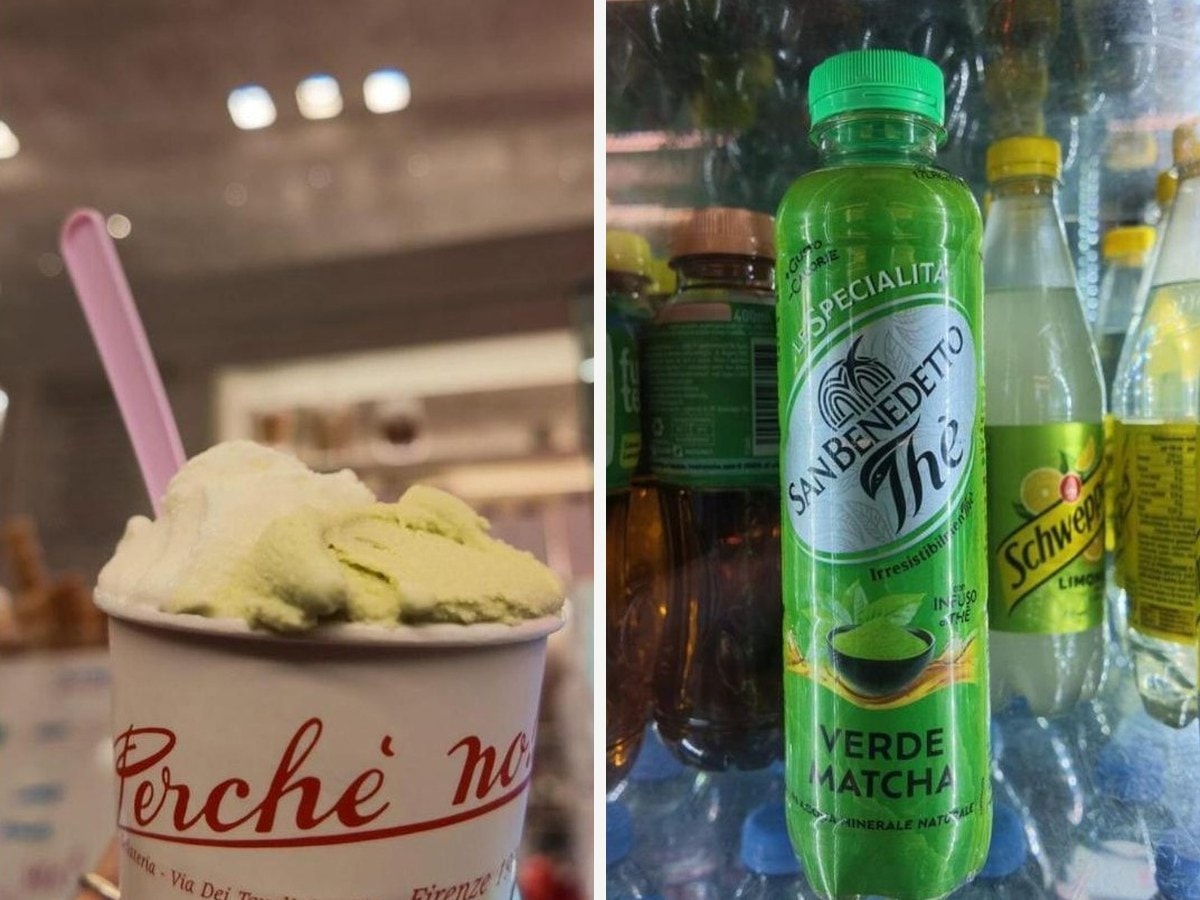
Left: “Mat-cha green tea” gelato at Perché no!, Florence. Right: San Benedetto's bottled Thè Verde Matcha, next to the lemon soda.
The biggest surprise in Rome was McDonald's (McCafé): a new coconut matcha latte at €2.50. The poster showed a vivid green; the real thing was a dull khaki, and the coconut won easily. Still, matcha on a McDonald's menu is as clear a sign as you'll get of how far it has travelled.
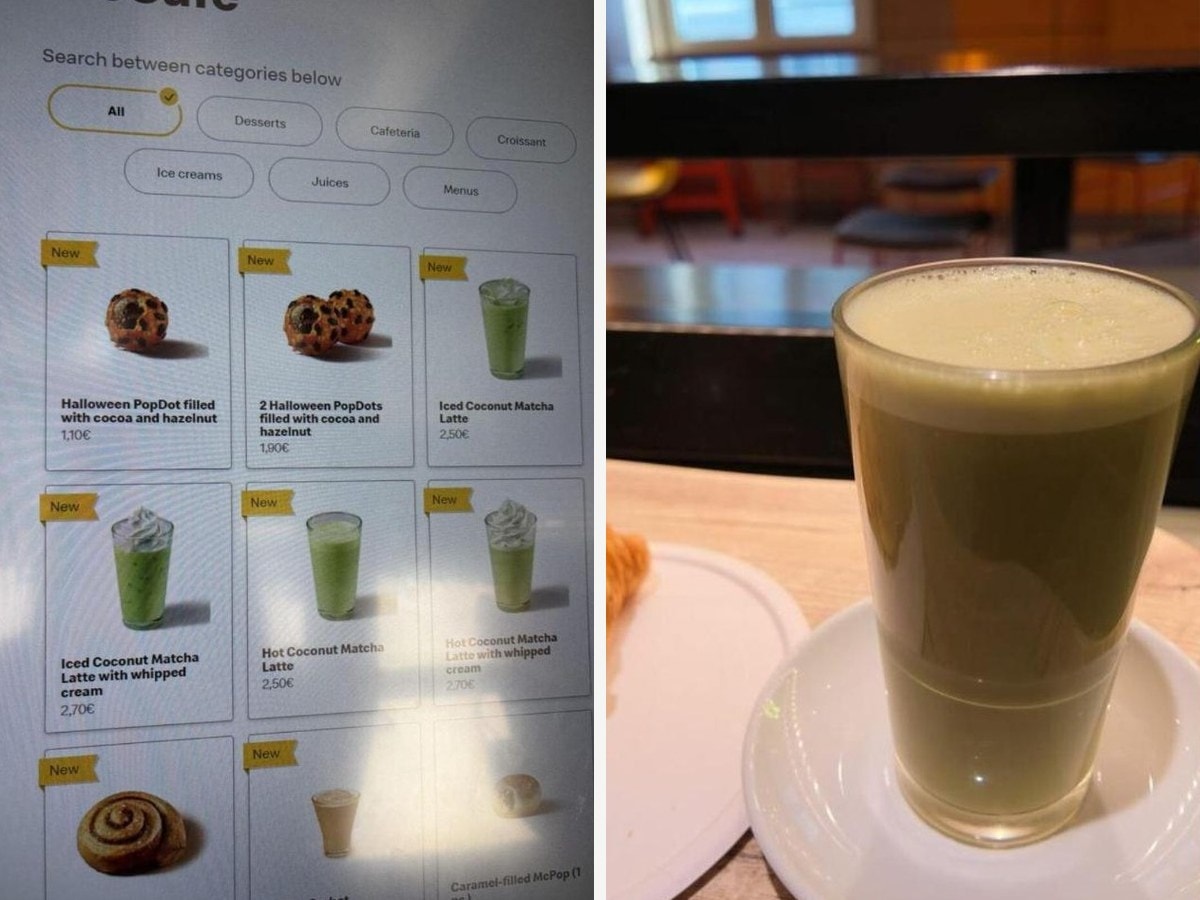
The McCafé menu in Rome: iced and hot coconut matcha lattes, €2.50. And what arrived: less green than the poster, and the coconut won.
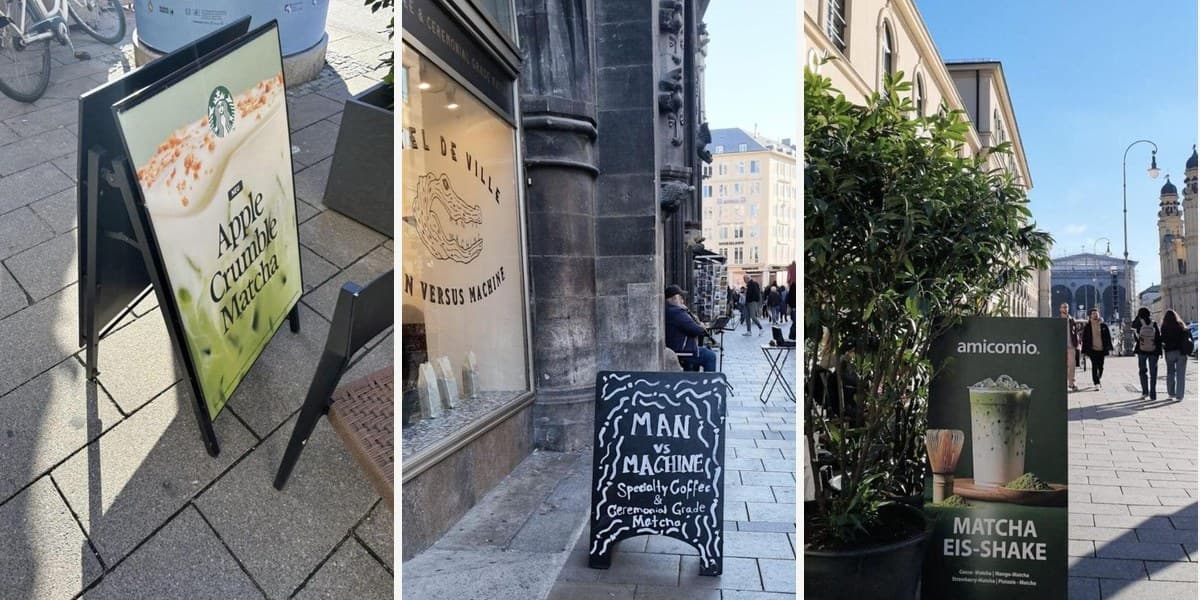
Starbucks had a whole “MATCHA” category on its autumn menu, Apple Crumble, Pumpkin Spice and more, at €6.00 for a Tall, fifty cents more than the Pumpkin Spice Latte. The Apple Crumble was sold out, so I ordered a plain matcha latte. My note says: “matcha-flavoured hot water.”
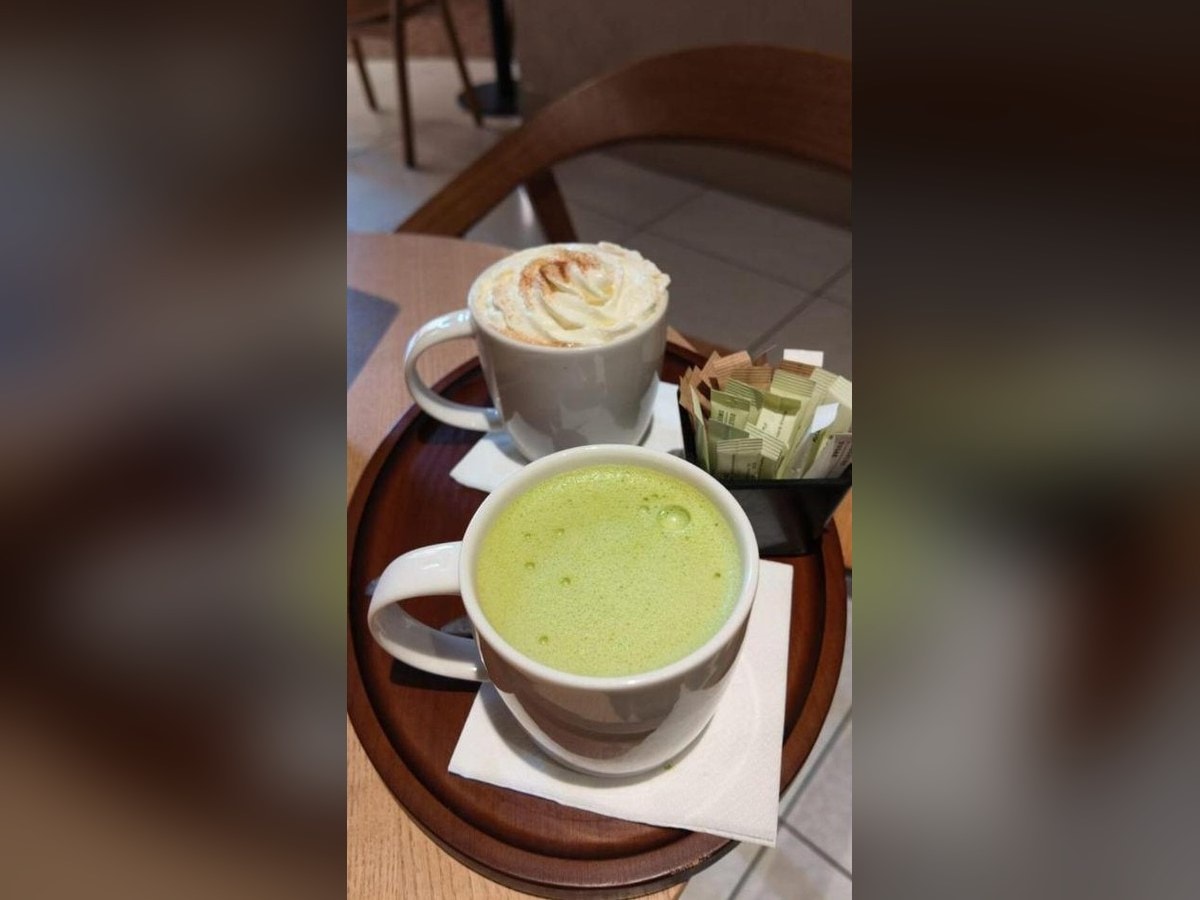
Starbucks, Rome: the plain matcha latte next to the Pumpkin Spice Latte.
At a supermarket, SAVE-brand Chinese matcha was €6.90 for 100 g. The selling points were all health, “antioxidants” and “equal to 10 cups of green tea”, with nothing about origin or grade. And at a supermarket checkout in Pescara: Lindt's TOKYO Style Matcha Strawberry, matcha with strawberry and puffed rice in a Japanese-pattern wrapper. Matcha has reached the impulse-buy shelf.
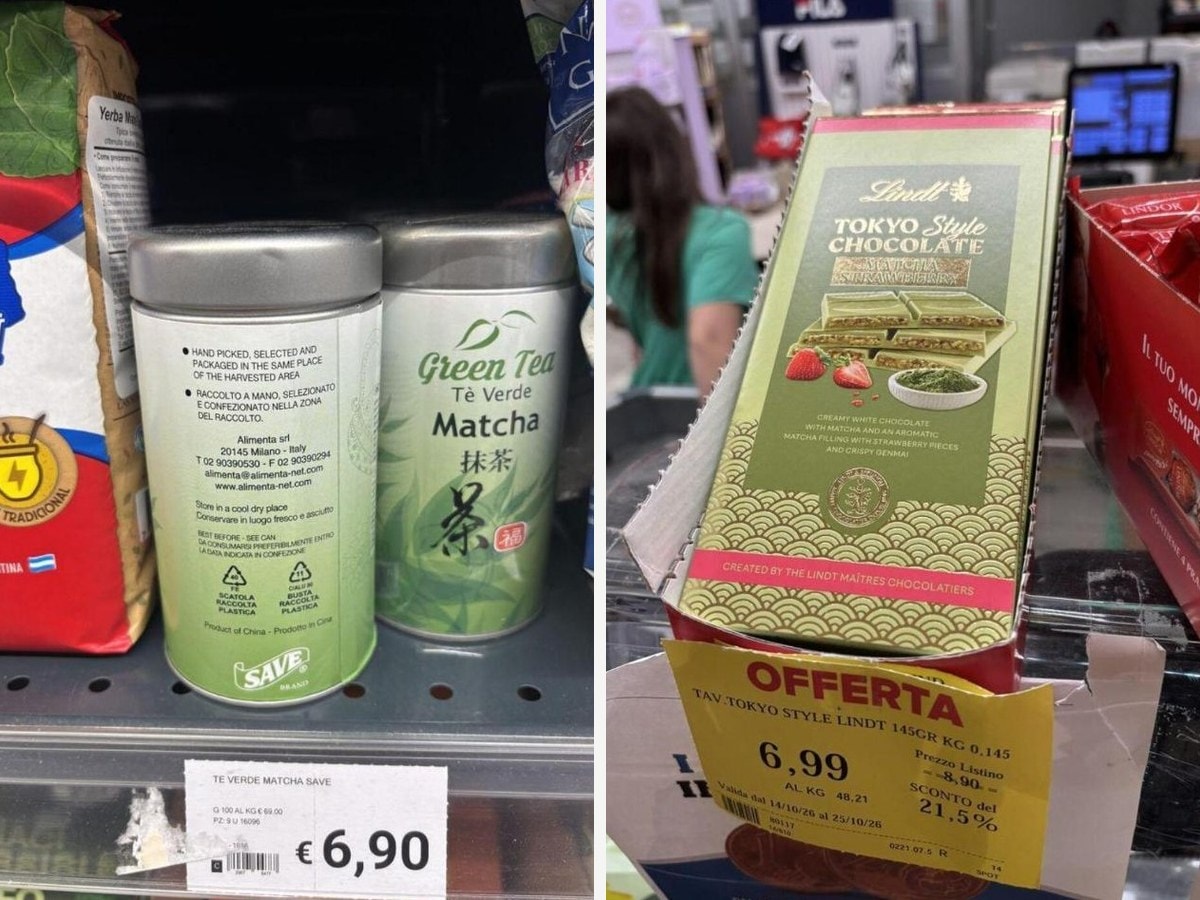
Left: supermarket matcha in Rome, €6.90 for 100 g, product of China. Right: Lindt's Tokyo Style Matcha Strawberry bar at the checkout in Pescara, on offer at €6.99.
A bookshop had the Italian edition of Very Matcha shelved next to the tea accessories.
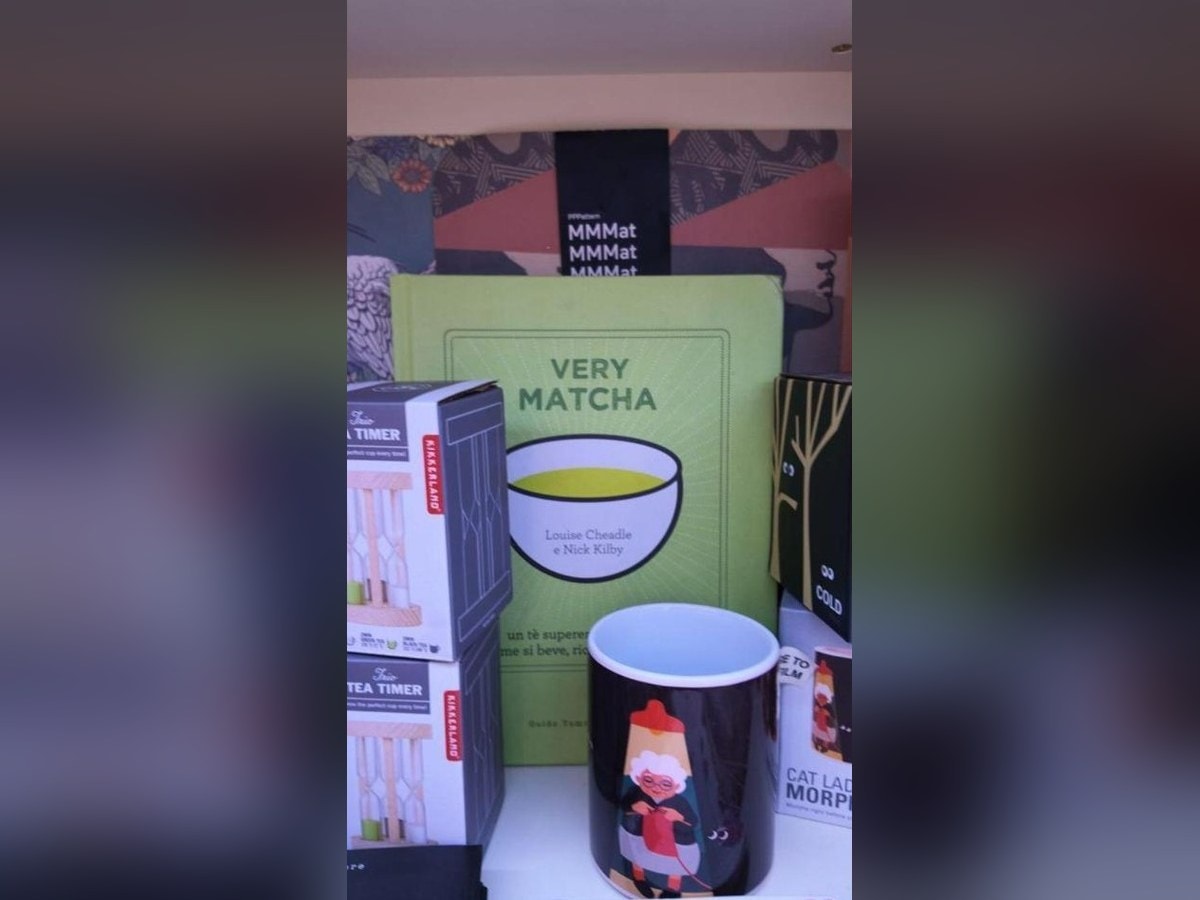
The Italian edition of Very Matcha, shelved with the tea gadgets.
Prices I Collected on the Trip
Most matcha lattes were €5 to €7, about €1.50 to €2 more than a cappuccino at the same counter. Sizes vary from shop to shop, so treat these as a guide. Prices as seen in October 2026; cappuccino price in brackets where I noted it.
Müller Café & Bäckerei, Munich: €6.70 (flavoured versions €7.20 to €7.70)
P&T, Munich: €6.50 for 300 ml (straight matcha, 80 ml, €4.50 to €5.50)
Café Onitsuka Tiger, Milan: €6.00 (cappuccino €4.50; fruit versions €7.00)
Starbucks, Rome, autumn menu: €6.00 Tall (Grande €6.50, Venti €7.00)
Ciao Amore, Munich: €5.90 (cappuccino €3.90; iced €6.50)
Dallmayr, Munich, take-away: €5.90 (chai matcha €6.50)
Matcha Rina, Munich: €5.90 (cappuccino €4.50; fruit versions €7.90, coconut-water matcha €9.90)
VANA, Munich: €5.30 (cappuccino €4.20; flavoured versions M €5.90 to €7.90)
Coffee Box, Munich: €4.60 (cappuccino €3.90; chai latte €4.40)
Café inside H&M, Munich: €4.50 (cappuccino €4.00; same price as a chai latte)
McDonald's (McCafé), Rome: €2.50 coconut matcha latte
Retail powder covers a huge range. Dallmayr's premium tin (30 g, €44.90) works out at roughly €1,500 per kilo; its own 100 g doypack (€45.90) at about €460; the Chinese supermarket matcha (100 g, €6.90) at €69. Using the 2 g per cup from Dallmayr's recipe card, the matcha in a single latte costs anywhere from a few cents to about €3.
So, What Can a Café Do?
Pulling the three posts together, here is what I'd say to anyone running a café.
The biggest opportunity is matcha that stands up to milk. Customers are paying €5 to €7 for cups that often taste of very little. That is a recipe for disappointment, and it means simply tasting of matcha is already a point of difference.
The matcha in a latte costs a few cents to €3. Moving up a grade changes the per-cup cost by far less than you'd think, and barely registers against a €6 price. “Good matcha is expensive” is much less true once it's in a latte.
The variations are coconut, strawberry, and black tea or chai. Those three families were on the menu in every city. When you're choosing a matcha, try it in those builds, not just in a plain latte, to see how it behaves in your own menu.
Being able to explain origin and grade is a strength. Supermarket and department-store matcha stops at “Japanese, organic”. P&T and ORII already lead with Kagoshima and Kirishima. The cafés that can say where our matcha comes from, and what kind of tea it is are going to multiply.
Closing Thoughts
In Europe, matcha is no longer rare. It's at Starbucks, at McDonald's, on the supermarket shelf. Which is exactly why a genuinely good cup is going to be worth more and more. That's the feeling I brought home. If the matcha latte at your café has turned into “matcha-flavoured hot water”, we have samples ready. Just get in touch.