Matcha Is Everywhere in Munich: Field Notes from a City Where the Latte Went Mainstream
28 October, 2026
Field notes by Demi, Customer Success Specialist at RIKYU Matcha Company. Part 1 of 3.
I spent a few weeks travelling through Munich and Italy this autumn, and I couldn't stop looking at matcha menus. This isn't a market study. It's a set of field notes from someone who loves matcha and kept pulling out her phone to photograph signboards. I'm sharing them in three parts. First up: Munich, and what it looks like when matcha stops being special.
Matcha, Wherever You Look
Honestly, I didn't expect it to be this far along. Specialist matcha cafés, yes. But also Starbucks, McDonald's, the café inside H&M, neighbourhood bakeries, supermarkets, and a luxury department store. You don't need to ask “Do you have a matcha latte?” anymore. It's simply on the menu, everywhere.
Of the places I visited on this trip, Munich felt like it had more matcha cafés than the Italian cities. And one thing surprised me: coconut matcha. It was on menus all over town.
Reading the Signboards
Just walking around, the signboards tell the story.
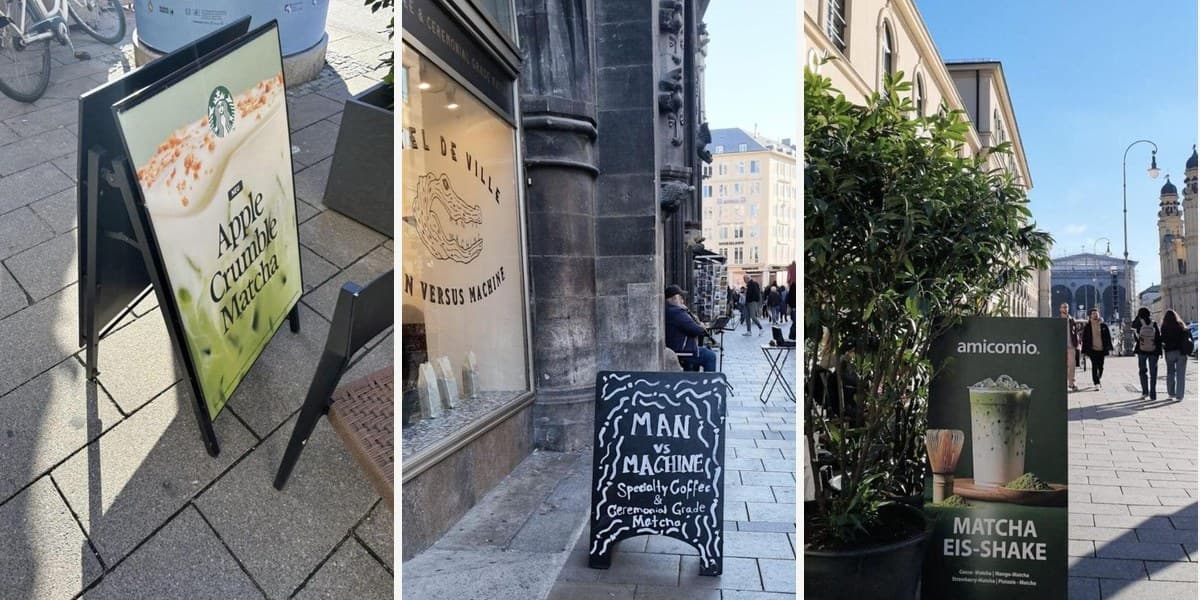
Starbucks: an autumn seasonal, Apple Crumble Matcha. I saw the same drink in Rome, so it looks like a Europe-wide launch.
dean & david: a limited-edition Pumpkin Chai Matcha Latte, with a three-layer strawberry matcha displayed at the counter.
amicomio: MATCHA EIS-SHAKE, in coconut, mango, strawberry or pistachio.
Man vs Machine: “Specialty Coffee & Ceremonial Grade Matcha”, right there on the sign, side by side.
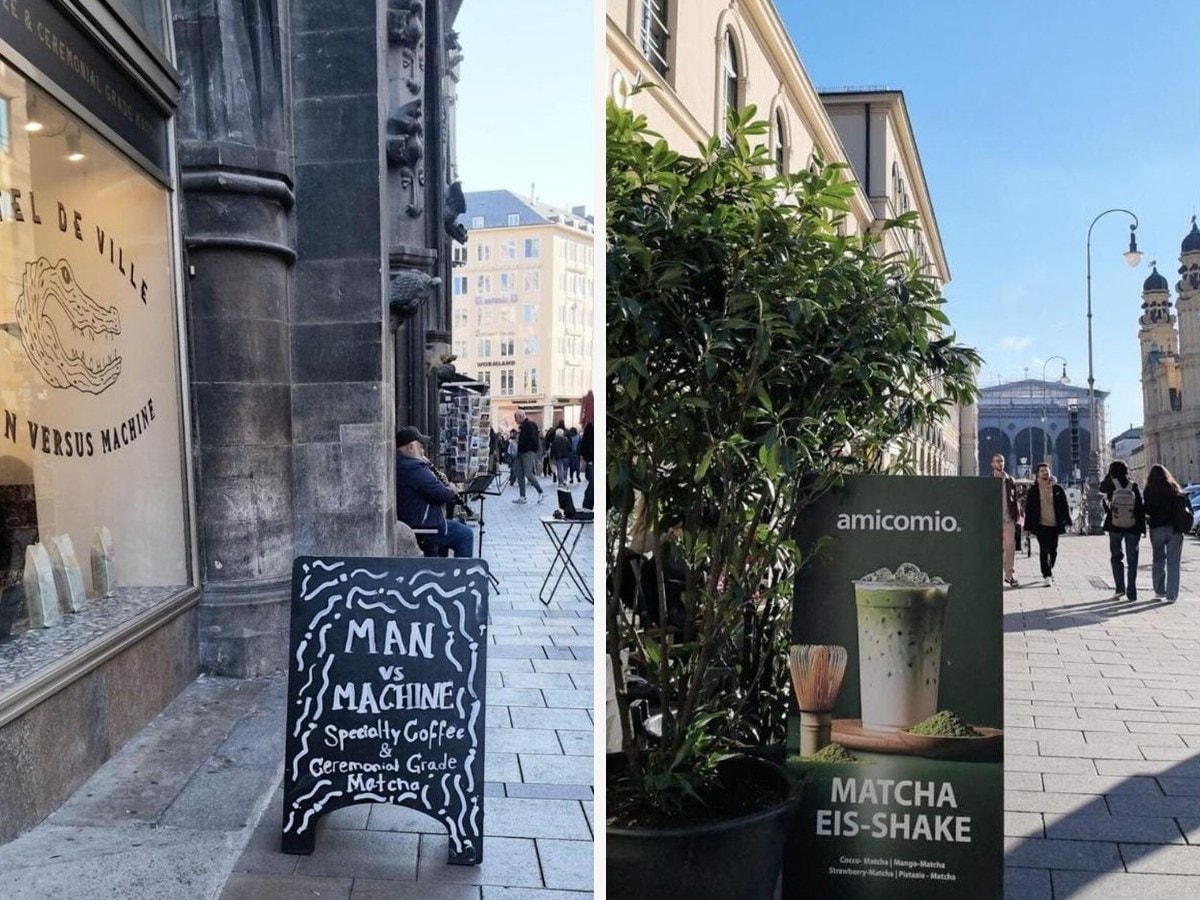
Left: Man vs Machine puts “Ceremonial Grade Matcha” on the same board as specialty coffee. Right: amicomio's Matcha Eis-Shake, in coconut, mango, strawberry or pistachio.
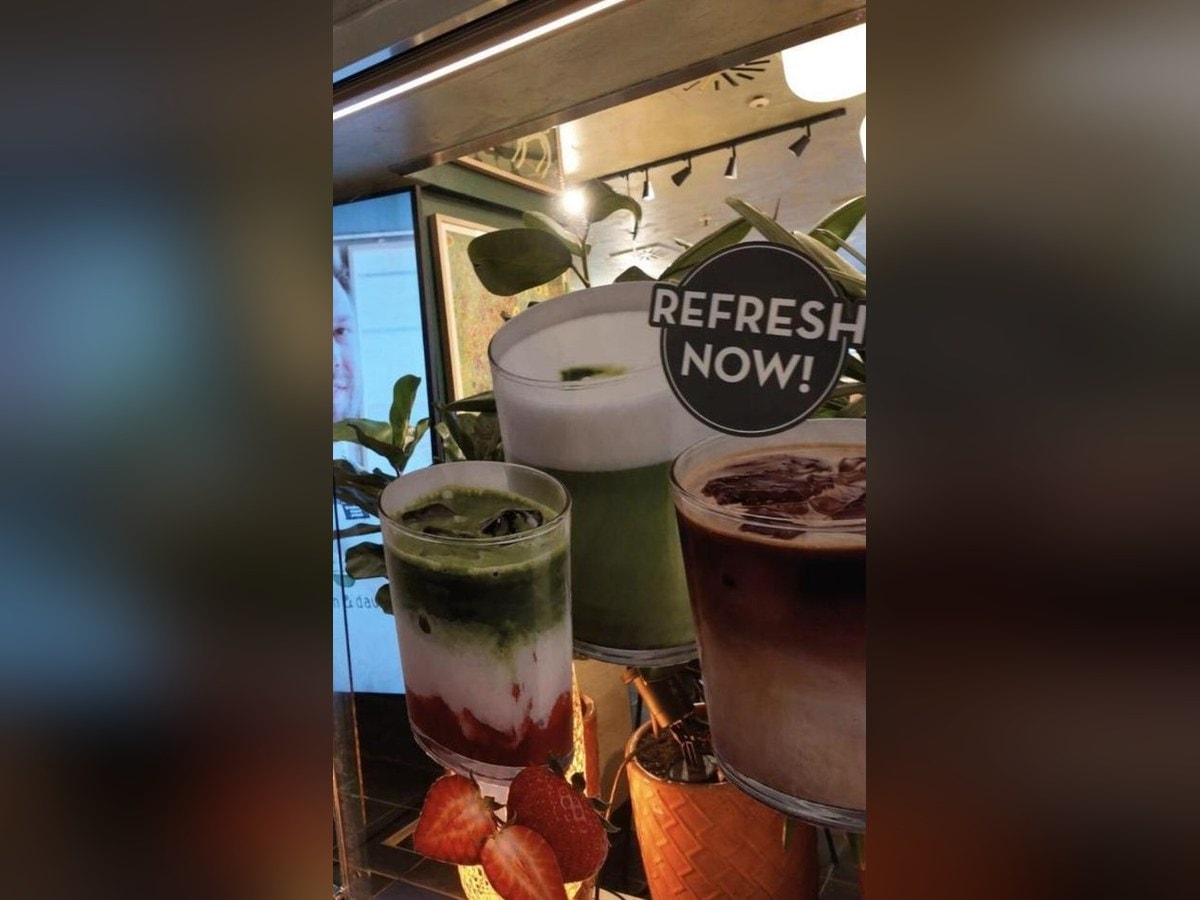
dean & david's window: a three-layer strawberry matcha next to the iced coffee.
Then there was the souvenir shop. Among the postcards of beer and Aperol Spritz, the standard “this is Munich” motifs, sat one that read THE MATCHA LATTE LOVER. When a matcha latte becomes one of the images a city uses to describe itself, something has shifted.
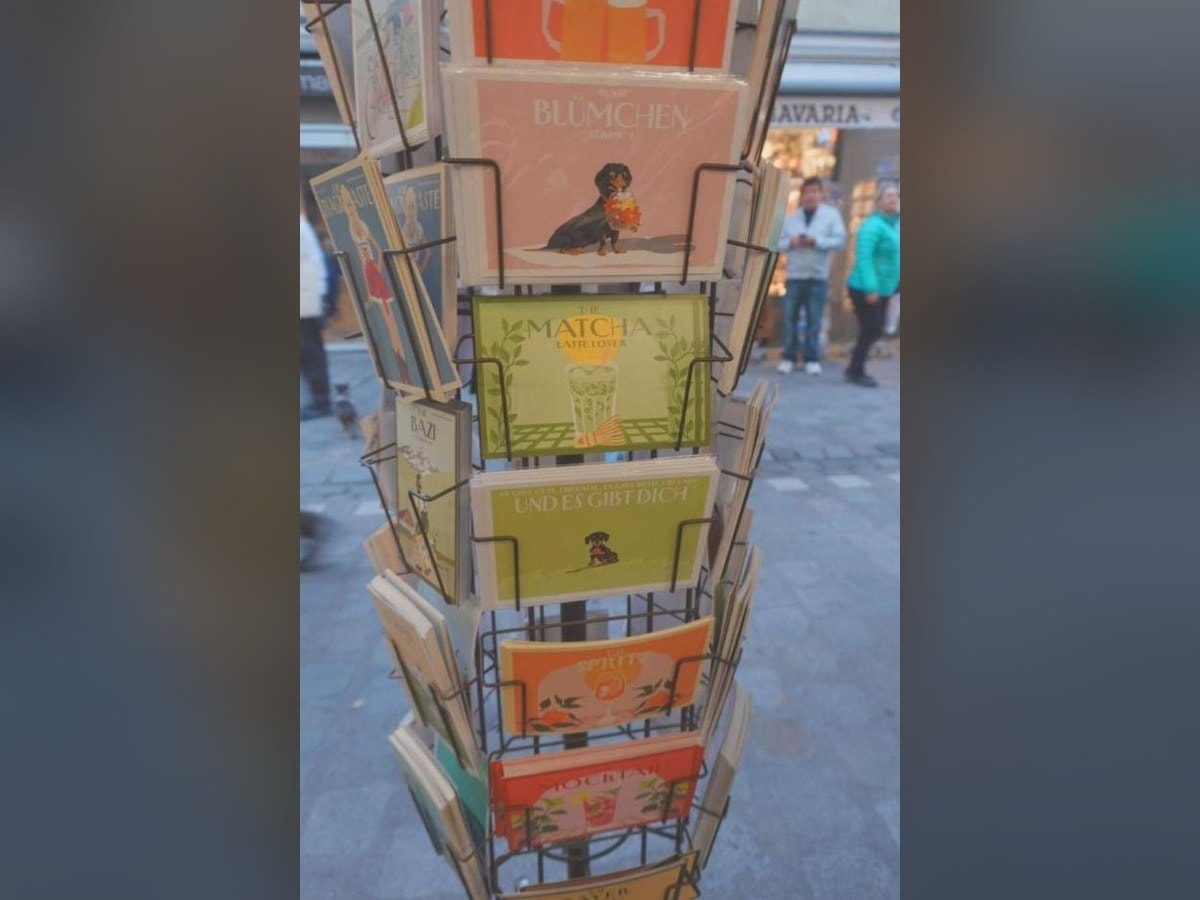
“The Matcha Latte Lover”, on the rack between the beer and the Spritz postcards.
From Chains to Department Stores
Outside the specialist cafés, matcha has settled firmly into everyday menus.
At the café inside H&M, a matcha latte is €4.50, the same price as a chai latte or a flat white. It isn't treated as something special; it's just one of the regulars.
Müller Café & Bäckerei is a bakery café, and yet matcha has its own category on the menu: from a Pure at €6.70 up to a Chai Matcha at €7.70. When a bakery gives matcha its own section, it has become an everyday drink.
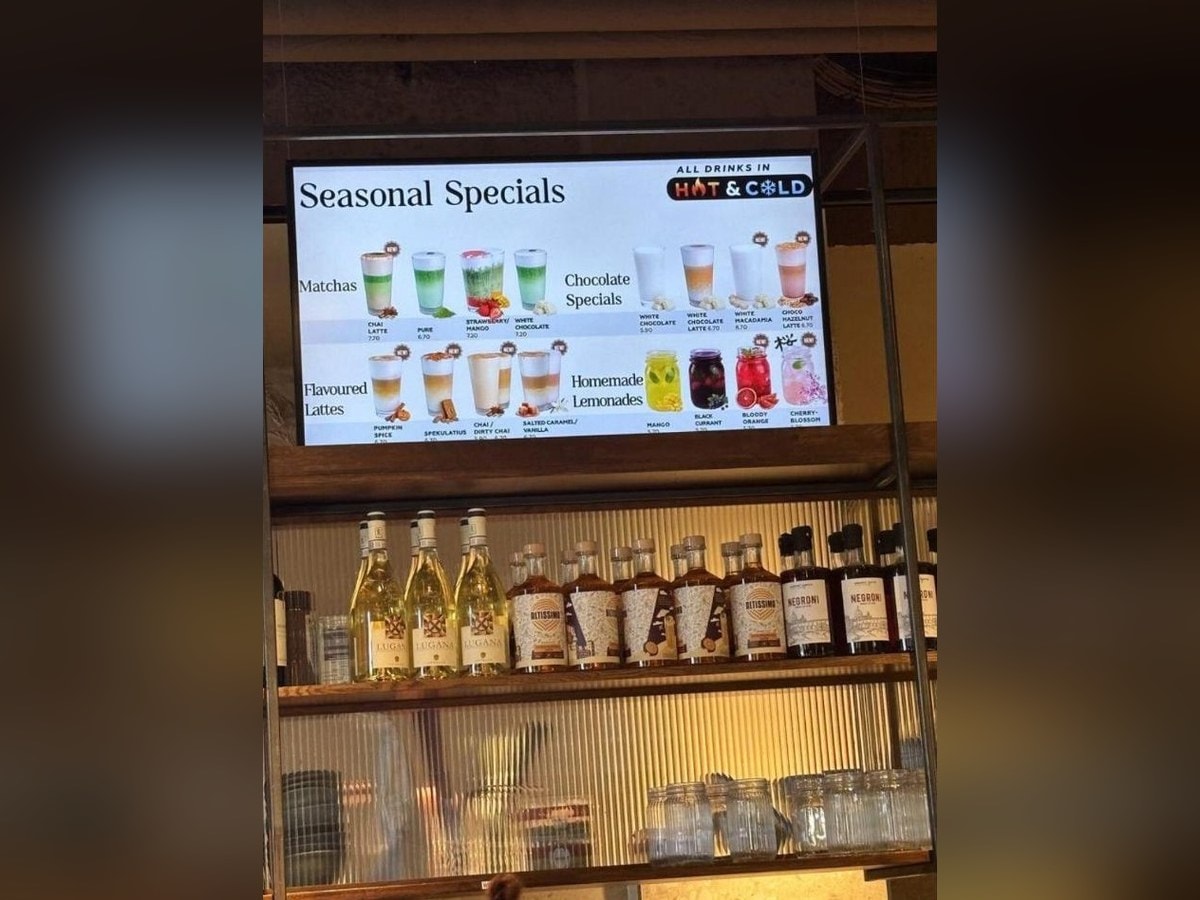
A bakery café with its own “Matchas” section on the seasonal board.
Dallmayr, the luxury department store, has a dedicated matcha corner: own-brand organic matcha powder, matcha truffles, whisks and scoops, a cap that says IN MY MATCHA ERA, even recipe cards. At the take-away counter, a matcha latte is €5.90 and a chai matcha latte €6.50.
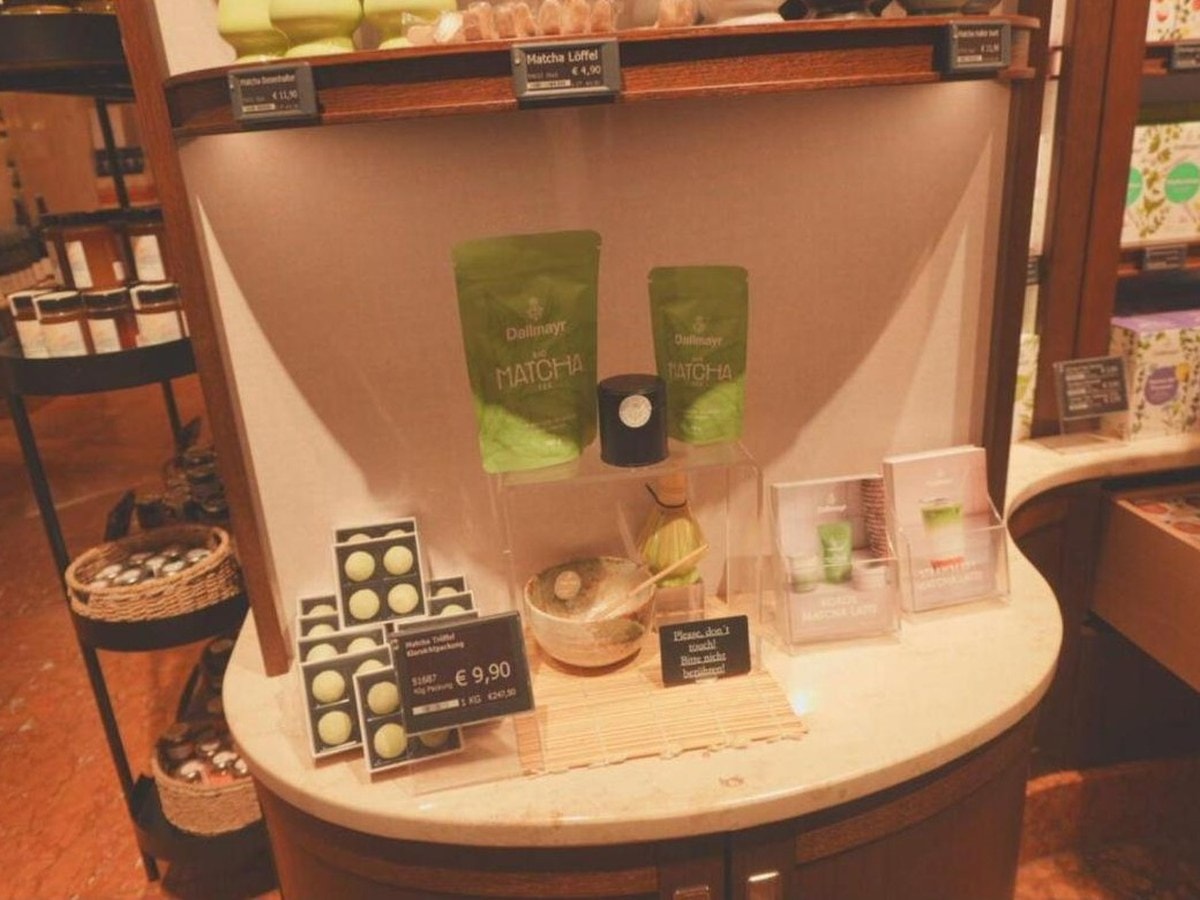
The matcha corner at Dallmayr: own-brand powder, matcha truffles, a whisk set and recipe cards.
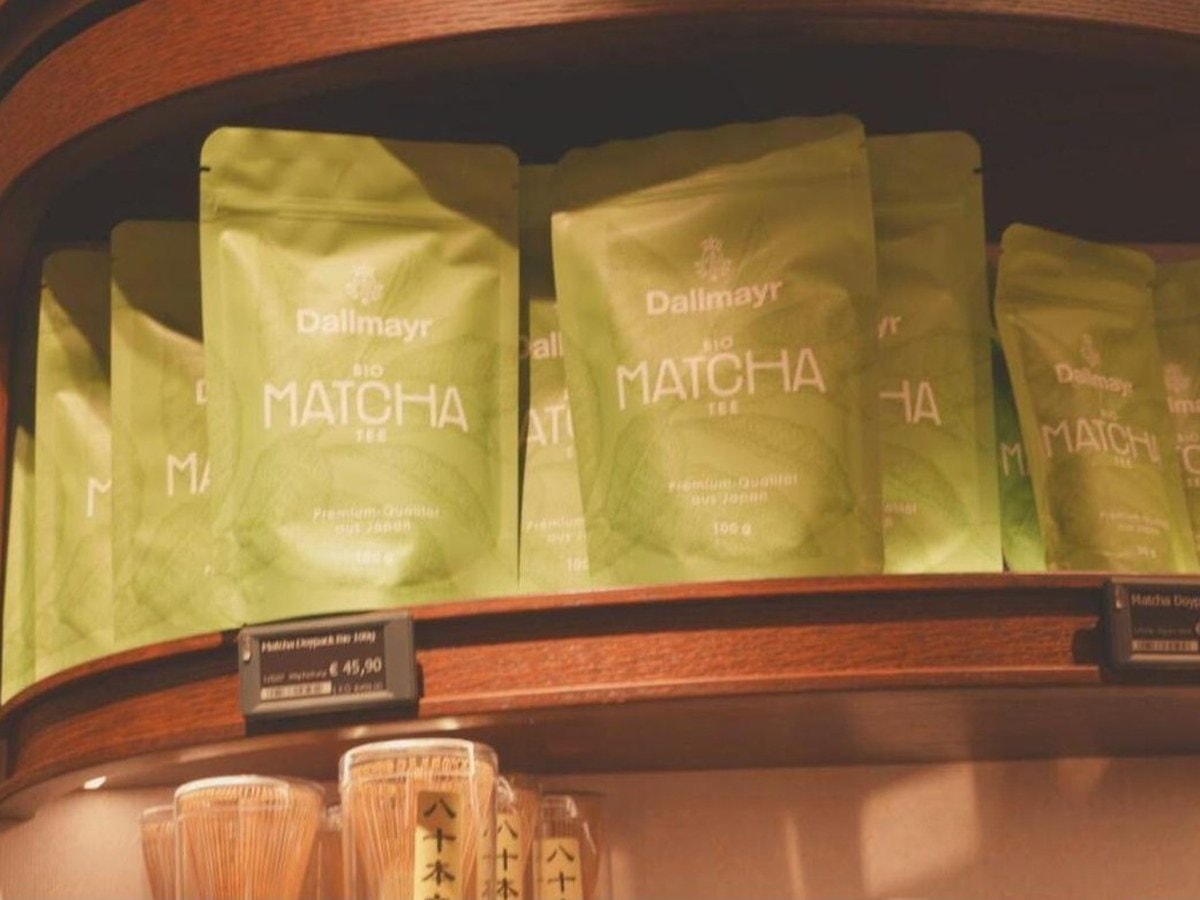
Dallmayr's organic matcha doypacks: €45.90 for 100 g, €16.90 for 30 g.
But How Did It Taste?
Reading this far, you might expect the conclusion to be “matcha is huge in Europe, the end.” The cups themselves told a slightly different story.
Most of the matcha lattes I drank were thin. The matcha lost out to the milk or the coconut, and what was left was a sweet, green-tinted milk. And they weren't cheap: €5 to €7, typically €1.50 to €2 more than a cappuccino at the same counter.
I don't mean this as a complaint. I think it's an opportunity. Matcha is everywhere, but a really good cup is still rare. That thought stayed with me for the rest of the trip.
Closing Thoughts
In Munich, matcha is no longer a novelty. It's expected. Next time, I'll look at the specialist shops that are trying to sell matcha on quality, with origin, grade and the whole story, and at the four cafés where we left RIKYU samples.
Next: Part 2, Munich's Matcha Specialists, and the Four Cafés We Left Samples With.