Hojicha Demystified: Roasting, Caffeine Myths and Why the Base Leaf Decides Everything
01 November, 2026
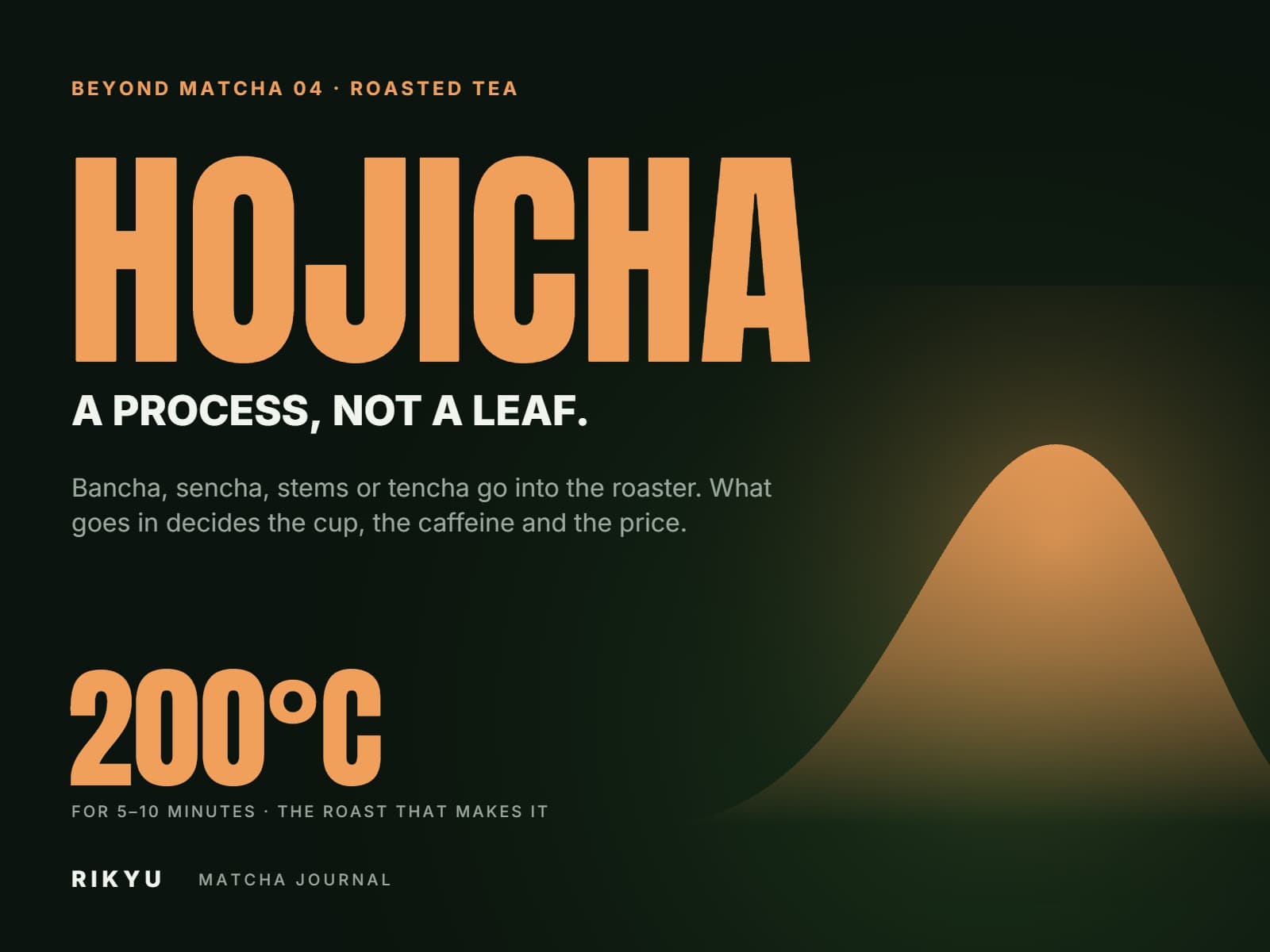
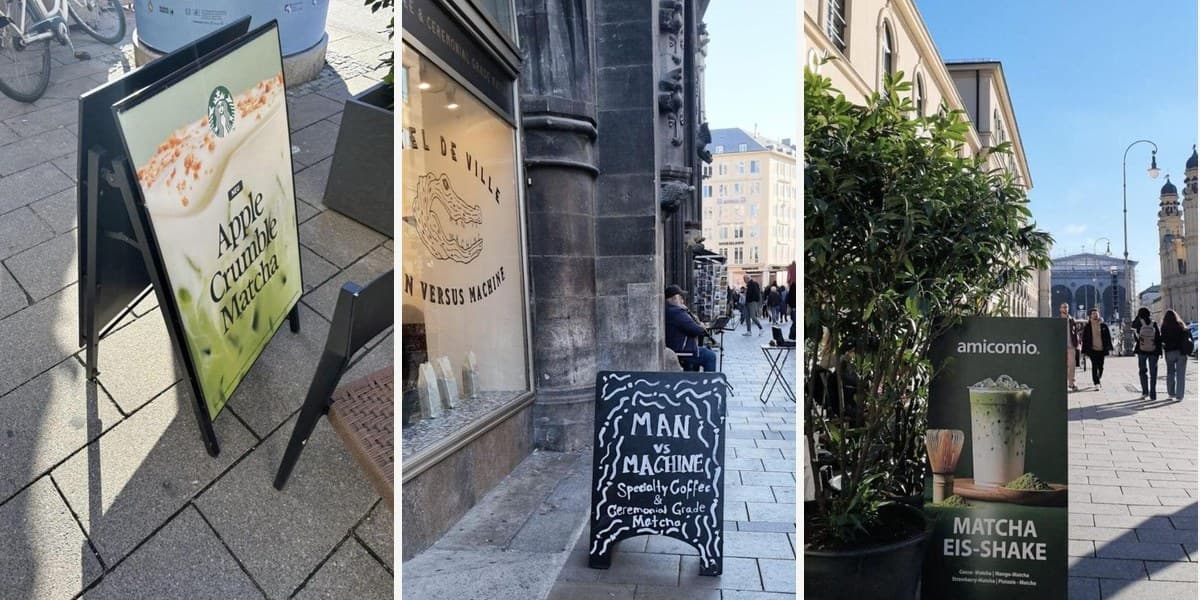
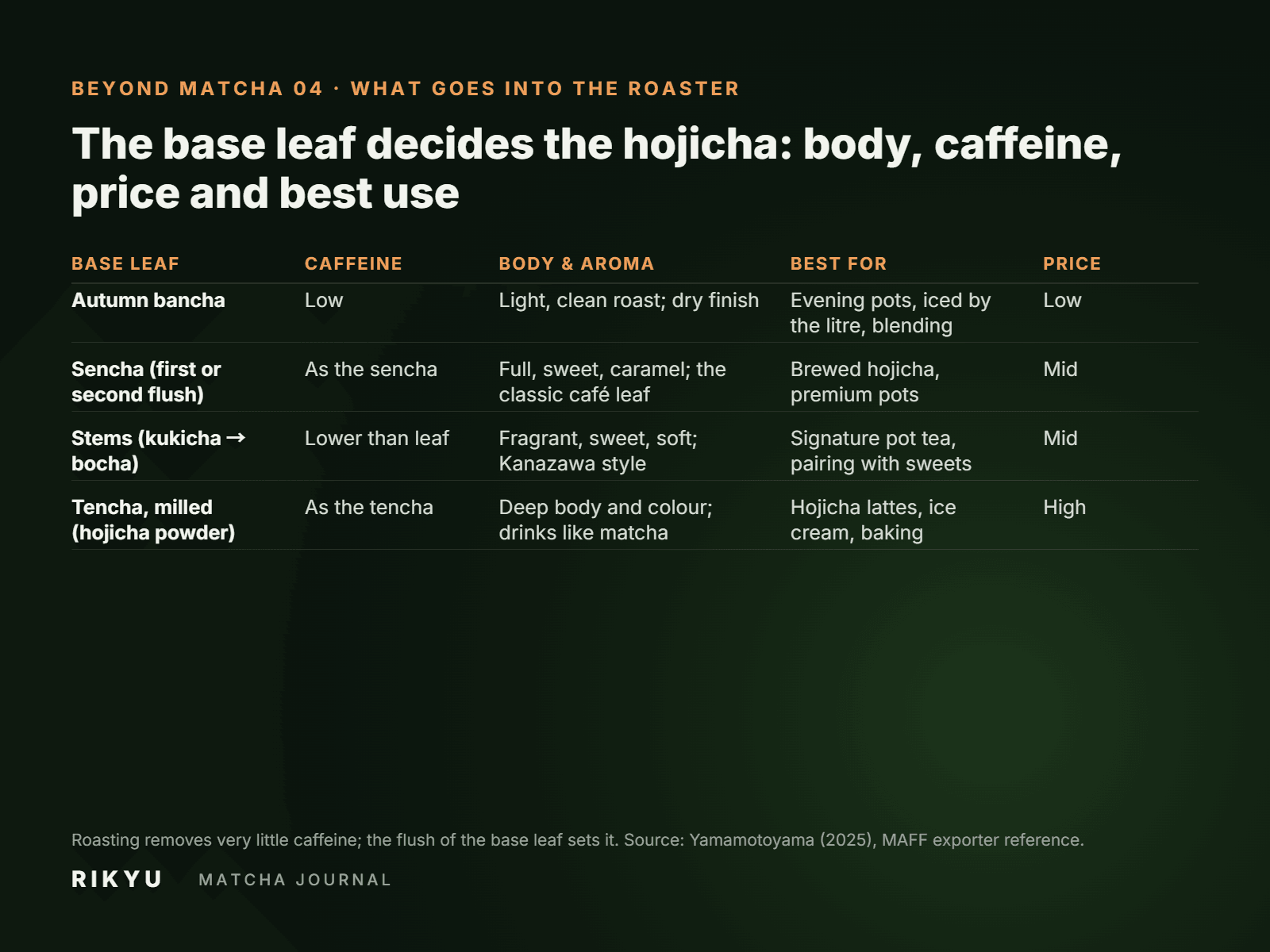
Hojicha is not a kind of leaf. It is a process: green tea roasted at around 200°C for five to ten minutes until it turns brown and smells of toast. What goes into the roaster decides almost everything about what comes out. Roast autumn bancha and you get a light, low-caffeine pot tea. Roast first-flush sencha and you get a sweet, full-bodied hojicha with as much caffeine as the sencha it came from. Roast stems and you get bocha, the Kanazawa style. Roast tencha and mill it, and you get the hojicha powder that is now on café menus from Los Angeles to Munich. If your hojicha latte tastes different every time you reorder, the base leaf changed, not the roast.
This is the fourth article in our Beyond Matcha series. For roast depth specifically, see Hojicha Roast Levels: Best Roast for Hojicha Lattes.
What is hojicha, exactly?
The name is literal: hoji means roasted, cha means tea. It began in Kyoto, where Edo-period tea merchants roasted leaf they could not sell, and the commercial version took off in Fushimi in the Meiji era. Any Japanese green tea can be the raw material: bancha is the traditional base, sencha gives a richer cup, kukicha (stems) gives the Kaga bocha style, and tencha is the modern base for premium powders. Because it is a secondary product, national statistics do not track hojicha separately; it is counted as whatever green tea it was before roasting.
What does roasting change?
Three things, and they are all chemistry you can taste.
Aroma. Heat makes amino acids and sugars in the leaf react into pyrazines, the same family of compounds that gives roasted coffee and toasted bread their smell. This is the whole point of hojicha.
Astringency. Catechins, the bitter and astringent compounds in green tea, are converted into forms that no longer dissolve in water. Hojicha is low in catechins and therefore smooth, which is why it brews well with boiling water and takes milk.
Sweetness. Sugars caramelise. A light roast keeps the leaf's own sweetness; a dark roast trades it for smoke.
Does hojicha have less caffeine?
Less than people assume, and not for the reason they assume. Roasting drives off only a small fraction of caffeine; the Japanese tea house Yamamotoyama puts hojicha's caffeine at roughly the same level as the sencha it was made from. What changes the caffeine is the base leaf. First-flush leaf is highest in caffeine; each later picking is lower; autumn bancha is lowest. A hojicha roasted from autumn bancha is low in caffeine because it is bancha, and a hojicha roasted from first-flush sencha or tencha is not low in caffeine at all. If you need a genuinely low-caffeine hojicha for an evening menu, ask for the base leaf and flush, not the roast.
Related: What's Inside a Bowl of Matcha? Reading the Ingredient Table
Leaf or powder?
Hojicha was a leaf tea for three hundred years and became a powder in the last ten, following matcha into the latte cup. The two behave differently.
Leaf hojicha is brewed and strained. The roast flavour is clean and the body is light, and 100 grams makes a great many pots. It stores well; roasting has already done most of the oxidation that would stale a green tea.
Hojicha powder is whisked or blended whole, like matcha. Body and colour are far stronger, because you drink the leaf, and the dose is 2 to 4 grams per cup. Powder milled from roasted tencha is finer and smoother than powder milled from roasted bancha, and costs more for the same reason that matcha costs more than powdered sencha.
Most café hojicha lattes are made from powder, and most consumer confusion comes from the two being sold under one name. Write them as two items.
Related: Rikyu Hojicha: A New Powder for Your Café Program · Matcha Is Everywhere in Munich
Where does hojicha come from?
Kyoto is the origin and still roasts a lot of bancha and stems. Kanazawa in Ishikawa made stem roasting famous as Kaga bocha. Sayama in Saitama, with its strongly fired leaf, makes a hojicha that many roasters prefer; our ARIHOJ powder comes from there. Tencha-based hojicha powders follow the tencha regions, Kagoshima and Uji above all. Because the roast dominates the cup, origin matters less for hojicha than for matcha, and the roaster's skill matters more.
What does this mean for your café?
Specify the base leaf on the spec sheet. Bancha, sencha, stems or tencha, and which flush. This is the line that keeps your latte consistent from lot to lot.
Separate leaf and powder on the menu. “Hojicha (brewed)” and “Hojicha latte (powder)” are different costs, different doses and different drinks.
Do not sell hojicha as caffeine-free. It is not. If low caffeine is the point, buy a bancha-based roast and say “later harvest” rather than “decaf”.
Order hojicha powder built for lattes
Rikyu Matcha supplies hojicha powder alongside matcha from Tokyo, with the base leaf, roast level and origin stated on every spec sheet. We can also roast and mill tencha for a brown-matcha style powder with the body of matcha and the aroma of hojicha, and both formats are available for private label. Tell us the drink you are building and the volume, and we will send samples and a price list. We answer in English, from Tokyo, and we answer fast.
FAQ
What is hojicha made from?
Any Japanese green tea that has been roasted: traditionally bancha, often sencha or stems, and increasingly tencha for premium powders.
Is hojicha a powder like matcha?
Hojicha is traditionally a leaf tea. Hojicha powder is a recent café product made by milling roasted leaf, and it is used like matcha.
Does hojicha contain caffeine?
Yes. Roasting removes very little caffeine. A hojicha's caffeine level depends on the leaf it was roasted from; autumn bancha is low, first-flush sencha and tencha are not.
Why does hojicha taste sweet and smooth?
Roasting converts bitter catechins into insoluble forms and caramelises the leaf's sugars, while producing pyrazines that smell like toast.
Where was hojicha invented?
Kyoto. Tea merchants there roasted unsold leaf in the Edo period, and the product was commercialised in Fushimi during the Meiji era.
Sources
Yamamotoyama, “What is the difference between hojicha and bancha?” (January 2025): roasting temperature and time, pyrazines, catechins, caffeine by flush, history
MAFF, Japanese tea reference for exporters: bancha, genmaicha and hojicha characteristics (Japanese)
Kyoto Prefecture, “Types and classification of Japanese tea”: hojicha and genmaicha as reprocessed teas (Japanese)
Waraku Web, interview with Maruhachi Seichajo on Kaga bocha (2022, Japanese)