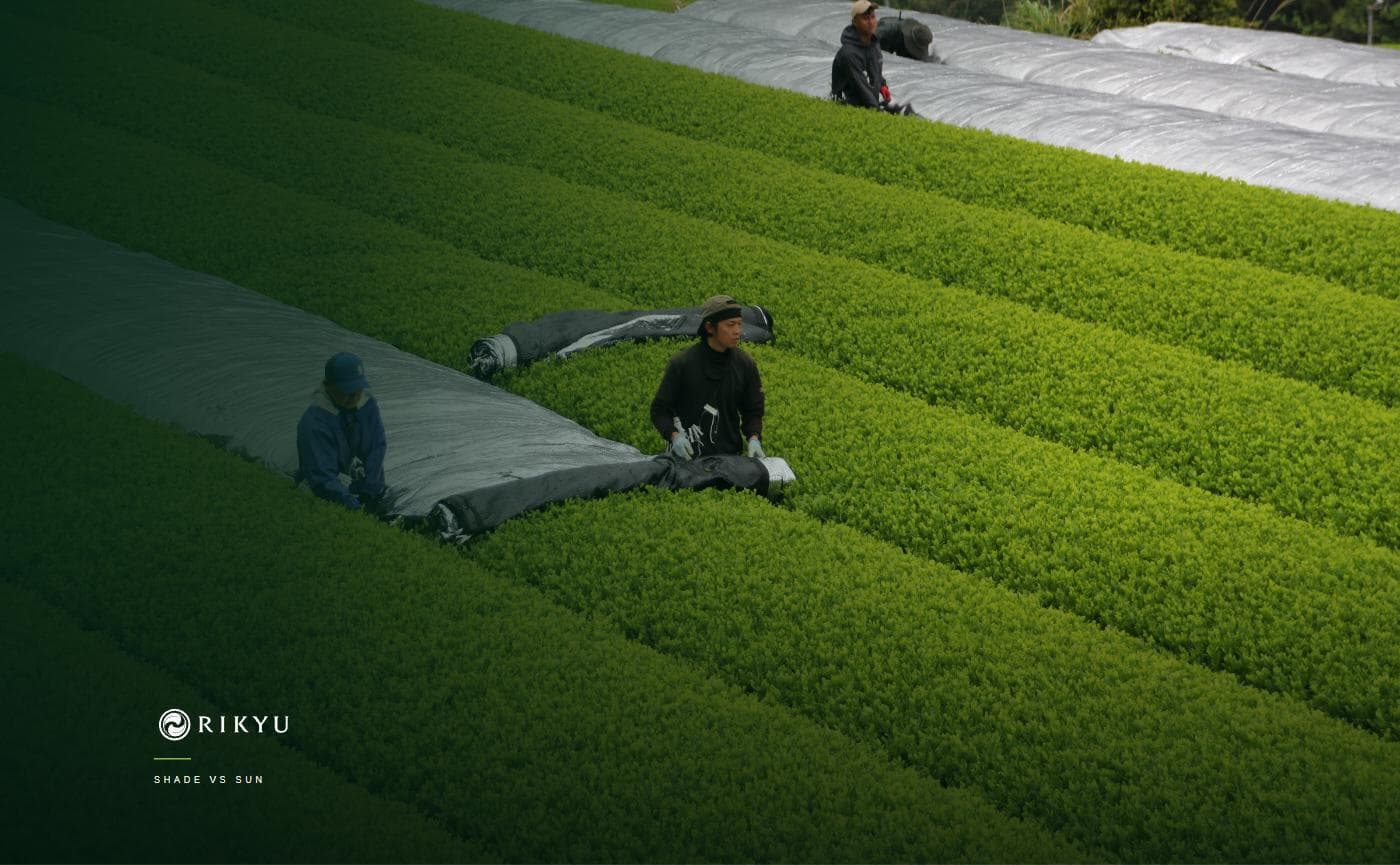
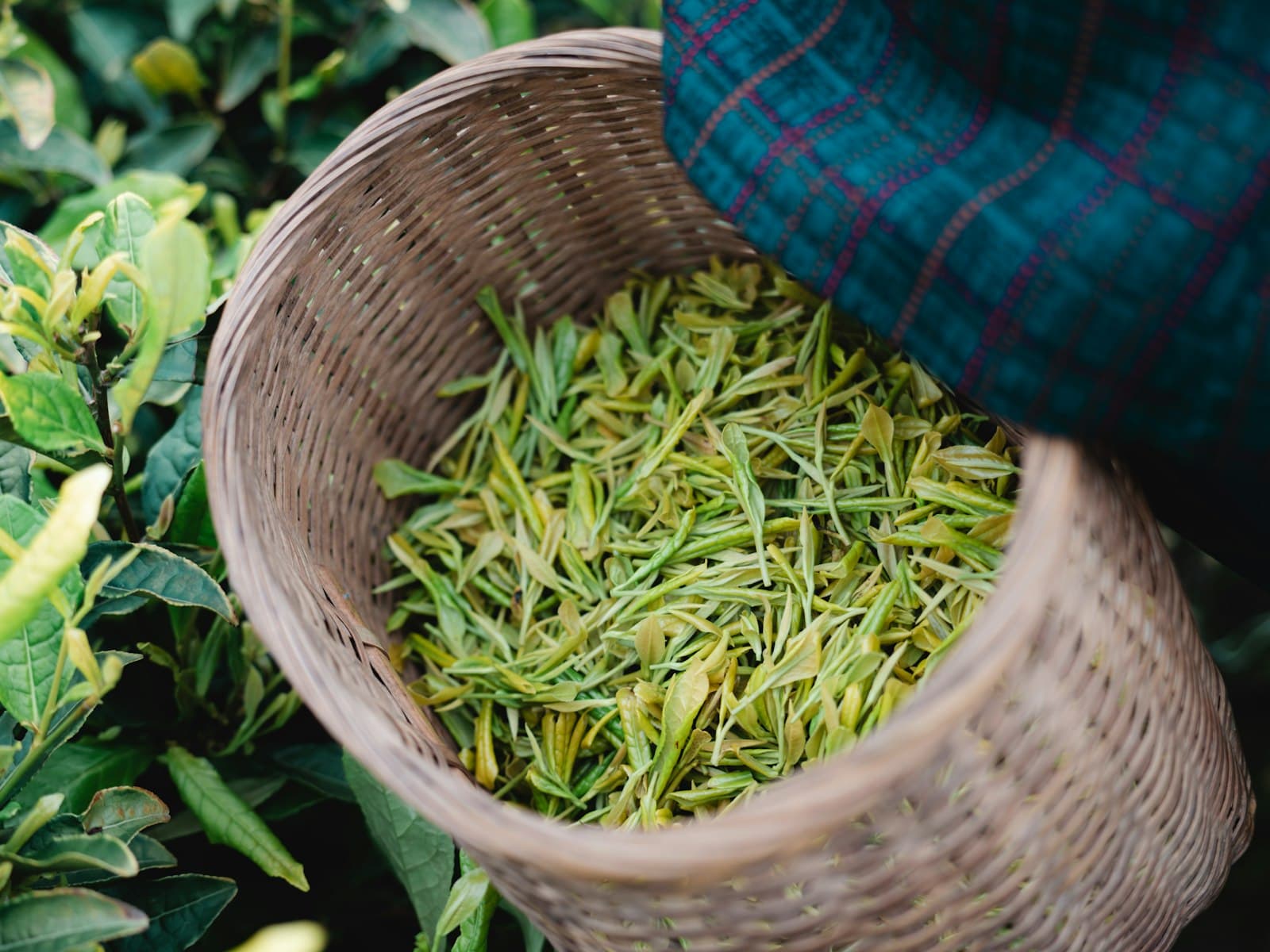
The value of hand-picking is not the hand itself — it is the choice. A picker can decide, bud by bud, exactly which leaves to take. In Uji's tradition, the finest grade is "two-leaf picking": the bud and the first pair of leaves. Because hand-picking demands enormous time and labor, even in Uji it is now reserved for top-grade tencha and gyokuro, while sencha is harvested with shears or machines.
"Is hand-picked matcha really that different from machine-picked?" The honest answer is: it depends on what you're buying it for. Part seven of Learning Ujicha explains what hand-picking actually changes.
Which Part of the Bud Is Picked?
Uji's tea-growing families have handed down three levels of picking:
Niyou-tsumi (two-leaf picking, "one bud and two leaves") — from the tip of the shoot to the first pair of leaves. Used for the finest tencha and gyokuro.
Sanyou-tsumi (three-leaf picking, "one bud and three leaves") — down to the third leaf. Used for high-grade tencha and gyokuro.
Futsu-tsumi (standard picking, "one bud and four to five leaves") — down to the fourth or fifth leaf. Used for everyday tea.
The closer a leaf is to the tip, the younger, softer and more concentrated it is. Two-leaf picking gives the lowest yield and gathers only the most delicate material on the plant.
Why Does It Have to Be Done by Hand?
A harvesting machine cuts the surface of the bush at a fixed height. A young bud and a slightly older leaf at the same height are cut together. A picker looks at each shoot and decides: "this one, down to the second leaf," "this one isn't ready." Selection happens in the field — that is the essence of hand-picking.
Uji's tea makers are famously particular about hand-picking the first flush, and for their finest tencha and gyokuro that tradition has not changed for a very long time.
So Why Has Hand-Picking Declined?
The answer is simple: it costs an enormous amount of time and money. The first-flush window lasts only a few weeks, and a large team of skilled pickers must be assembled for exactly that period. That is why ordinary gardens producing sencha use shears and machines — and, in doing so, deliver very good tea to the whole of Japan at reasonable prices.
"Hand-picked or machine-picked" is therefore less a question of quality ranking than of which price band and which use the tea is designed for. Hand-picking makes sense for a top-grade matcha whisked bowl by bowl as usucha. Demanding it for a latte-grade matcha rarely justifies the cost.
Ask your supplier: "Is this matcha hand-picked or machine-picked? If hand-picked, two-leaf or three-leaf?"
FAQ
Can you tell hand-picked matcha by looking at it?
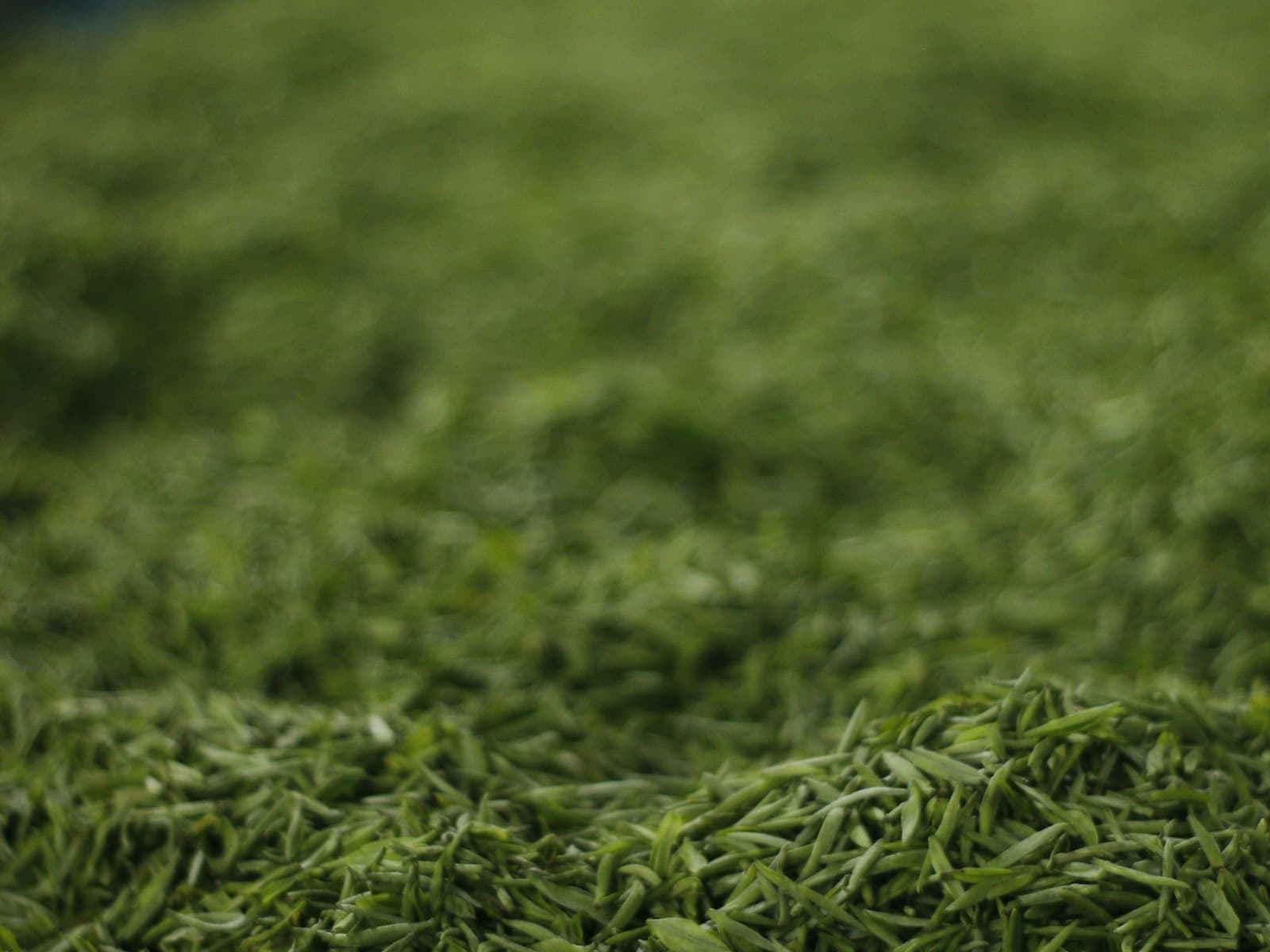
Not reliably as a powder. As tencha leaf, you can see differences in the uniformity of the fragments and the near-absence of stems. In practice, rely on a trustworthy supplier's explanation.
Can machine-picked tencha make good matcha?
Yes. With careful sorting afterward to remove stems and older leaves, machine-picked tencha produces excellent matcha. Most ceremonial-grade matcha intended for lattes is machine-picked.
Learning Ujicha, part 7 of 10. Next: Temomi — The 4-Hour Hand-Rolling Craft Behind Modern Sencha.
Curious how a hand-picked tencha compares with a machine-picked one? We're happy to send samples. 📩 Request a sample or get in touch with our team