RIKYU Matcha Company — Field Notes
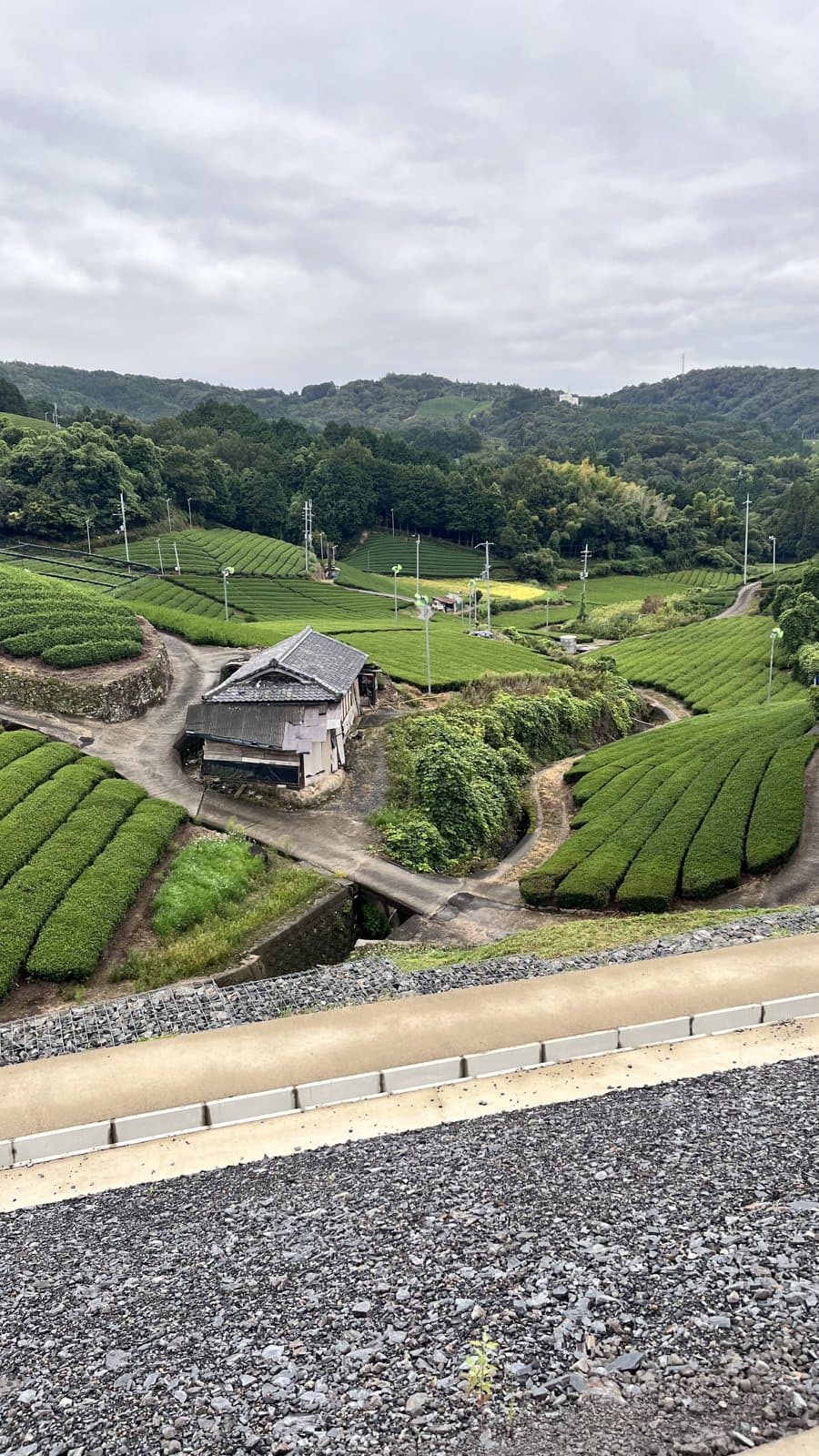
We visited the Kyoto tea farm behind our SR series to see, first-hand, where our matcha comes from and the thinking behind how it is grown. These are field notes from that visit — the kind of knowledge you won't find in textbooks, gathered from conversations with the people who grow and judge the tea.
One Harvest a Year — What Hand-Picking Really Means
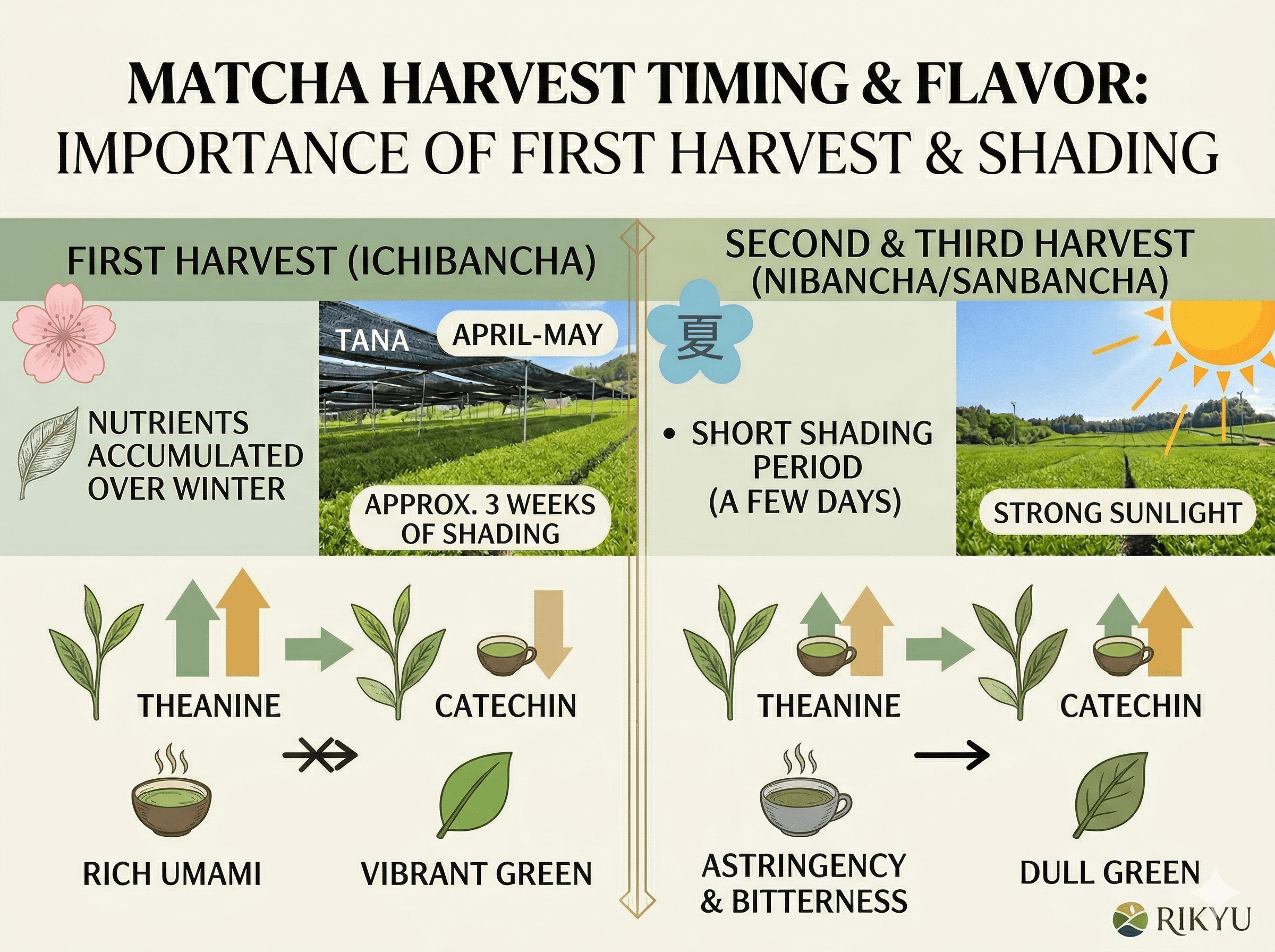
A hand-picked tencha garden is harvested just once a year. In Kyoto, that harvest runs for about a month, from early to late May, and only the year's very first buds — the first flush — are picked. Unlike sencha gardens, there is no second or third harvest. Everything the tree has stored over an entire year is poured into that single picking.
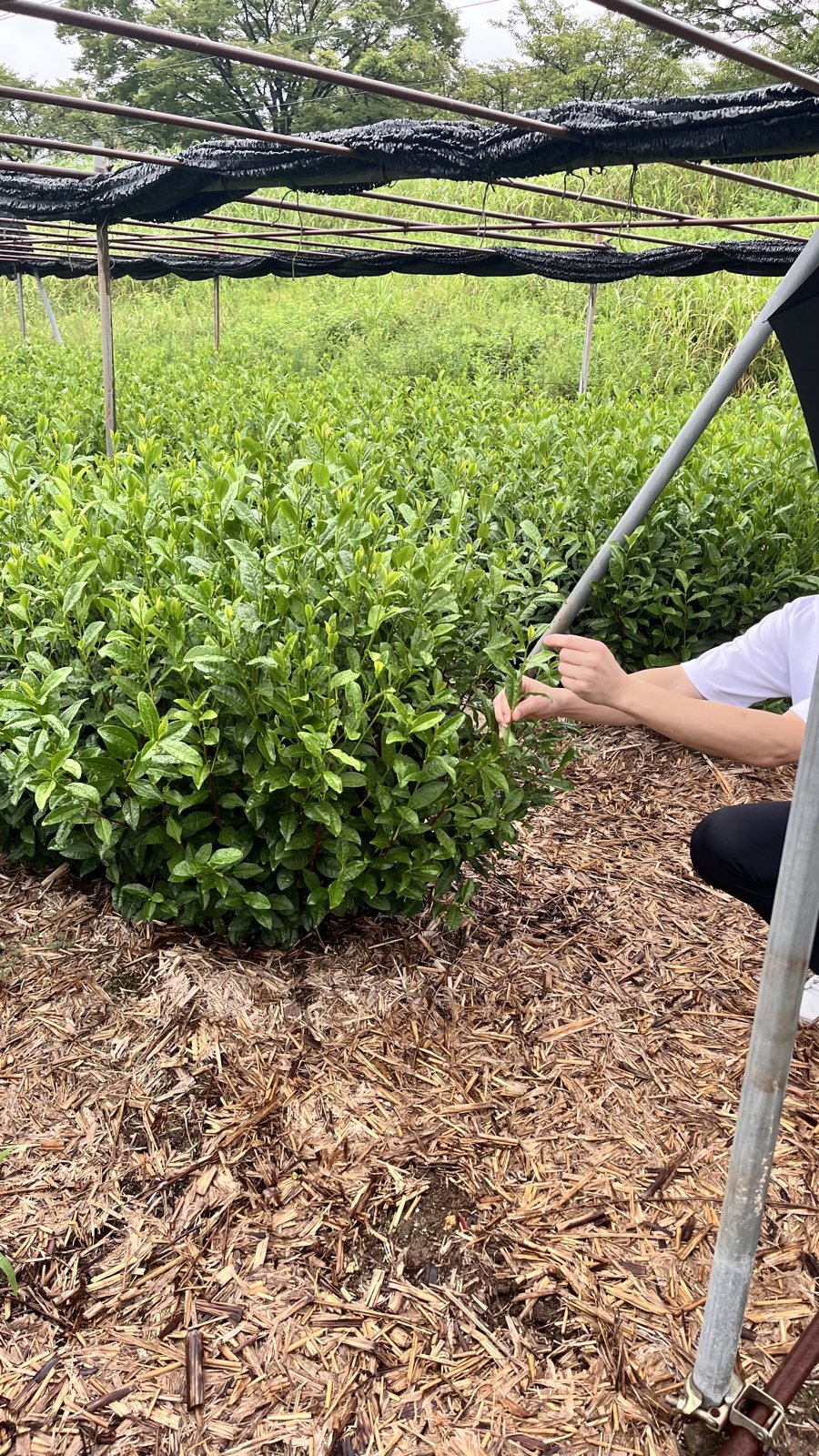
Tea trees under black shade netting. Beneath the cover, the new buds develop slowly.
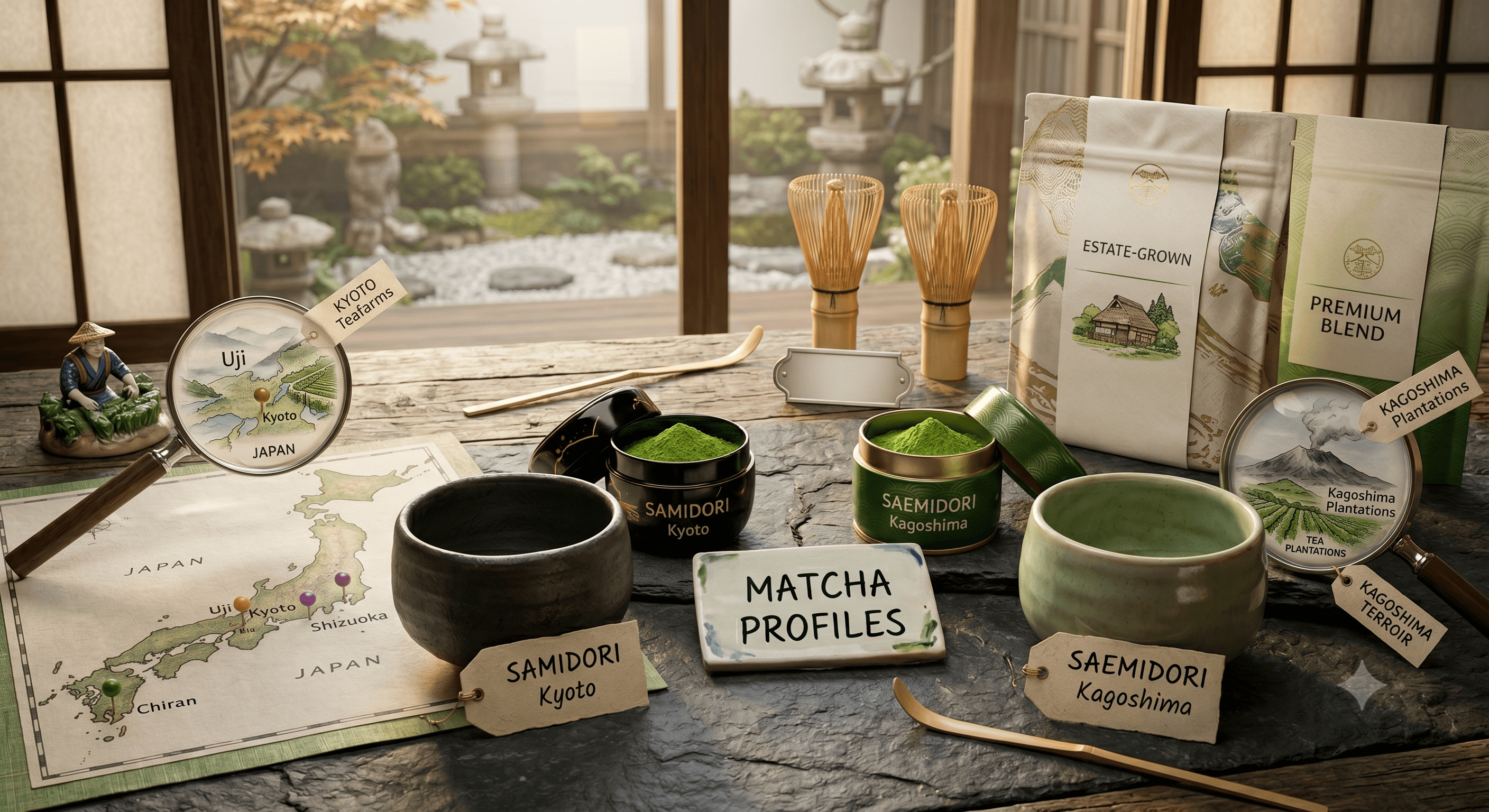
One thing that surprised us was how simple the cultivar mix is. A hand-picking farm typically grows only about two cultivars. To spread the harvest across the month, growers pair an early-budding cultivar with a late-budding one. The most common combination is Asahi as the early cultivar and Saemidori as the late one — a two-cultivar relay that carries the garden through the season.
Early-budding — Asahi: carries the first half of the harvest. A traditional Uji cultivar.
Late-budding — Saemidori: carries the second half of the harvest.
Some growers use Saemidori as their early cultivar instead. But Saemidori is notoriously difficult to grow, with a very narrow window for its ideal picking moment. Miss that window and quality swings sharply — which is why Saemidori lots can vary from year to year and grower to grower. The same cultivar name can mean very different levels of consistency depending on who grows it and in what role. That's worth remembering when you buy.
A Garden Where the Trees Never Flower
In a once-a-year, first-flush-only garden, the trees are fed continuously — fertilized throughout the year, even in the long months when nothing is harvested. The trees are rarely depleted, so they enter spring fully loaded with stored nutrients. The concentrated character of Kyoto's hand-picked tencha comes from exactly this design: a whole year of the tree's strength, released in one harvest.
The growers taught us a simple way to read a garden's condition at a glance: in a garden where the trees are fully nourished, the tea trees don't flower. A plant under stress rushes to reproduce and sets flowers; a tree with everything it needs doesn't bother. A garden with no flowers is a garden of contented trees — a beautifully simple indicator you can see just by walking the rows.
The Tea Master Judges at the Aracha Stage
Quality evaluation happens earlier than you might think — at the aracha (crude tea) stage. Aracha is the dried leaf before finishing; remove the stems and leaf veins, and what remains is tencha, the raw material for matcha. In other words, the tea master judges the material itself, before any finishing work.
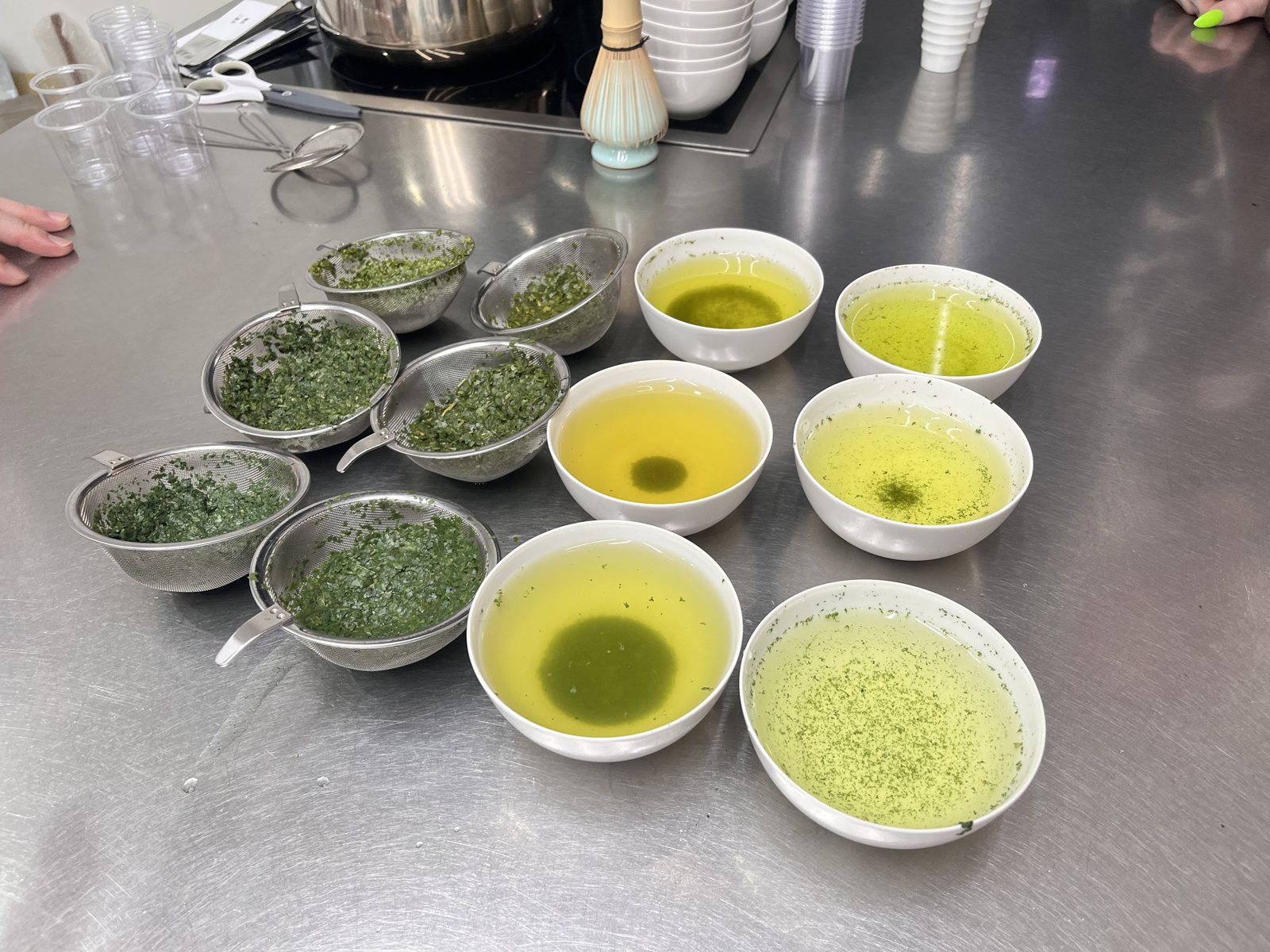
Tasting bowls lined up for evaluation — quality is judged before finishing, at the aracha stage.
How the tea is brewed for judging matters too. Cold-brewed tencha releases almost no bitterness, so it lets you evaluate pure umami strength in isolation. When judging it as matcha, whisked and drunk, you assess color, bitterness, and umami together — and since boiling water pushes bitterness forward, the water should not be too hot.
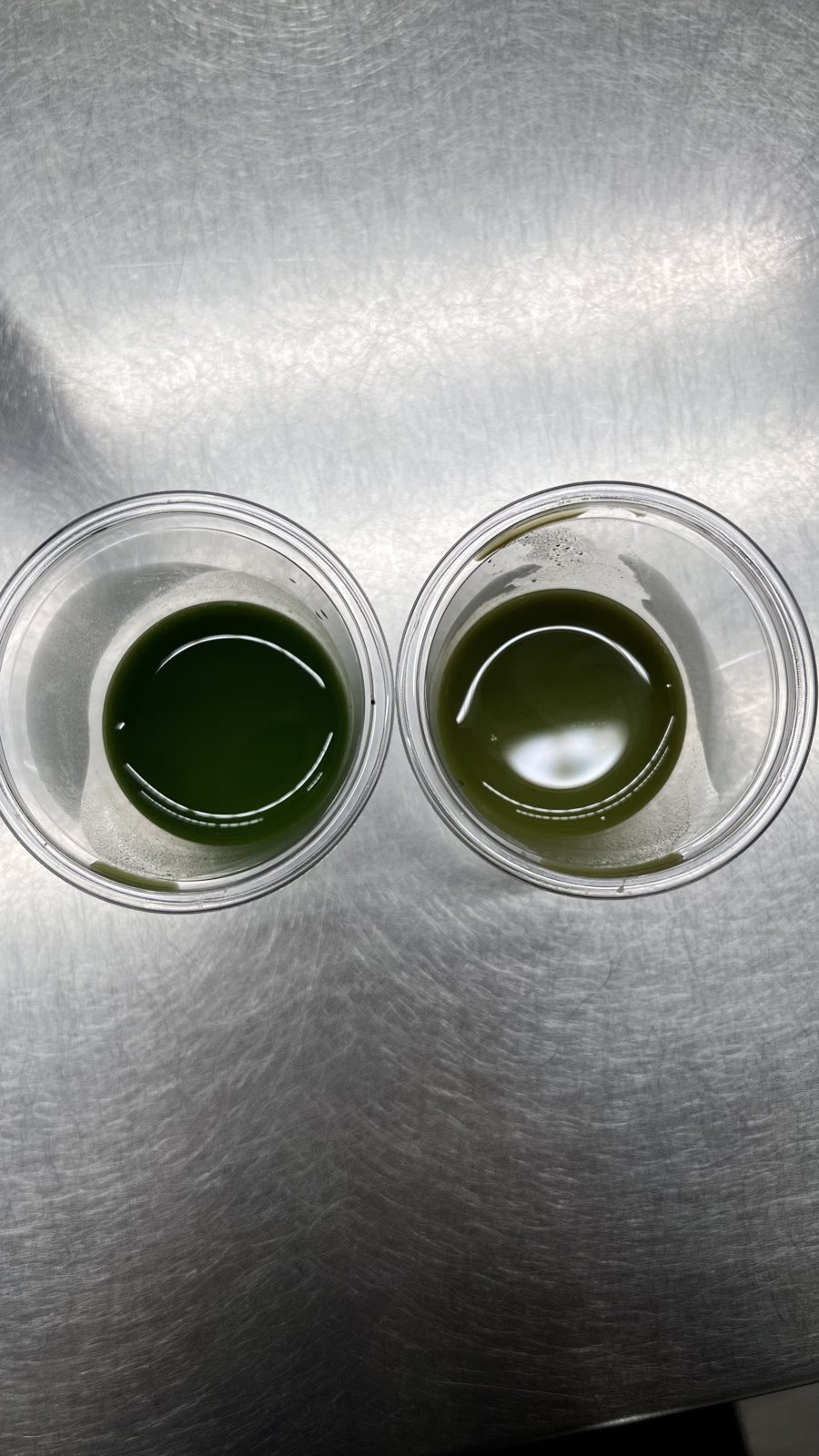
Cold-brewed tencha: almost no bitterness, so pure umami strength can be judged on its own.
A method you can use in your café
When comparing matcha samples for buying decisions, try two passes: first taste cold-brewed or at low temperature to gauge the raw umami, then taste at your actual serving temperature to judge the overall balance. Two passes make your sample evaluations far more consistent.
Prestige and Its Price — The Structural Problem of Wazuka
Even within Kyoto, there is a hierarchy of growing areas. The three districts held in highest regard are Uji, Joyo, and Kyotanabe.
Wazuka, one of Kyoto's largest producing towns, is seen as a rank below these three. That gap in brand power translates directly into lower wholesale prices for Wazuka tea. To compensate, growers there have to rely on volume: not just the first flush, but second-flush and autumn harvests too — three machine harvests a year.
And here lies a structural trap. Harvesting three times a year exhausts the trees, which lowers the quality of the following year's first flush. If quality can't rise, neither can reputation or price — and growers are pushed back toward volume again. It is the mirror image of the once-a-year approach we saw earlier, where the whole system is built around letting the trees store their strength. The difference in prestige between areas is not simply a difference in land; it is, in part, an economic structure feeding back into the tea itself.
A sharper way to read origin labels
Behind words like "Kyoto" or "Uji" sit real differences in area prestige — and in the farming practices that prestige makes possible. Beyond the place name, ask: how many times a year is this garden harvested, and is this first flush? Those two questions connect price to quality far more reliably than the origin name alone.
The Case for Vintage Matcha — Umami Doesn't Age
The most striking conversation of the visit was about aging. Matcha is usually treated as a freshness product, but the growers see it differently. As tea ages, the fresh, plant-like notes — the young-leaf character — do fade. But umami does not fade. In a first-flush tea with real depth of umami, resting the tea actually makes its umami and sweetness stand out more clearly. For tea like that, deliberately aging it — treating it as a vintage — is a perfectly rational choice.
So what does "real depth of umami" mean? Truly great matcha is overwhelmingly rich in umami, leaving an intense aftertaste like drinking dashi broth — with a rounded, pleasant bitterness, a creaminess, and a distinctive character that carries that savory, broth-like quality. Tea rich in amino acids is also physically different: it has a higher viscosity, a slightly thick, almost dense texture in the mouth.
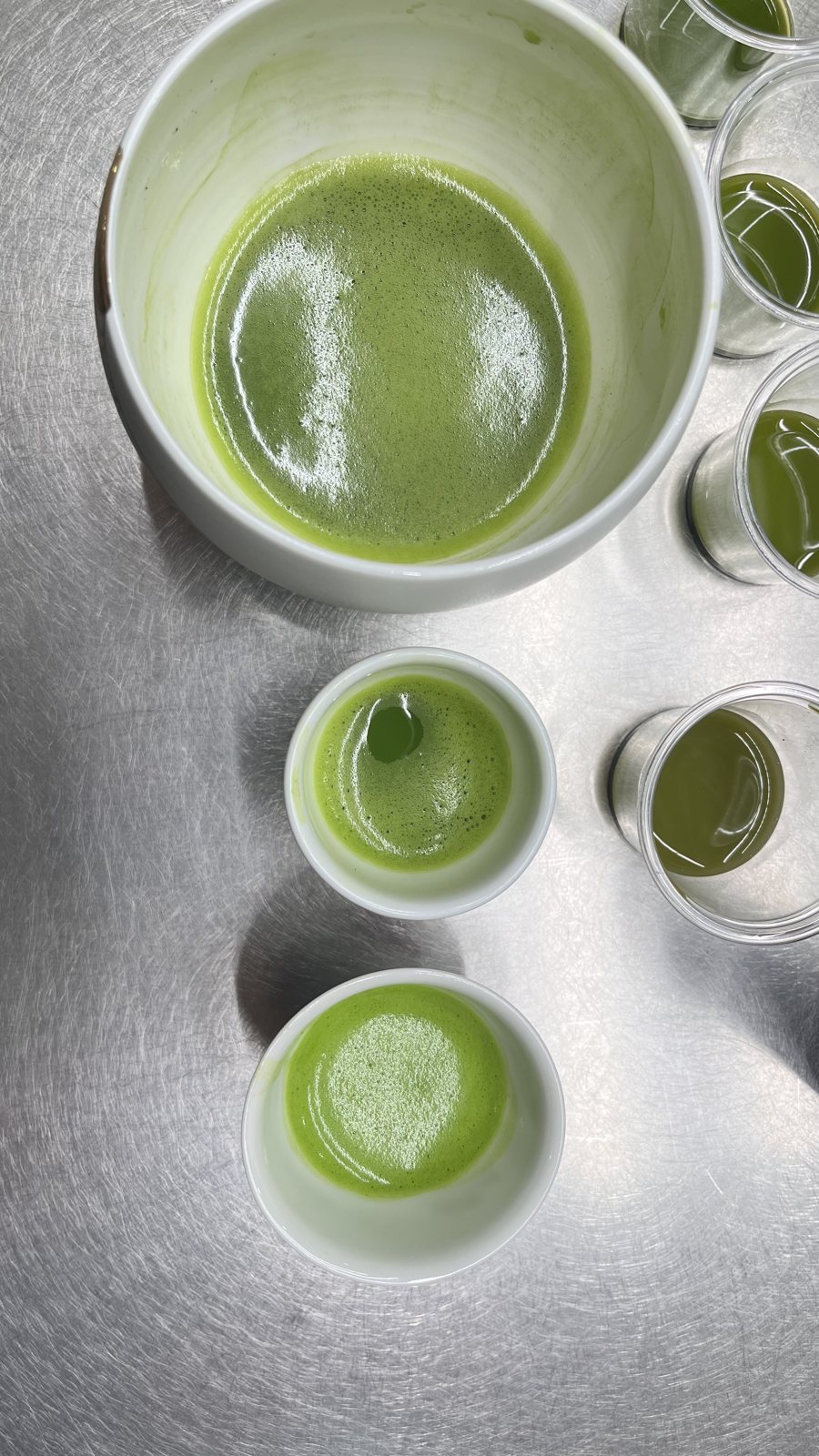
Freshly whisked matcha. Amino-acid-rich tea has a visibly thicker, denser texture.
In Kyoto, this viscosity has traditionally been prized as the very mark of quality — the defining character of Kyoto tea. Freshness of aroma on one axis, thick, clinging umami on the other: these are the two things that matter most. Farming that sacrifices this much productivity to build density into the leaf is something you will really only find in Kyoto.
How to choose
For fresh, vivid aroma, choose newly milled matcha. For deep, dashi-like umami, look for a high-umami first flush — and consider its aged version. "Old" does not mean "degraded"; the question is what you want the tea to express. It's a way of thinking much closer to wine than most people expect.
Closing Thoughts
One harvest a year. A relay of two cultivars. Gardens where the trees never flower. Judgment at the aracha stage, and aging built around umami. Every step of Kyoto's hand-picked matcha connects back to a single philosophy: concentrate the tree's entire strength into the first flush. The dashi-like umami and viscosity of our SR series rest on this farm, and on this philosophy. The next time you open a tin and that aroma rises, we hope you'll picture the tea garden in May where it began.